The economist John Maynard Keynes famously once said, "When the facts change, I change my mind. What do you do?"
We do too.
Especially when it comes to human connection – it’s what matters most to us, and what always has. But the notion of what it entails has changed and evolved for us over time, and in true Keynes-style, the more experience we got in the IRL tech space, the more the facts changed… and the more our minds did too.
When Timeleft as we know it was born in 2023, third places were already sharply declining after one of their biggest closures in post-pandemic 2021, and we were all readjusting to socialising after a prolonged period of quite literally not being allowed to.
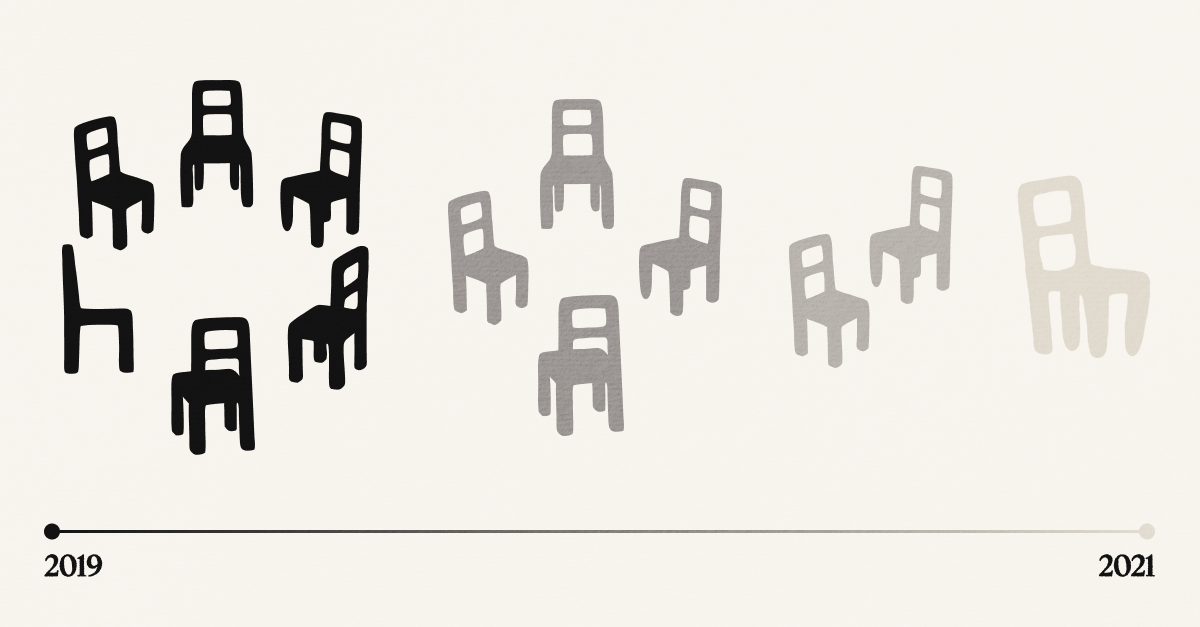
Third places experienced their sharpest closures between 2019 and 2021, with the worst impact in socially vulnerable communities. (fchealth.org)
During this time, we were the first IRL tech company to do what we were doing in the way we were doing it.
Fast forward 3-and-a-bit years, and we now have plenty of company in this space, with many of the big dating apps even jumping on board, so there’s a lot that we feel that we must have been right about from the start.
However, one thing we were wrong about was the nature of human connection. Something that looks very different now versus what it did 10 years ago.
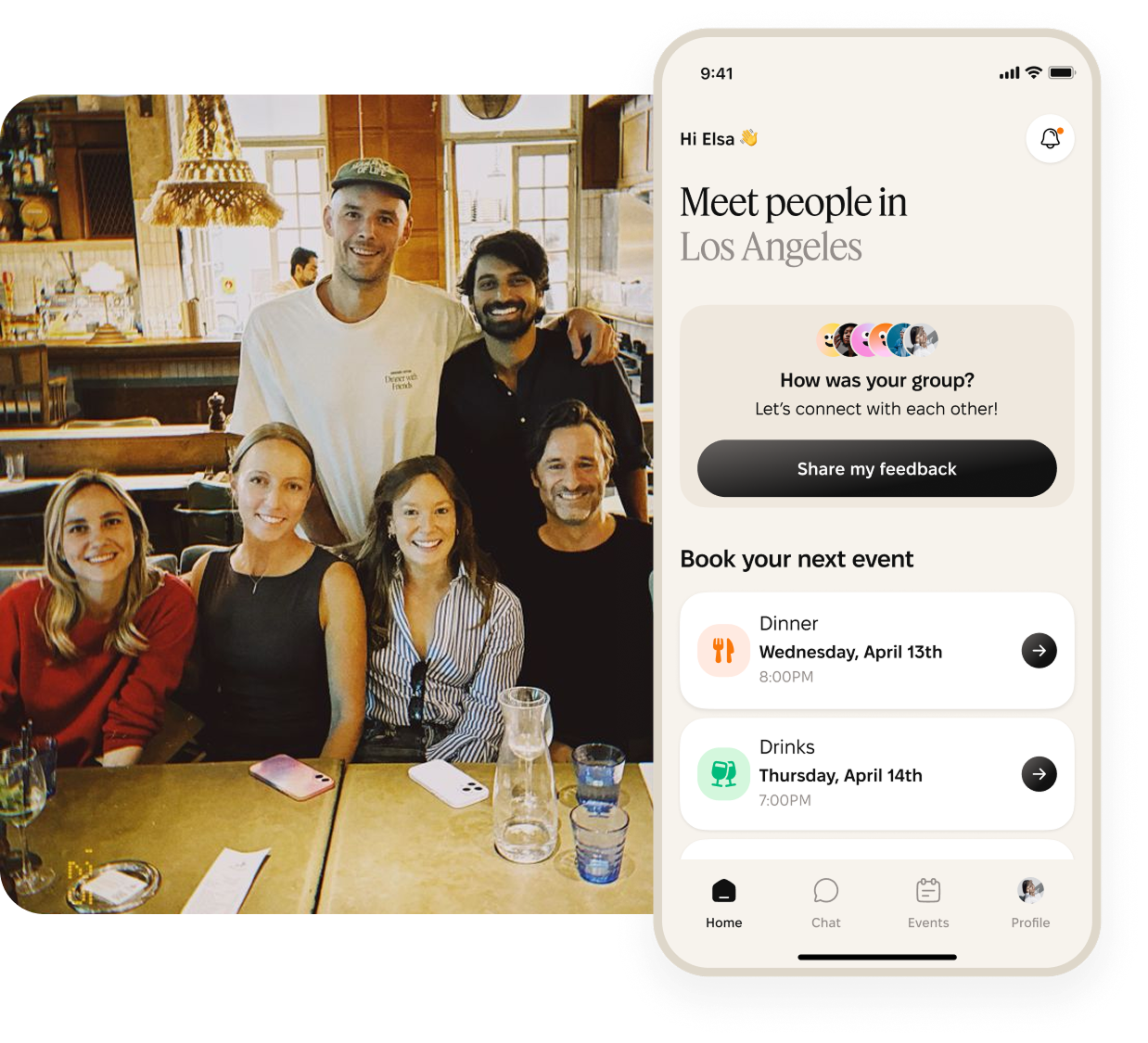
Since we launched, we’ve facilitated a fair amount of human to human connection:
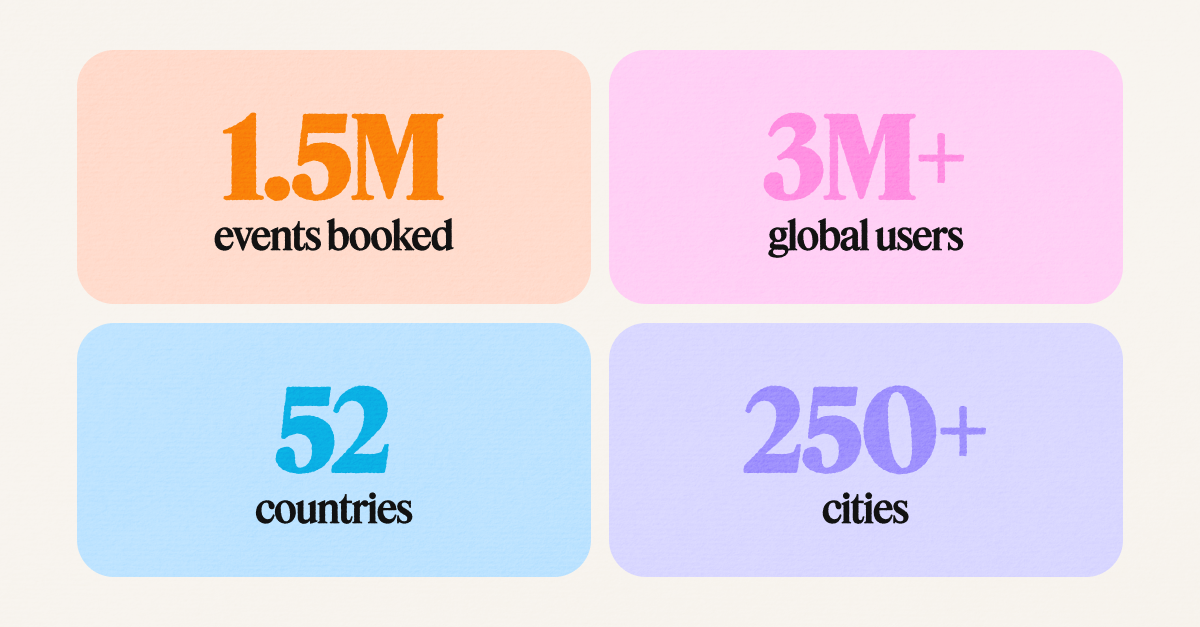
That’s a lot of events from a lot of different places to learn from.
And with all of that came lessons we weren't expecting, and a much clearer picture of why connection is hard as an adult in the first place…
So without further ado, here’s a list of the 10 most prominent things that we got wrong about connection back then, and what we know about it now.
1. That it happens naturally
This one was probably the biggest realization to date. And we believe that it’s all owed to the fact that optimization is killing unexpected chance encounters – aka: The Death of Serendipity. Our digital culture has slowly eliminated discomfort, friction, and the chances of anything unwanted (but also magical) happening. About a decade ago, it was enough to simply “put yourself out there,” but these days, connection doesn’t seem to happen quite so naturally anymore. It requires intentional design, effort, and a willingness to step out of your comfort zone.
We’ve got the intentional design down… the comfort zone’s yours to challenge. When you think about what's at stake, it makes it a little easier (also the fact that everyone else around the table did the same – strength in numbers right?)
2. That it needs instant chemistry
Once again, we have our digital age/convenience culture to thank for this – namely, the sense of instant gratification that comes with having the world at our fingertips.
At Timeleft, we like to attend as many events as we can – our CEO Max frequently joins Timeleft dinners and has officially surpassed the 300 dinner milestone – and one thing we noticed was a collective disappointment when a connection didn't happen instantly. Yup, we had this instant reward system deeply ingrained in us too. Luckily the night was still fun, and after another event (or 2, or 10) we all ended up making connections we didn't expect.”
So it’s not a case of you either click or you don't – most meaningful connections take more than one interaction to reveal themselves… the "click" is often something that builds.
3. That it needs a lot of time
That being said, there are plenty of Timeleft stories where people found deep connection on their very first meetup, some even went on to get married:
"I met my fiancé at a Timeleft dinner on June 12th, 2024. It was my first dinner and his third, prompted by a year of living in New York City without making any real friends. I arrived before anyone else, then two more guests, and finally the most handsome man I had ever seen walked into the restaurant. We hit it off immediately, and although we chatted with the rest of the table, we split off from the group to talk afterward at the bar.
He asked me out that night, we went on our first official date a few days later, and on exactly our one-year anniversary, we moved into a new apartment together. This year, on June 12th, we will be getting married on what we're counting as the two-year mark.”
- Hannah, NYC
(She said it better than we ever could tbh. Onto the next one.)
4. That introverts struggle with it
This was a huge one that we got wrong. Huge.
According to our personality quiz results, a lot of the people who use Timeleft are introverts – and once they’re around the table and comfortable, they most certainly do not struggle with connection. In fact, introverts are often the most deeply connecting people in the room; they just need the right conditions to do it. (That’s where we come in.)
Our matching algorithm has been tried, tested, and perfected over the years, so whenever you book an event, it’ll match you with some people on the same sort of vibe as well as others with different perspectives. This keeps things interesting and mirrors real life.
The result? A lot of very happy introverts… extroverts… ambiverts… and omniverts too.
5. That shared interests are what bond people
An interesting one that took us by surprise!
As mentioned in the previous section, our algorithm takes into consideration shared interests… but then we adjusted it to include people with differences too – simply because of the incredible connections we'd see form as a result. We all know about the other kind of algorithm running our social feeds – the consequent echo chambers that this creates has left people thinking that shared interests are essential for connection to form. But sometimes, it's the differences that bring us together.
What we've learnt from this is that how to make real connections with people has less to do with shared interests, and more to do with shared time and repeated exposure. (Why showing up over and over again works.)
6. That you need confidence to connect
Surely… right? Nope.
Swap them around and you’ll have the correct answer. That’s right, the causality runs the other way: it’s actually connection that builds confidence. And we have the science to back this up:
A week-long intervention of repeated conversations with strangers made people less fearful of rejection and more confident in conversation. (sciencedirect.com)
So if you’re usually not the most confident in the room, challenge yourself to leave the house and sit with some discomfort for a bit… you’ll be surprised at how quickly the conversation starts flowing – and how much more sure of yourself you’ll feel when you return home.
One thing we're 100% sure about: you don't wait until you feel confident to show up, you get confident by showing up. (Our version of chicken-egg.)
7. That awkwardness means it's not working
Everyone wants to avoid awkwardness… not us.
We’ve started to revel in it, celebrate it even. Because it’s usually the best ice breaker there is. Think about it: an awkward silence more often than not is followed by shared laughter – and then all of a sudden, everyone’s comfortable. We like to think of the awkward as the catalyst for the real, the remover of any pre-rehearsed performance, and the true equalizer of different social types. Connection is human, which means it’s messy, unpredictable, and often feels, well, pretty damn awkward.
What we know now is that it’s often a sign that something genuine is trying to form; the friction of two people not yet knowing each other, not a red flag.
Embrace the awkward!
8. That it’s all about finding the right people
This one's the reason we didn't go with something like ‘Find your people' as a tagline, and instead chose ‘Show up first.’ What years of facilitating human to human connection has shown us is that it’s less about finding the right people, and more about creating the right conditions for connection to happen… then seeing who shows up. The famous quote by the Brazilian poet Mário Quintana sums this up perfectly:
"If you chase butterflies, they fly away. But if you create a beautiful garden, the butterflies will come."
And the best part? You don’t even have to create the right conditions – we’ve handled that bit. You just show up in all your glory. (Like a butterfly.)
9. That it has to feel significant to count
Anyone who works from home/lives alone will vouch for this one.
When you haven’t connected with another person properly in a while, even a trip to the grocery store leaves you feeling so much better than you did before. Why? Because you shared a small connection with another human being. Coffee barista. Waitress. Fellow runner on the street. Small connections do just as much to our mood and sense of wellbeing as significant ones, and are sometimes the more accessible of the two.
A two-minute conversation that makes someone feel noticed is connection – it doesn't have to be a three-hour heart-to-heart to matter.
10. That busyness is its biggest enemy
Nope. Comfort zones are.
What gets in the way of real connection is the unwillingness to sit with discomfort. And the most comfortable thing in the world is doing nothing – the path of least resistance, if you will. It’s not about laziness, it’s about the familiar or safe winning, again and again, until your world has shrunk without you noticing. The effects of which reflect in the stats:
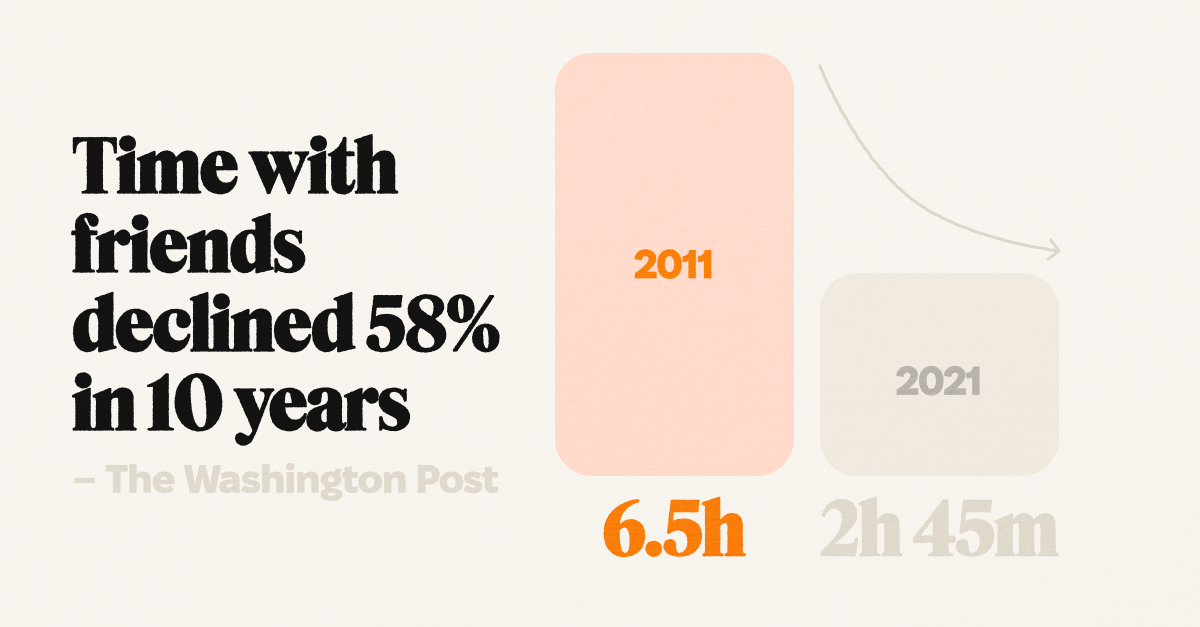
Timeleft is the thing that pushes back. It’s the antidote to living life on the default setting – and this is hands down the most important thing we’ve built this app for.
What we can say for certain at this point in our journey: resist the comfort zone with everything you’ve got. It’s a one-way street to a life that was always too small for you to live.
The thing we got *right* about connection?
Three years, 1.5 million events, and a lot of dinners later… the one thing we've never had to revise is this:
Showing up first is where everything starts.
The conversation you didn't expect. The person who changes something. The night that becomes a story you're still telling. None of it happens from the couch, all of it becomes possible when you walk through the door and sit around a table. Try it this week?