The table.
A surface we all know, love, and use (a lot), but probably don’t think much of. Unless, of course, we’re busy furnishing a new home or… waitressing?
Tables have become so omnipresent in our everyday lives that they blend into the background, like air. But (like air) they're incredibly important for our health and wellbeing – not just for function, but for something a bit harder to quantify: getting humans to come together and connect in real life.
It’s time to give the table its well deserved moment in the sun. And, honestly, it deserves it.
The table is easily the most social object ever invented (with the smartphone sadly moving in on that position). Think about it, nobody ever seems to gather around a chair… Or take the couch – sit on one and it's basically an unspoken rule that speaking is not necessary, or even encouraged.
And yet, nobody sings its praises.
Even the chaise longue is having a moment in pop culture. But the table? Most people don’t seem to GAF unless it's a ‘roundtable’ and it’s on LinkedIn…
Well, today that changes.
Because today, it’s the table’s turn.
Tables vs smartphones
What really separates the table from the smartphone is the relative symbolism of each.
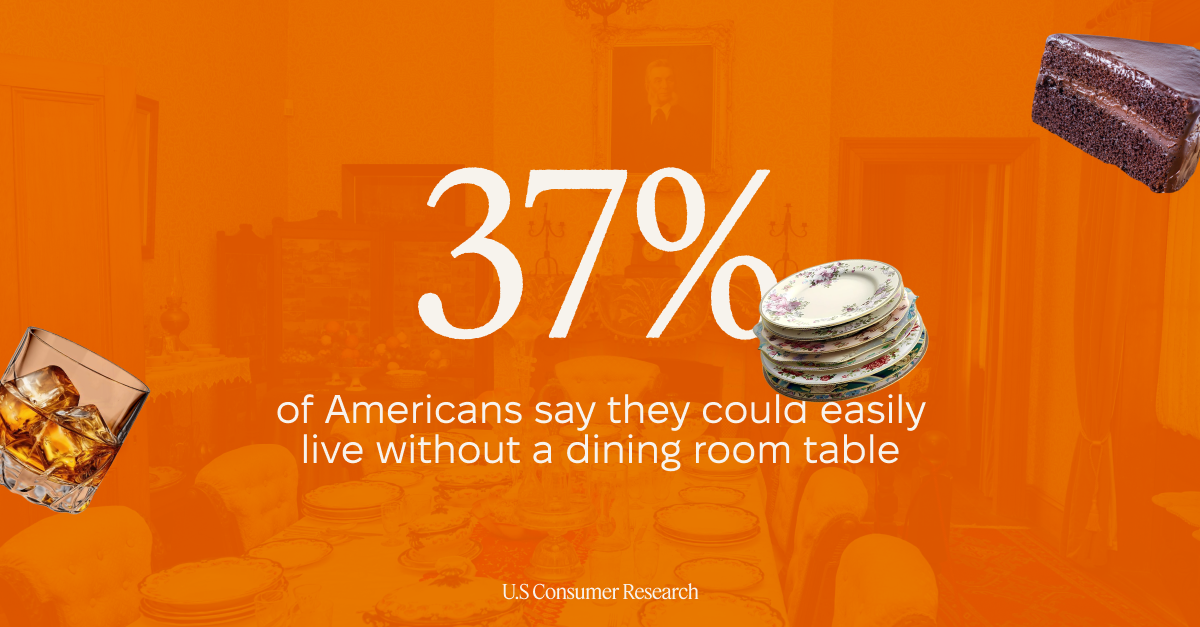
Across cultures, the table represents community, opportunity, connection, and belonging, while smartphones have us more ‘connected’ and alone than ever before. Despite all this, the dining table in particular is starting to fade out of our everyday lives, with families eating together less and a growing number of young people choosing not to own one at all.
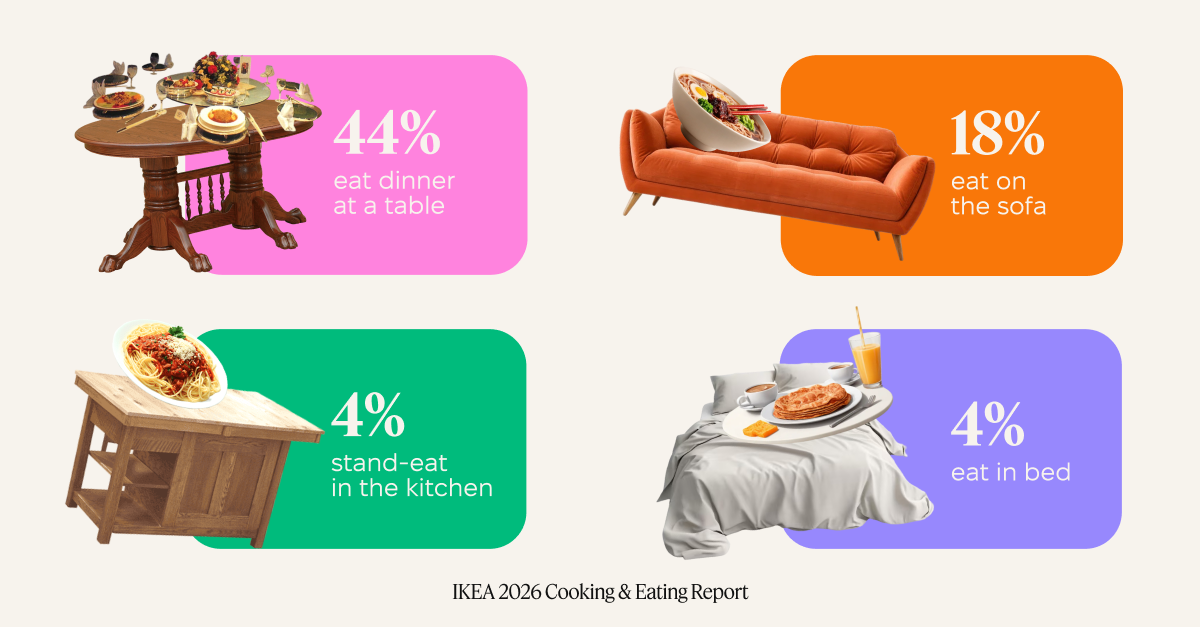
A recent IKEA study found that 1 in 5 people now eat dinner on the sofa, a sign of how screens are impacting one of our most human rituals.
We need to protect the table at all costs. Especially now.
Because, as the writer Mackensie Griffin puts it, dining tables offer their owners an instant connection to history:“My grandparents’ dining table made of an old church door, my parents’ colonial table from Pennsylvania, and even my Ikea dining table all speak to different time periods and are all descendants of the medieval table.”
And for the first time in human history, the table is disappearing from it.
And that brings us to the one thing that smartphones will *never* have on the table: the same history.
Since some of the earliest periods of civilization, the table has traveled alongside human beings for thousands of years, right up to this very moment, like a trusty (albeit unlikely) sidekick. Proving that the table is not just any old object, but one of our greatest social allies. And the more people know about where it's been, the harder it is to take it for granted.
So, let's take it back to the beginning.
The evolution of the table through the ages
From ancient civilisations to modern dining room setups, here's a brief dining table history that tracks how it's evolved, and why it's mattered to us at every step.

Fashioned from stone or occasionally wood, the earliest ‘tables’ were more like raised platforms. (Cleopatra used to bathe in milk and honey, so it makes sense she didn’t want her food and drinks touching the floor.) Purely functional, these pre-table platforms were even found buried with the deceased in tombs – indicative of the inherently human need for suitable surfaces, even in the afterlife.
Still platforming, not yet tabling. Except these ones were used as practical solutions for artisans – giving them a raised surface for crafting, creating works of art, and keeping written records. Which, in hindsight, makes a pretty compelling case for what the table would eventually become: a surface for sharing food and connecting with others… a whole art in and of itself.
It wouldn’t be a Greek table without a Greek column – and true to their style, these lightweight movable tables featured single-column supports underneath small circular surfaces. Brought out for meals and tucked away after (the original fold-flat furniture.) The Romans then came along and refined the design, adding ornate materials to suit the lavish feasts they were fast becoming known for.
The medieval table is recognized as the official ancestor of the dining table as we know it today. In the Early Middle Ages, politics and war saw a return to more basic design… et voila! The trestle table was born. High-society lords and ladies dined in great halls with enormous trestle tables where the order of seating reflected strict hierarchies, making the table an object of politics as much as one of practicality.
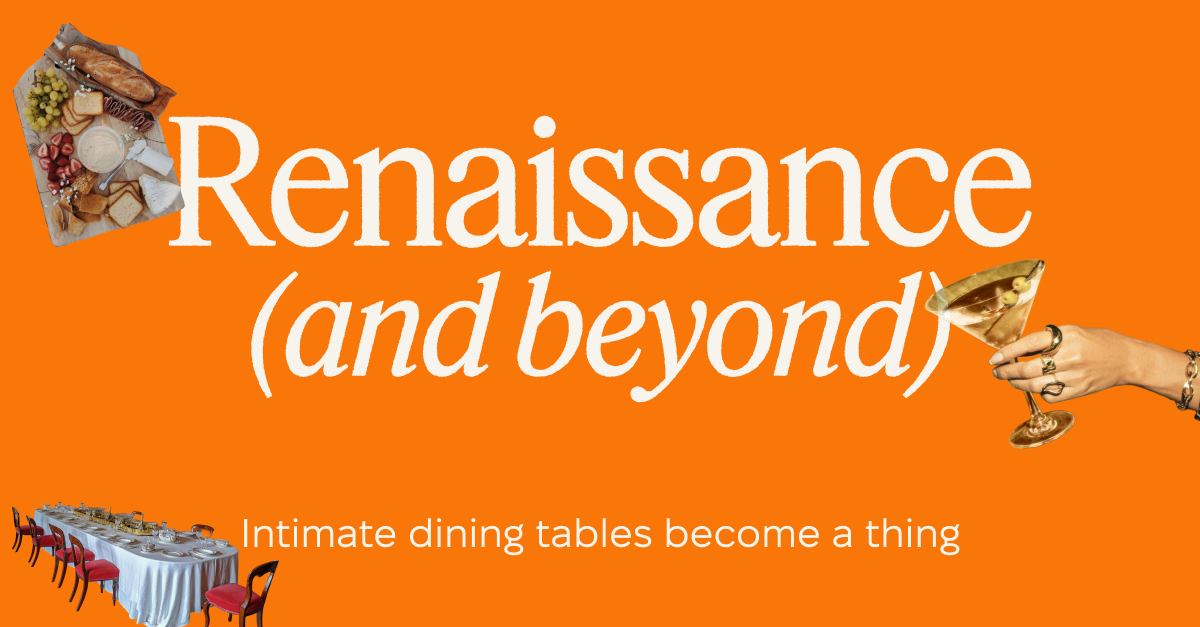
This is the period where we see the great halls give way to smaller, private dining chambers. Refectory tables become the norm for hosting big meals but within a more settled and refined lifestyle. From the 18th century onwards, the social status quo started to change and so did the table’s purpose – resulting in dining rooms as distinct, dedicated spaces for eating and connecting with one another.
The current age is ours to write
It’s time to GAF about the table.
An object that’s been with us through it all – the feasts, the politics, the art, the ordinary. It's outlasted empires, trestle halls, and everything that's tried to replace it. It’s done more for human connection than any other surface ever could.
Whether it survives the smartphone from now on is, quite literally, up to us.
And the most foolproof way to secure its rightful spot in human history?
To keep showing up… over and over again. Around a table, with other people, and in real life. Go on, give it a go this week.
Source: The Evolution of Dining Tables: A Brief History and Design Timeline