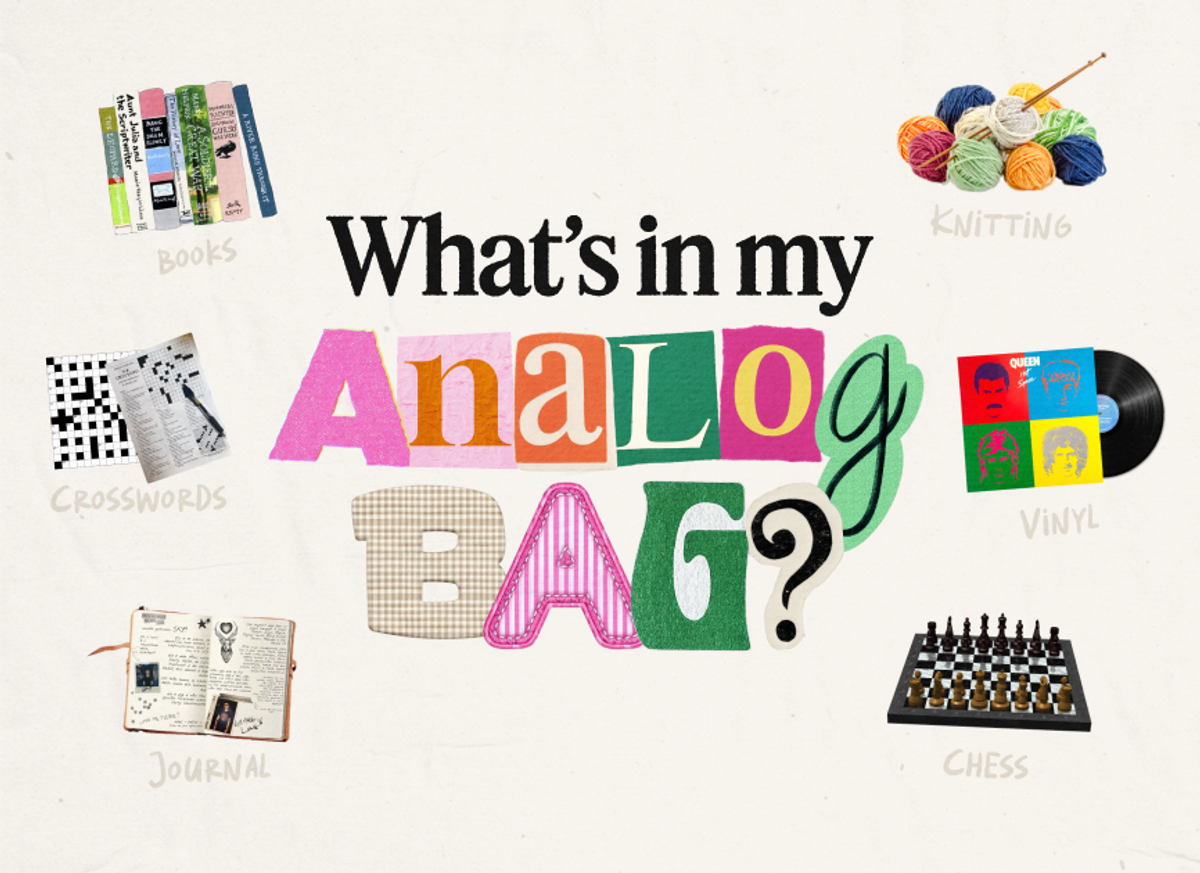
Ahh, the good old days. Sitting quietly beside a crackling fire, knitting a scarf, a classical record playing softly in the background. No texts from your ex to strategically ignore. No emails from your boss lighting up your phone at 9:00 pm. No notifications from an app trying to sell you a candle you didn't know you needed. Bliss.
It's funny, though, how we hark back to a life most of us never actually lived. Most of us here didn't grow up without technology, and yet more and more of us are trying to leave it and all its permutations behind, at least for a little while.
CNN recently gave this whole cultural shift a name: “the analog lifestyle”. This isn't just a digital detox weekend or a New Year's resolution that dies before January is out, but rather something closer to a philosophy. People are ditching their Kindles for paperbacks, putting their phones away in wall-mounted “homes” in an effort to treat it more like a landline, and popping on a record because the AI-driven algorithm just isn't doing it for them anymore.
And it's not just a niche corner of the internet cosplaying as off-grid (ahem we see you tradewives of Instagram). Craft retailers recently reported that knitting and yarn searches increased by 1200% in 2025. Vinyl, film cameras, dumbphones, and handwritten letters are all having a moment, too. According to a Talker Research survey, 63% of Gen Z say they're actively trying to disconnect from their devices for the sake of their wellbeing, more than any other generation surveyed.
It couldn't get more ironic: the most online generation in history is the one leading the charge back into the physical world.
To be clear...
The analog lifestyle isn't necessarily about going full grandmother, canceling the internet, and churning your own butter. As CNN put it, it's less a nostalgic return to "ye olden days" and more a shift toward tangible ways of getting things done and entertaining yourself, even as AI and automation creep into everything else.
The point isn't the paperback over the Kindle, specifically. It's choosing the version of a task that asks something of you, one that's slower, more hands-on, and purposefully less frictionless than the app that could do it instead.
So, does going analog actually help?
Turns out, yes, and the science backs it up.
A 2025 study published in JAMA Network Open followed nearly 400 young adults as they gave up social media for one week. The results were striking: a 16.1% reduction in anxiety symptoms, a 24.8% reduction in depression symptoms, and a 14.5% reduction in insomnia. One psychologist not involved in the study noted that it usually takes two to three months of intensive therapy to see improvements of that size. This took just seven days.
That's no small claim.
It suggests that some of what we're calling anxiety, or burnout, or just feeling "off," might be less about our brains and more about our inputs. Take away the constant noise provided by doomscrolling, the comparison cycle, the group chat that never lets up, and your brain finally gets to switch off for a moment. It's like a giant exhale for your nervous system.
But, it's not all about switching off – it can often be about the opposite. A moment away from the AI slop and the apps that do all the thinking for us, allows us a chance to actually use our brains. To allow ourselves to try and fail at something, and be present in the uncomfortable gap between starting and completing a task. To cook up new ideas, and iterate on them. To be creative. To learn.
This isn't just a feeling, either: MIT Media Lab researchers found that people who wrote essays without any AI assistance showed the strongest, most connected brain activity of any group they tested, while those leaning on ChatGPT showed the weakest. The less the tools do for you, the more your brain stays switched on.
Good thing the bots can't knit for us then, then.
But it's not really about the knitting needles
If going analog were purely about the objects (“phones bad, cassette tapes good”), we could all just throw our phones into the sea and call it a day. But, if we look closer at what people are actually doing with their newfound offline hours, a pattern emerges: knitting circles, painting nights, cookie decorating with friends, book clubs that meet in someone's actual living room. The "analog bag" trend isn't just an aesthetic – it's also an excuse to sit across from another human being with your hands busy and your phone face-down.
What people seem to be craving above all is the presence of each other.
Convenience culture has spent the last decade optimizing away the small, unplanned moments that used to fill our social lives without us trying: chatting with a neighbor, running into a friend of a friend, being bored enough at a bus stop to strike up a conversation. Every one of those moments now has an app that lets you skip it. So when we say we're "going analog," what we might actually be reaching for is friction – the slightly inconvenient, slightly uncomfortable, entirely human experience of showing up somewhere, in person, with nothing to hide behind.
The knitting circle is the point
All that is to say that the analog lifestyle isn't a rejection of technology so much as a rediscovery of company.
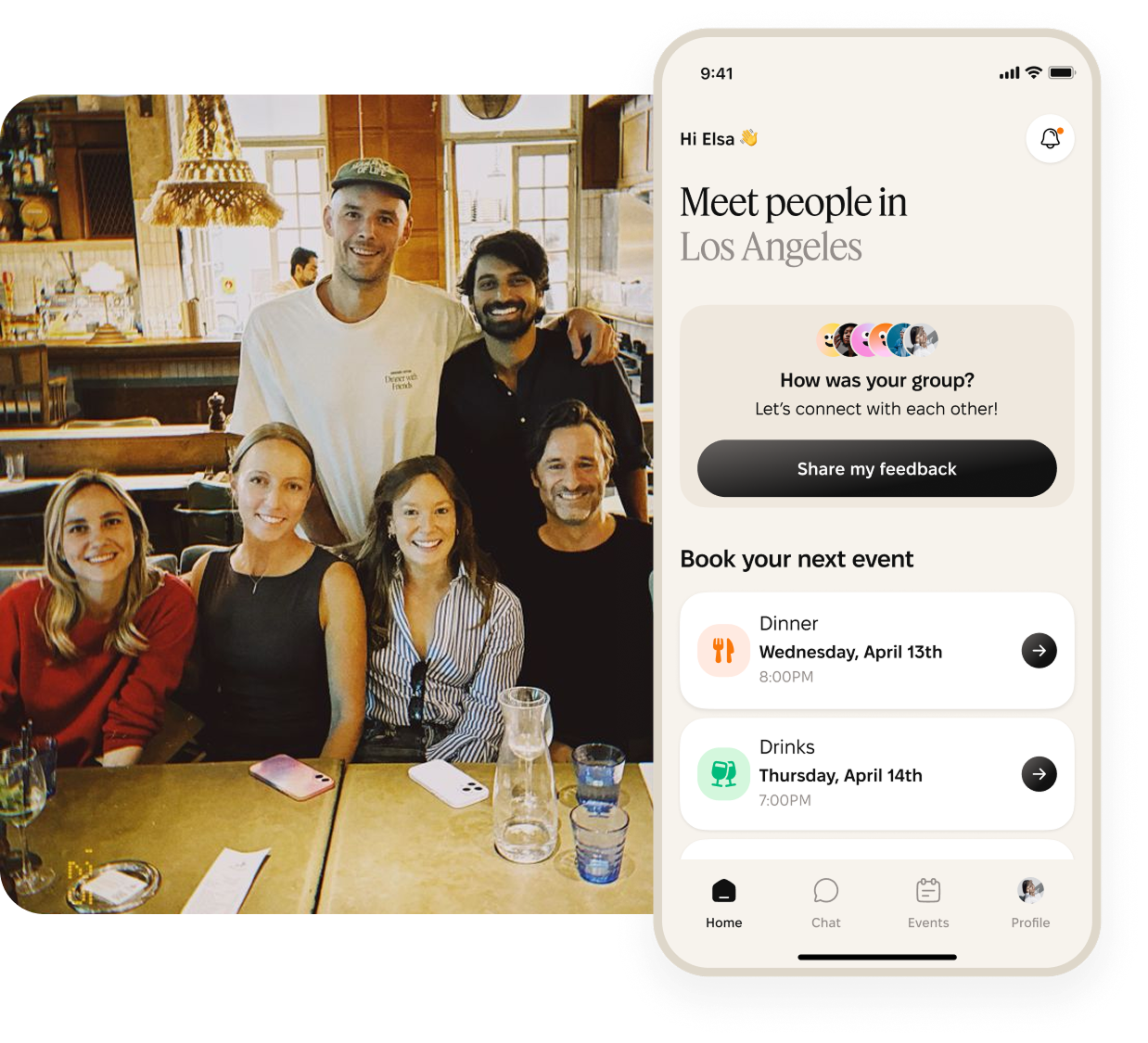
You don't need to throw your phone in a drawer for a week to feel the benefit (though, per the research, you might not hate it). You could start smaller. Trade one scrolling session for one dinner with people you haven't met yet. Pick up the hobby, and try doing it with someone else in the room. The nervous system gets to relax because the phone is gone and because you still have this opportunity for uncomplicated connection.
So light the candle, learn to knit badly, whatever gets you there. Even better if it's in good company.