A clear answer to whether Timeleft and dinners with strangers are safe: how venues and members are vetted, what happens in person, how group chats are moderated, and how to look after yourself at a first dinner.
Yes. A dinner with strangers through Timeleft is built to be safe, and most of that safety is in place before you ever sit down. Every dinner happens at a public, vetted restaurant, profiles use real names and real photos, the minimum age is 18, and you never hand over your phone number or address to book a seat. The approach leans on preventing problems rather than reacting to them, which the team sums up in one line: a report button is a last resort, not a strategy.
When four to six strangers sit down for dinner, there is an unspoken agreement. You show up, stay open, and treat the people across from you with curiosity and respect. That agreement has always been at the heart of Timeleft. This guide covers how the platform holds up its side of it, in person and in the group chat, and how to look after yourself the first time you go.
Key takeaways:
Every Timeleft dinner is at a public, vetted restaurant, and you meet a group of four to six, never one stranger alone.
Profiles use real names and photos, the minimum age is 18, and you share no personal contact details to book.
Group chats are moderated in real time; 94% are never flagged and fewer than 1% ever see a member banned.
99% of Timeleft experiences happen without a safety incident, and there is a women-only dinner option on Tuesdays in 50+ cities.
Is Timeleft safe
Timeleft is safe by design, with the safeguards front-loaded so that the risky parts of meeting someone new are handled before you arrive. Here is what that means in practice.
- Public venues only. Every dinner is held at a vetted restaurant partner, never a private home or a random hired room. You are meeting in a busy public place, with staff and other diners around.
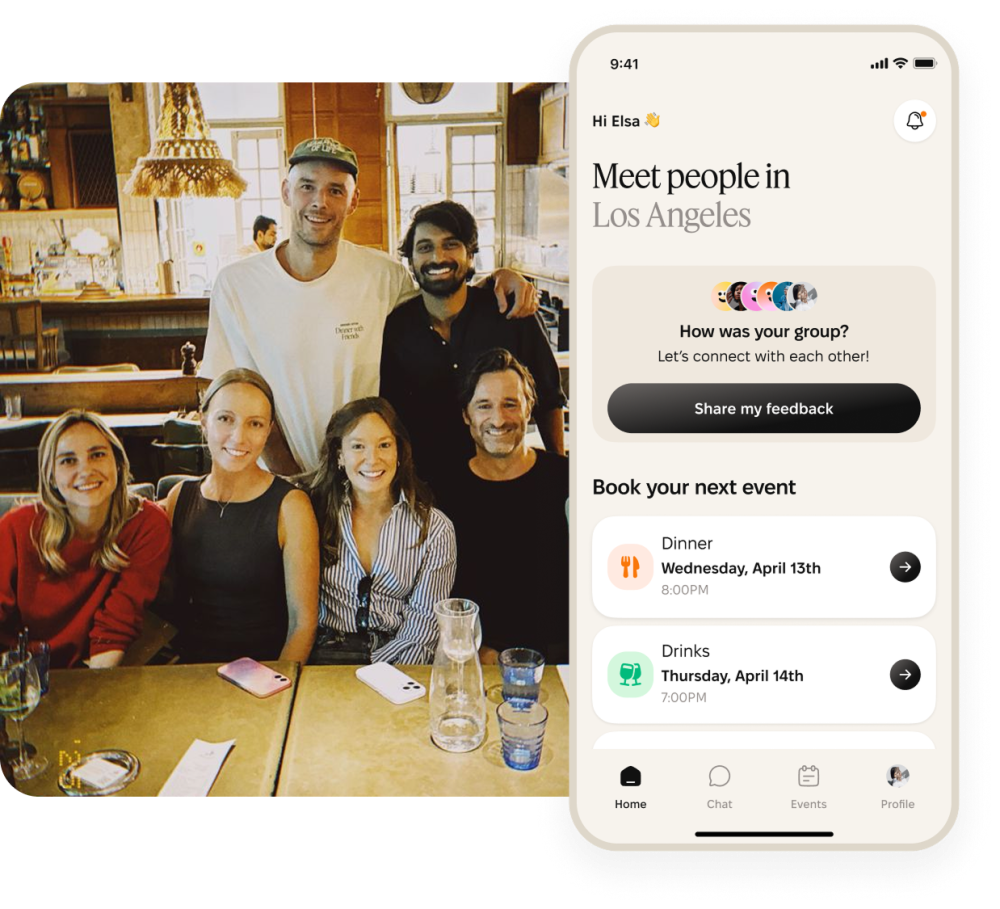
- A group, not a one-on-one. You are matched into a table of about four to six people, so you are never alone with a single stranger. The group setting is part of what makes a first meeting low-risk.
- Real names and photos. Profiles use real names and real photos, and the minimum age is 18 (21 in the UAE), so you know the people at the table are who they say they are.
- You control your information. You do not share your phone number, last name, or address to book. Nothing personal is exchanged unless you decide to swap details at the end of the night.
- Prevention first. The platform screens for harm before it happens rather than waiting for a report, and there are block and report tools built into the app if you need them.
The result of building it this way shows up in the numbers: 99% of Timeleft experiences happen without a safety incident, and 94% of group chats are never flagged for a safety concern.
Is it safe to have dinner with strangers in person
Meeting strangers for dinner is safe when a few basic conditions are met, and Timeleft is set up so they always are. The meeting is in public, you are in a group rather than alone with one person, and you arrive and leave on your own terms.
That last point matters more than it sounds. You choose how you get there and home, you are never expected to go anywhere private, and there is no pressure to stay past the meal. The evening has a natural end when the bill arrives, and an optional Last Drinks nearby only if the whole group wants it.
For anyone who would rather ease in, there are two things worth knowing. Timeleft runs women-only dinners on Tuesdays in 50+ cities, which give a first-timer a more predictable room. And you can bring a +1 to any dinner, so you do not have to walk in alone if you would rather not.
How Timeleft vets venues and members
Timeleft reduces risk on two fronts before a dinner is ever confirmed: the place and the people. Both are screened rather than left to chance.
On venues, every restaurant is a hand-selected partner chosen for being a good, safe place for a small group to talk, not a room booked at random. Because the location is always a working public restaurant, there are staff and other guests present the entire time.
On members, the platform uses real-name and real-photo profiles and an 18-plus age requirement, and it screens proactively for harmful behavior instead of relying only on after-the-fact reports. There is a zero-tolerance policy on any behavior involving the exploitation or abuse of minors, and a clear rule against continuing to pursue someone romantically after they have said no. Enforcement runs on a tiered ladder, from an educational warning to a formal warning to a permanent ban, depending on how serious the issue is. The detail behind that model is laid out in Timeleft's safety framework.
Safety tips for your first dinner with strangers
The setup already handles most of the risk, so the useful tips are the few small habits that keep you in control of your own evening. None of these are about being fearful. They are about arriving relaxed because you have nothing to second-guess.
- Tell one person where you are going. You will get the restaurant name the day before, so it takes a second to text it to a friend along with when to expect you home.
- Sort your own way home before you go. Knowing how you are getting back means you can leave whenever you like, without it becoming a thing.
- Keep your contact details yours until you want to share them. Nobody at the table has your number unless you give it to them, and there is no expectation that you will.
- It is completely fine to leave after the meal. The dinner is the commitment, not the after-drinks. Nobody keeps score.
- If something feels off, trust it. You can use the in-app report and block tools during the group chat, and you are never obliged to stay somewhere that does not feel right.
Is Timeleft legit
Timeleft is a real, established company, not a fly-by-night app. It launched its current dinner format in 2023, has 4M+ members across 200+ cities and 52 countries, and holds a 4.8-star rating on the App Store.
It is worth being straight about the reviews, because that is the honest version. Timeleft's ratings are largely positive, and where people are critical, the complaints tend to be about operational things like booking and customer support rather than safety. The concept itself, sitting down with a matched group of strangers, consistently earns high marks from the people who try it.
If you want to read unfiltered accounts, the app stores and independent review sites carry thousands of them, and the picture they paint is of a genuine service with the ordinary ups and downs of any real-world product.
How Timeleft group chats stay safe
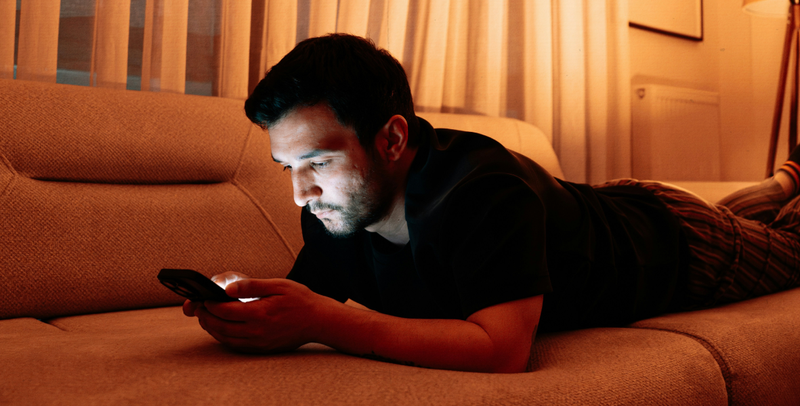
Group chats are protected by three layers of moderation that run for as long as the chat is open, before dinner and after. The chat opens 30 minutes before your event, so you can say hi, sort out who's sitting where, and spot each other on arrival. That's already happened over 16,000 times across 48 countries.
A group chat changes the equation, though. Your messages are visible to everyone who will be sitting with you in a few hours, the pace is faster, and the audience is wider. A comment that might land fine one-on-one carries more weight when five other people read it before they have met you. That is why the protections were built into the feature from day one rather than added later.
Layer one is automated filtering. Every message passes through real-time safety checks before it is delivered, so harmful content like spam, slurs, and inappropriate material is intercepted and blocked before it reaches anyone. It runs in the background within seconds. So far, over 94% of group chats have never had a single message flagged.
Layer two is one-tap reporting. Automated systems catch a lot but not everything, because tone and context matter. Any user can report a message with a single tap: long-press, tap Report, done. There are no forms to fill in, no need to explain yourself, and the person you report never finds out it was you. That lack of friction is deliberate, because reporting drops sharply when systems make people work for it.
Layer three is context-aware review. Every reported message is assessed in the full context of the conversation, not in isolation. "You are going to regret that" reads as teasing after someone admits they have never tried oysters, and as something else entirely after an argument. The surrounding conversation is what tells the difference, so it is taken into account. The team would rather review a borderline message twice than wrongly penalize someone, because false positives erode trust just as much as missed violations do.
What happens when you report someone
Reporting a message triggers a review, and the outcome depends entirely on what actually happened, not on the fact that a report was filed. The most serious violations lead to an immediate, permanent ban. Less severe issues are handled through structured warnings. And when a report does not reveal a real violation, nothing happens to the person who was reported. Fewer than 1% of group chats have ever had a member banned.
Casual conversation, even on awkward or mature topics, is not against the rules. Disagreement is not a violation, and neither is being a bit awkward. The system is not there to sanitize every exchange. It is there to catch the things that genuinely harm people, and to leave the rest alone.
Reporting, in other words, is not a weapon. It is a safety net, and using it makes the next dinner safer for people you will never meet.
Why Timeleft puts prevention before reaction
Timeleft treats a report button as a last resort, not a strategy, because a safety model that only reacts after harm has happened is already too late for the person it happened to. The whole design points the other way: screen members and venues up front, filter messages before they land, and match people into public group settings where the riskiest dynamics simply do not arise.
That is also why the safety challenges here are different from those on platforms built for infinite scroll and anonymous engagement. A Timeleft group chat is a bridge to a real dinner with a small, named group, not a feed performing for strangers. The chat opens before the meal, the meal gives it a natural place to land, and it stays open afterward so a good connection does not have to end when the bill arrives.
FAQ: is Timeleft safe
Is Timeleft safe?
Yes. Dinners happen at public, vetted restaurants, profiles use real names and photos, the minimum age is 18, and you never share personal contact details to book. Timeleft screens members and venues in advance and moderates group chats in real time, and 99% of experiences happen without a safety incident.
Is it safe to have dinner with strangers?
It is safe when the meeting is public, in a group, and on your own terms, which is how Timeleft is set up. You meet a table of four to six people at a working restaurant, you are never alone with one stranger, and you arrive and leave when you choose.
Is Timeleft safe for women?
Yes, and there is a women-only option for anyone who prefers it. Timeleft runs women-only dinners on Tuesdays in 50+ cities. Every dinner is in a public venue, no personal details are shared to book, and there is a clear rule against continuing to pursue someone after they have said no.
Can you go to a Timeleft dinner alone?
Yes, and most people do. You are meeting a matched group in a public restaurant, so arriving solo does not mean being alone with a stranger. You can also bring a +1 if you would rather not go by yourself.
Are the restaurants safe?
Every venue is a hand-selected restaurant partner, never a private home or a random hired room. Because it is always a working public restaurant, staff and other diners are present throughout.
What is the minimum age for Timeleft?
The minimum age is 18, and 21 in the UAE. Profiles use real names and real photos, so the people at the table are verified to be who they say they are.
Is my personal information shared with the group?
No. You do not share your phone number, last name, or address to book a dinner. Nothing personal is exchanged unless you choose to swap contact details at the end of the night.
How do you report someone on Timeleft?
In a group chat, long-press the message and tap Report. There are no forms and no need to explain, and the person reported never learns it was you. Every report is reviewed in the full context of the conversation before any action is taken.
Is Timeleft legit?
Yes. Timeleft is an established company that has 4M+ members across 200+ cities and 52 countries, with a 4.8-star App Store rating. Reviews are largely positive, and the criticism that exists is mostly about booking and support rather than safety.
Héctor, Head of Customer Experience at Timeleft
Got questions about group chats? Visit the Help Centre for details on how group chats work and how they are moderated.