In this article
- What is a dinner with strangers
- Why dinner with strangers is having a moment
- Who goes to a dinner with strangers
- How a dinner with strangers works, step by step
- Dinner with strangers vs other social dining formats
- How dinner with strangers is different from a dating app or a networking night
- What do you actually talk about
- But won't it be awkward
- Is a dinner with strangers safe
- What to expect at your first dinner: what to wear, who pays, and the small stuff
- Why people keep coming back
- Eating with strangers isn't a new idea
- How to make the most of your first dinner
- Where dinners with strangers happen
- FAQ: dinner with strangers
A practical guide to dinner with strangers: how modern social dining works, what actually happens at a Timeleft table, and why millions of people now use shared meals to meet new people.
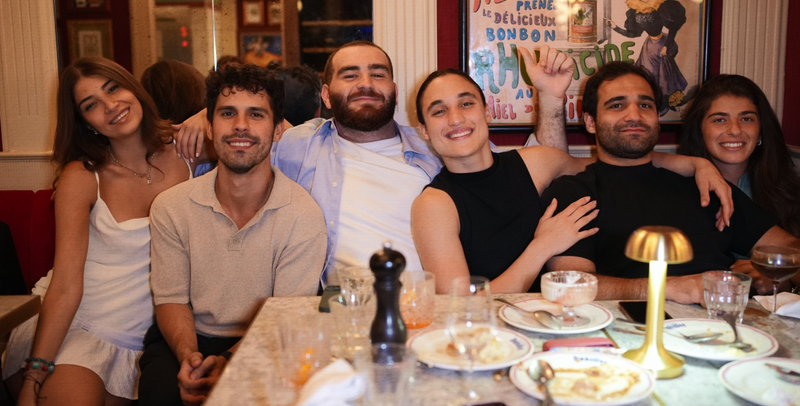
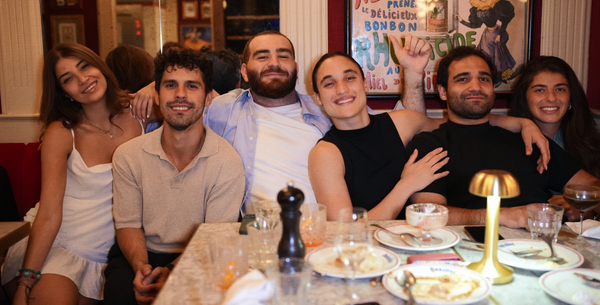
A dinner with strangers is a planned meal, usually at a local restaurant, where a small group of people who have never met share food, conversation, and an evening together. Modern versions like Timeleft's dinners with strangers match four to six guests by personality and book the restaurant for you, so all you do is show up.
It can sound unusual at first. Who shows up? What do you talk about? Is it actually fun, or just a bit awkward? This guide walks through exactly how it works, what to expect on the night, who tends to go, what it costs, and how Timeleft's community has grown to 4M+ members.
The short version
- A dinner with strangers is a planned meal at a local restaurant with a small group who have never met.
- Timeleft matches four to six guests by personality, books the restaurant, and reveals the venue before the dinner.
- Most guests come alone, and most are nervous for the first ten minutes before the table settles.
- A Timeleft membership is required; the app shows current plan prices before you pay, and food and drinks are paid at the venue.
What is a dinner with strangers
A dinner with strangers is a shared meal between people who have never met, usually four to eight guests at a local restaurant, arranged so that no one at the table already knows anyone else. It is sometimes called dining with strangers or eating with strangers, and the shape is always the same: a group is brought together for a single evening, and the meal is the reason everyone is there.
Some dinners are organized by an app, some by a host, and some by a group of friends who each agree to bring someone new. What links them is that you sit down with people whose names you did not know that morning.
The format feels modern, but the idea is old. Shared meals have long been one of the simplest ways people build relationships, from communal feasts to the supper clubs and hosted dinners that came later. What is new is the demand. More and more adults are actively looking for ways to meet people in real life rather than on a screen, and a table is a low-stakes place to do it.
Why dinner with strangers is having a moment
Interest in dinner with strangers has grown because the ordinary ways adults used to meet people have thinned out. Severe loneliness has tripled since the pandemic. The US Surgeon General issued an advisory in 2023 comparing the health impact of chronic loneliness to smoking 15 cigarettes a day, and the WHO Commission on Social Connection now treats social disconnection as a global public health priority.
There's also a reason a shared meal, rather than any old event, tends to work. Food seems to do some of the bonding on its own. As Jennifer Verdolin, PhD, writes in Psychology Today:
"Research shows that after just a single food sharing event, the levels of circulating oxytocin are higher and promote social bonding and higher levels of cooperation in chimpanzees, bonobos, and humans. That means being generous with others you don't know very well can expand your community of support and solidifies cooperation."
That is the gap a structured dinner fills. Timeleft is the IRL connections app, bringing strangers together over weekly dinners, drinks, coffees, and walks in 200+ cities across 52 countries. Founded in 2020, it has grown to 4M+ members.
Who goes to a dinner with strangers
Most people at a dinner with strangers are adults between 25 and 45 who have plenty going on but a social circle that has quietly narrowed, though the range runs well past that on both sides. Some tables skew younger, some older, and a lot of guests are in their 40s and beyond, including people whose kids have left home and whose friends have settled into family routines.
They are rarely people with nothing else in their lives. More often they moved to a new city, came out of a long relationship, started working from home, or simply noticed that the friends they used to see every week are harder to pin down now. The situation changed. The wish to sit across from interesting people did not.
A few things tend to be true of who ends up at the table:
- Most people come alone. Showing up solo is the norm, not the exception, so no one is walking into someone else's friend group. If you would rather not arrive by yourself, you can bring a +1.
- It skews toward people who want structure. A set day, a set group, and a booked venue suit people with unpredictable schedules or a low tolerance for organizing plans that fall apart.
- There is a women-only option. Timeleft runs women-only dinners in 50+ cities for anyone who prefers that setting for a first time out.
The point is not that everyone at the table is the same. It is closer to the opposite. Each group brings together a mix of ages, jobs, and backgrounds, which is usually what keeps the conversation from going flat.
How a dinner with strangers works, step by step
At Timeleft, a dinner with strangers works in six steps: you take a short personality quiz, get matched into a group of four to six, and find out the restaurant before the dinner. On the night you show up, eat, and afterward decide who you want to stay in touch with. Here is what each step looks like.
Book your dinner
It starts with choosing a Wednesday dinner in your city. No profiles, no swiping. You answer a few short questions, and Timeleft's personality-matching algorithm places you in a group of four to six, then picks a partner restaurant suited to the group's vibe, location, and budget. You can book a seat up to 13 hours before the dinner starts, so a last-minute Wednesday plan is genuinely possible.
Why a group of four to six? It is small enough to hear everyone and big enough that the conversation never rests on one person.
Get your table assignment
The app reveals your restaurant before the dinner and shows the event time and arrival details. Timeleft works with local restaurant partners chosen because they are good for small-group conversation, not because they are the loudest room in town.
Meet your group
Most dinners bring together four to six guests who are meeting for the first time. The first few minutes look about the same everywhere. People introduce themselves, order a drink, and start with the easy opening questions, where you're from, what brought you here tonight, how you heard about this. Everyone signed up for the same evening, so the context is already shared. No one is breaking into an existing group.
Let the conversation build
To help things along, many tables lean on in-app icebreakers, light open-ended prompts that make it easier to move past small talk toward travel, unexpected life stories, or the odd job nobody expected. They are there if you want them and easy to ignore if you don't. Some tables use them all night, others never open them once.
The evening unfolds
Most dinners run about three hours, roughly a relaxed restaurant meal. Food arrives, stories get going, the early nervousness fades, and the table starts to feel less like four to six strangers and more like a group that has been out before. In some cities there is an optional Last Drinks nearby if the group wants to keep going. Others wrap at the door. Both are fine.
Decide who to stay in touch with
At the end of the night, guests often swap numbers or connect in the app, but there is no expectation that everyone becomes close. Sometimes the outcome is a good evening and a few new perspectives. Other times people make plans to meet again. Beyond dinners, Timeleft also runs drinks, coffees, and group walks, so there are other ways to show up again if the format clicks.
Dinner with strangers vs other social dining formats
People often lump dinner with strangers in with supper clubs, dinner parties, and social dining apps. They overlap, but each has a distinct shape. The clearest differences are who picks the table, how people are matched, and what the evening is built to produce.
| Format | Group size | Who picks the table | Typical venue | Booking model | How you're matched |
|---|---|---|---|---|---|
| Timeleft dinner | Four to six guests | Algorithm + venue partner | Partner restaurant | Weekly, city-wide | Personality-matched |
| Classic supper club | 8-20 guests | Host | Private home or pop-up | Invite or mailing list | Host's choice |
| DIY dinner party with strangers | 4-12 | You or a friend | Someone's home | Friend-of-a-friend invites | Loose mutuals |
| Restaurant group-seating app | Varies | Algorithm, first-come | Partner restaurant | On-demand | Location + availability |
| Casual food meetup | 5-30 | Organizer | Public restaurant or park | Event-based | Self-selected by interest |
A supper club is mostly about the food and the host, and it is worth reading up on what a supper club is if that is the format you are picturing. A DIY dinner party depends on your own social circle. A Timeleft dinner is built to turn four to six strangers into people who actually want to see each other again, with the planning taken off your plate.
How dinner with strangers is different from a dating app or a networking night
A dinner with strangers is not a dating app and not a networking event, even though it can look a little like both from the outside. The difference is the order of things. You meet people in real life first, with no profiles and no agenda, and only afterward decide what, if anything, you want the connection to be.
On a dating app you vet first and meet later. You read a profile, decide, and then arrange to meet. A dinner reverses that. There is no profile to swipe through and no single "swipe right" moment, so the pressure of picking someone in advance never shows up. You sit down, talk, and see who you click with. For people who specifically want a romantic angle, Timeleft runs Singles Events as a variant, but a regular dinner carries none of that expectation.
It is not a networking night either. There are no name tags, no elevator pitches, and no reason to lead with what you do for work. It is a meal. The conversations that stick tend to be the ones that have nothing to do with anyone's job.
“Honestly, it gives me hope that we can channel those pesky algorithms towards a culture of connection rather than the meaningless swiping of dating apps.”
What do you actually talk about
You rarely have to plan what to talk about, because the setup does most of the work. Everyone arrived for the same reason, so the opening questions are already on the table: where you're from, what made you come, how you found out about it. That shared starting point is why the first ten minutes usually move faster than people expect.
From there, tables drift where they want. The in-app icebreakers are there for the quiet stretches, but plenty of groups never touch them. What comes up is often the stuff you would not get to with people who already know you: a strange first job, a country someone just moved back from, an opinion nobody at your usual table would have.
There is a real advantage hiding in the fact that no one knows your history. You are not the version of yourself your existing friends expect. Research on weak ties, the acquaintances just outside our close circle, suggests these looser connections are surprisingly good for us, partly because talking to someone with no fixed idea of who you are leaves room to be a little different. A dinner with strangers is basically a room full of that.
But won't it be awkward
Even curious guests wonder whether a dinner with strangers will feel awkward. Here is how the most common worries tend to play out.
Q: What if I have nothing to say?
The in-app icebreakers exist for exactly this, and they usually keep the dreaded silences from ever forming. Most guests say the first ten minutes are the hardest, and after that the table carries itself.
Q: What if I don't click with anyone at my table?
Timeleft matches groups by personality and pulls from a different slice of the city each week, so if one table doesn't click, the next often does. A lot of guests say the real surprise is enjoying someone they would never have crossed paths with otherwise.
Q: What if I'm the only one who's nervous?
You won't be. Almost everyone is a little anxious at the start, and the shared nerves are part of what makes the group feel like a group so quickly.
Q: Is it safe?
Yes, with the caveats any first meeting deserves. The next section covers exactly how that works.
Is a dinner with strangers safe
A dinner with strangers is generally safe when it runs through a platform with real safety infrastructure behind it. The meal happens in a public, vetted restaurant, you share no personal contact details unless you decide to, and a serious app screens and verifies its members before they ever sit down.
99%+
of Timeleft experiences happen without any safety incident.
Vetted
Every venue is a public restaurant partner, never a private address.
Never again
Report someone and you are never placed with them again, automatically.
With Timeleft, that means a few concrete things. Every venue is a vetted restaurant partner, not a private address. Profiles use real names and real photos, the minimum age is 18 (21 in the UAE), and there are block and report tools built into the app. The approach leans on prevention rather than cleanup, which the company sums up in its own words: "a report button is a last resort, not a strategy." In practice, 94% of group chats are never flagged for a safety concern, and 99% of experiences happen without an incident.
For anyone who would rather ease in, the women-only dinners give a first-timer a more predictable room. And because you never hand over your number or address to book, you stay in control of what you share and when.
What to expect at your first dinner: what to wear, who pays, and the small stuff
Most first-timer questions are practical, not existential. Here are straight answers to the ones that come up most.
What should you wear
Wear what you would wear to a nice-but-casual restaurant. Nobody is dressing up, and nobody is turning up in gym kit. If you would feel comfortable in it at a weeknight dinner with people you like, it works here.
Who pays, and how much
A Timeleft membership covers matching, restaurant booking, and icebreakers; the app shows current plan prices before you pay. Your food and drinks at the venue are separate and paid there on the night, the same as any meal out, and the table usually splits anything shared. Because the subscription covers as many events as you want in a month, the cost per dinner drops the more you go.
Do you have to drink
No. Drinks are optional, and plenty of guests stick to water or a soft drink. The evening is built around the conversation, not the bar.
Can you go alone, or bring someone
Almost everyone comes alone, so arriving solo is completely normal. If you would rather not, you can bring a +1, whether that is a Timeleft friend you met at an earlier dinner or someone from your own circle.
What if you're running late
Arriving a few minutes late is fine, and some guests say it actually takes the edge off, since the table is already talking by the time you sit down. If you are going to be very late, a quick message to the group is the courteous move.
What if you need to cancel
Timeleft does not charge a penalty for missing a dinner. If you cannot attend, cancel your dinner booking in the app so the group and restaurant have notice.
Why people keep coming back
For most guests, a dinner with strangers is not a one-off.
Part of it is the mix. With 4M+ members across 200+ cities and 52 countries, and 96% of diners reporting they felt compatible with their group, the tables tend to combine people who would never otherwise share a meal. People start as strangers, become friends, and now and then find something more.
“I love the diversity of people I would never meet in my daily life. Met everything from firework experts to astrophysicists so far.”
There is also a reason return visits matter more than a single night. The research on friendship is fairly clear. Hall's 2018 study found it takes roughly 50 hours together to move from acquaintance to casual friend, about 90 to reach friend, and around 200 for a close one. That is a lot of evenings, but every one of them starts with a first. Show up a few times and the hours add up faster than you would guess.
Eating with strangers isn't a new idea
Sitting down to eat with people you don't know is one of the oldest social habits there is. Long before any app, communal tables, shared feasts, and open-door supper clubs did the same job: they gave people a reason to be in a room together and let the meal carry the rest. If you want the longer version of that story, Timeleft's take on the history of the table is a good read.
What the modern version changes is the coordination. The instinct to gather around food never went away. The organizing, the group chat, the venue nobody could agree on, is the part that got heavier, and the part a structured dinner quietly removes.
How to make the most of your first dinner
A few habits make the first evening, or the tenth, easier. Most of them come down to lowering the stakes for yourself before you walk in.
- Treat the venue reveal as a feature, not a test. You find out the restaurant shortly before the dinner.
- Ask the second question, not just the first. "What brought you here" gets a polite answer. "What made you actually book it this week" gets a real one.
- Let the quiet person in. The table feels best when everyone is talking, and steering one question toward whoever has said the least does more for the night than any icebreaker.
- Skip the work talk for a while. The conversations people remember are rarely about anyone's job, and dropping it early tends to make the table warmer.
- Say yes to the Last Drinks if your city offers it. A lot of the connections that turn into plans happen in the hour after dinner, not during it.
Those habits, repeated, are how you get from "I went to a dinner with strangers once" to "these are people I see on purpose now."
Where dinners with strangers happen
Timeleft dinners run all over the world, so you rarely have to travel far to try one. Popular cities include New York, Paris, Los Angeles, Mexico City, London, and Taipei, with tables in major metros and plenty of smaller ones too.
To find a dinner near you, browse all the cities where Timeleft gathers. If you want more ways to meet people locally, the guide to making friends as an adult and the city-specific guide to making friends in New York are good next reads, and you can compare the best apps to make friends if you are still weighing your options.
Take the personality quiz and see which formats are available in your city.
FAQ: dinner with strangers
What is a dinner with strangers?
A dinner with strangers is a planned meal where a small group of people who have never met, usually four to eight guests, share an evening at a local restaurant. Modern formats like Timeleft use personality matching to build a group of four to six and handle the restaurant booking, so guests just show up and eat.
What is the app where you meet strangers for dinner?
Timeleft is the app most people mean. It matches four to six personality-compatible strangers for a weekly dinner at a local restaurant, in 200+ cities across 52 countries, with no swiping and no profiles to browse. You answer a few questions, and it handles the group and the venue.
How many people are at a dinner with strangers?
Most tables seat four to six guests who have never met. Timeleft uses four to six because it is small enough to hear everyone and big enough to keep the conversation going. Other formats vary: supper clubs often run 8 to 20 people, and casual food meetups can be much larger.
Who goes to dinners with strangers?
Most guests are adults between 25 and 45, with a strong showing from people in their 40s and older, including empty nesters and recent movers. They tend to be people whose social circle has narrowed rather than people with no social life at all.
Is a dinner with strangers safe?
Yes, when it runs through a platform with proper safeguards. Timeleft dinners happen in public, vetted restaurants, profiles use real names and photos, the minimum age is 18, and no personal contact details are shared unless you choose to. A women-only option is available for a lower-key first time.
How much does a dinner with strangers cost?
A Timeleft membership covers matching and restaurant booking; the app shows current plan prices before you pay. Your food and drinks at the restaurant are paid separately on the night, like any meal out. Since the subscription covers as many events as you want in a month, the per-dinner cost drops the more you go.
What do you wear to a dinner with strangers?
Wear what you would wear to a nice-but-casual restaurant. Guests dress comfortably rather than formally, and there is no dress code to worry about.
Can you go to a dinner with strangers alone?
Yes, and most people do. Showing up solo is the norm, so you are not walking into an existing group. You can also bring a +1 if you would rather not go by yourself.
What's the difference between a supper club and a dinner with strangers?
A supper club is usually hosted by one chef or organizer, held in a home or pop-up, and built around the food. A dinner with strangers in the Timeleft sense happens at a public restaurant, matches guests by personality, and is built around the conversation, with the meal as the backdrop.
How is it different from a dating app?
A dating app has you vet a profile and then decide whether to meet. A dinner with strangers reverses that: you meet in person first, with no profiles and no swiping, and only afterward decide what the connection is. Timeleft runs separate Singles Events for anyone who specifically wants a romantic angle.
What if the group is quiet?
The icebreakers help, and because each week pulls from a different mix of people, the next dinner usually feels different.
Can introverts do a dinner with strangers?
Yes, and many guests describe themselves as introverts. A set group of four to six, prompts on standby, and a clear end time tend to suit quieter personalities better than an open, free-floating event where the roles are unclear.