TL;DR: A supper club is a ticketed or hosted dinner that sits between a restaurant meal and a private dinner party. You sit at shared tables, eat a fixed menu, and share the evening with people you didn't choose, while a host (or an app) handles the logistics. The format started with Prohibition-era roadhouses and mid-century Wisconsin supper clubs, and you're seeing a genuine renaissance in 2026 as social dining shifts toward experience over transaction. You can find one through underground networks, private clubs, pop-ups, or app-organized formats like Timeleft, which removes the coordination entirely.
The supper club is having a renaissance, and it has almost nothing to do with the food. You've seen them surface in your feed, on event listings, in a friend's story from a table full of people she'd never met before. But pinning down what "supper club" means is slippery, because you're looking at a spectrum, not a single thing. It runs from Prohibition-era speakeasies to Wisconsin fish fries to app-organized dinners. The common thread isn't the food or the host. It's that nothing about the evening was yours to choose, and that's the whole point. This guide defines the format, walks through what an evening actually looks like, and helps you decide whether it's for you.
In this article:
- What you're actually signing up for
- How supper clubs became a social staple
- Beyond the home: diverse supper club styles
- Why the supper club is making a comeback
- Where to find authentic supper clubs
- What to expect at your first supper club
- Is a supper club right for you?
- FAQs
- Key terms glossary
What you're actually signing up for
Before you decide whether a supper club is for you, it helps to know what the format actually is. Here's what stays constant across every version you'll encounter.
The core format, stripped down
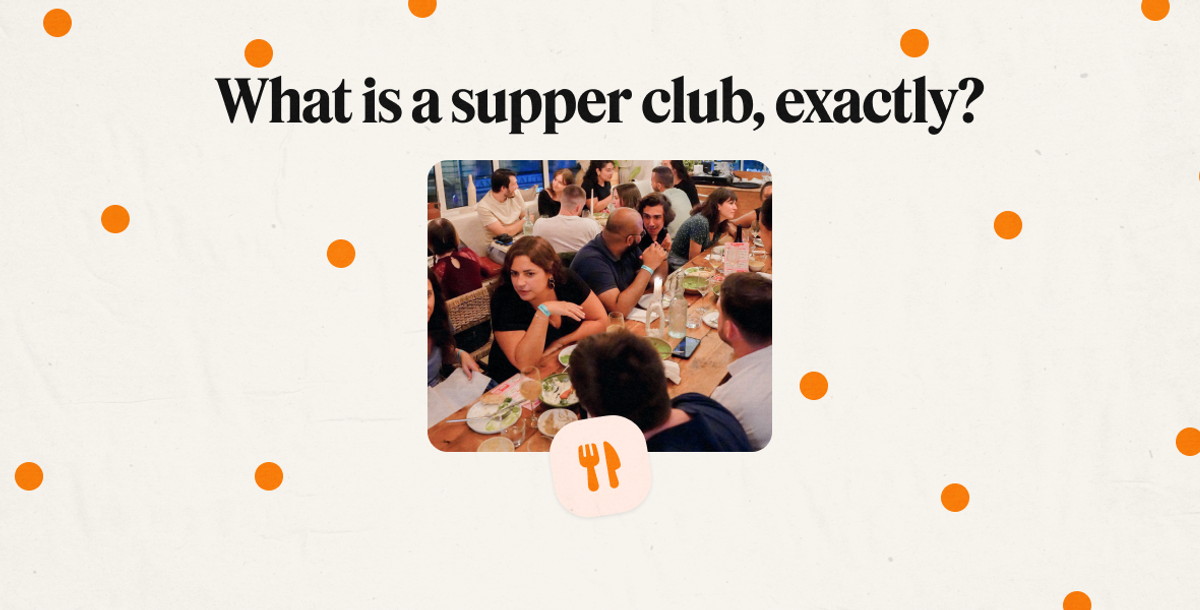
Strip away the era and the venue and you get a consistent core, a dining format that sits somewhere between a restaurant meal and a private dinner party, as Timeleft's guide to the best supper clubs in NYC puts it. The term works as an umbrella for any ticketed dinner party outside the traditional restaurant format, held anywhere from living rooms to rented event spaces, per RUSSH's coverage of the trend.
You'll find four ingredients in nearly every version:
- You sit at shared tables with strangers. Tables are communal and the atmosphere is deliberately intimate, which creates a natural opening for conversation, according to The Takeout's supper club primer.
- You eat what's served. Most supper clubs plan the menu in advance, and substitutions are rare.
- Someone else handles logistics. A host books, plans, and seats. You just arrive.
- The vibe feels familial. Hosts and chefs often engage with you personally, describing the origins of each dish or sharing anecdotes that add depth to the meal.
Beyond the menu: the night unfolds
A proper supper club runs on a rhythm, not a reservation slot. It often opens with something small and welcoming, a relish tray, an amuse-bouche, a first pour, a moment to settle in, as a signal that the evening is not to be rushed, per Maxwell Social's take on the trend. Many hosts add a welcome drink on arrival so you can mingle before sitting down. The structure is loose, but it's there, and it's doing social work the whole time.
Why you can't curate your way to surprise
Here's the tension at the heart of the supper club 2026 moment. Most social tools respond to boredom with more curation. Better filters, smarter recommendations, a tighter loop of your own taste. The loop gets smaller, not wider. The supper club does the opposite. In a world of endless online reviews and algorithms, off-the-grid dining feels refreshing, like stumbling on a well-kept secret, as Wilmax notes about underground pop-ups. You're not looking for someone to pick the perfect room for you. You want a room you didn't pick at all.
How supper clubs became a social staple
The supper club you'll encounter in 2026 has roots that stretch back a century. Understanding where the format came from helps explain why it's resurfacing now.
From speakeasies to supper clubs
The format's roots are illicit. In the 1920s, as mob-run alcohol distribution moved through speakeasies, transporters needed roadhouses along their routes, and Wisconsin, Michigan, and Minnesota hosted the first ones before the format spread to New York, according to Tasting Table's supper club history. Food, drink, music, and a reason to linger became the format's DNA early.
When Prohibition lifted in 1933, Lawrence Frank of Milwaukee is widely credited with opening the first supper club in Beverly Hills, offering the same components as the roadhouses but on a more elaborate scale, per The Guide Magazine's history and TableAgent's account of the format.
Underground supper clubs explained
Across the Atlantic, UK supper clubs adopted the cabaret concept of 1930s America, bringing underground jazz club ambience to diners who wanted dinner without the formality of a ball, per Sullivan's Supper Club's history. Today's secret supper clubs run on the same fuel. The cook decides the menu, usually a single fixed progression of courses, and guests sign up knowing they're along for the ride, as Hidden Bites reports on the scene.
The new era of communal dining
What changed is scale. Supper clubs stopped being a nostalgia act and became infrastructure for people whose own social circles have stopped surprising them. The social currency in dining has shifted from booking the hottest table to being part of the right community.
Beyond the home: diverse supper club styles
Not all supper clubs work the same way. The term covers a spectrum that runs from traditional Midwest establishments to app-organized dinners, and knowing the differences helps you pick the door that matches your tolerance for mystery. Here's the spectrum at a glance:
| Model | Venue | Access | Cost | Vibe |
|---|---|---|---|---|
| Traditional (Midwest) | Established restaurant | Walk in or book | Per meal | Familial, generational |
| Underground | Rooftops, galleries, private homes, warehouses | Invite or password | Ticketed, varies | Secretive, chef-led |
| Private / members' club | Dedicated club space | Membership | Dues plus dining | Exclusive, seasonal |
| Pop-up | Temporary, unconventional spaces | Ticketed | Per event | One-night-only energy |
| App-organized | Partner restaurants | Subscription | $19.99/mo plus your meal | Spontaneous, repeatable |
The invitation-only tier: underground and members-only rooms
Underground clubs trade on concealment. You often won't know the location, chef, or menu until the last minute, and events surface on rooftops, in art galleries, private homes, or abandoned warehouses. Members-only dining runs on the same desire for something singular, from secret menu items to hidden speakeasies, as New Jersey Monthly documents. The barrier is the point, but it's also the limitation. You need to know someone who knows someone, or commit to membership dues before you've tasted a single course.
The rise of pop-up supper clubs
Pop-ups are the most permissive door in. They're temporary, one-time-only events in unexpected places, from food tastings to immersive performances in galleries and warehouses. You buy a ticket, you show up, and the room exists for one night only.
Digital tools for analog evenings
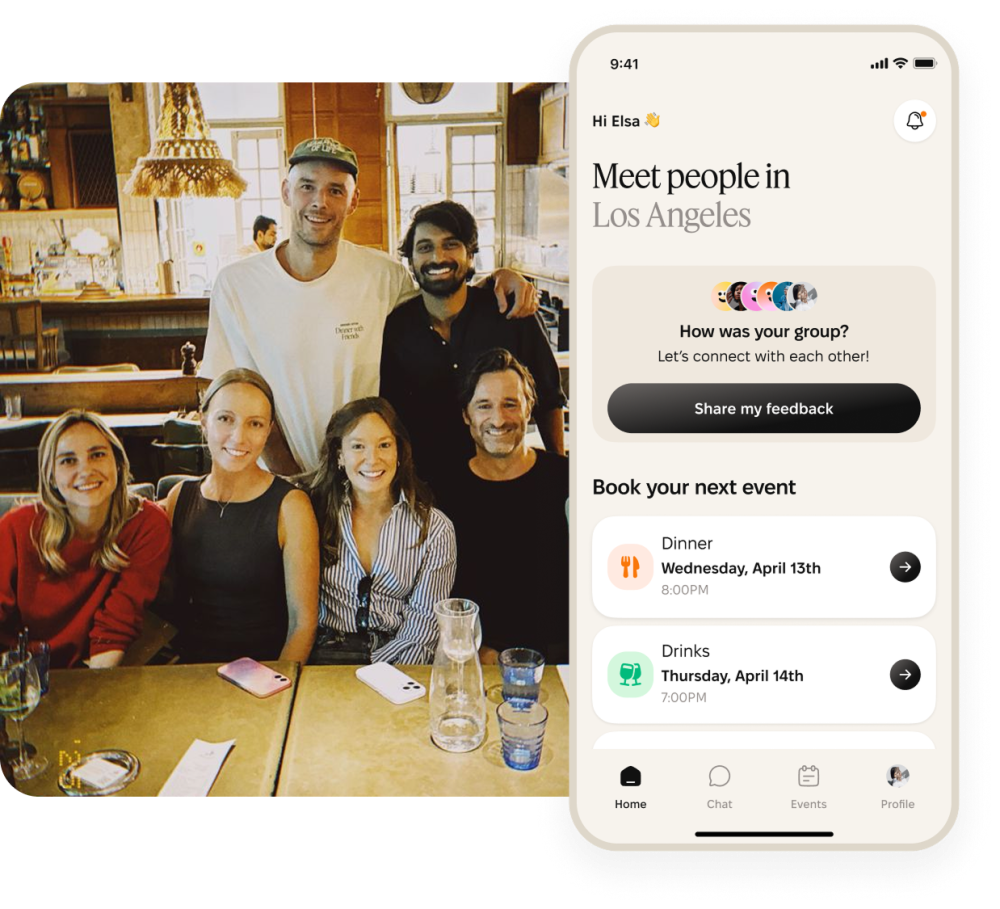
The newest model moves the host's work into an app. Timeleft organizes weekly dinners, drinks, coffees, and runs for small groups of four to six people who haven't met before, handling the venue, the booking, the group, and the logistics. You take a short personality quiz, pick a date, choose a format, and find out the venue the day before. You can book up to 13 hours before an event starts, and the range of event types runs from dinner to morning runs.
Why the supper club is making a comeback
The format isn't new, but the timing is. Three forces are converging to make the supper club relevant again in 2026, and the data backs the shift.
The shift to experience-led social dining
The numbers back the vibe. Experiential dining grew 46% year-on-year in 2025, with chef's tables, tasting menus, and themed nights leading the increase, according to OpenTable's 2026 Diner Trends report. Recent industry reporting shows that dining out increasingly feels like a special occasion rather than a habit, with communal counter and bar seating on the rise.
Supper clubs vs restaurants: the difference
At a restaurant, you choose the table, set the time, pick your own dishes, and leave when you're ready. Social dining flips the model. Communal seating encourages interaction among strangers, hosts engage you personally with the story behind each dish, and the line between kitchen and dining room softens. Gen Z increasingly expects exactly this blend of storytelling, ambiance, and immersion from a meal, per Entegra's Gen Z food trends report.
Why unexpected encounters still matter
The U.S. Surgeon General declared loneliness an epidemic in 2023, framing social disconnection as a public health risk. But most people booking a supper club aren't in crisis. Your life is fine, and that's the problem. Everything is optimized, so nothing is unexpected. Chemistry doesn't respond to scheduling, and Timeleft's own writing on the subject makes that case better than most.
Where to find authentic supper clubs
Finding a supper club depends on how much mystery you're willing to tolerate and whether you'd rather do the hunting yourself or let software handle it. Here's where to start.
Finding local underground supper clubs
A search engine is still a reasonable first move. Pair your city name with whatever format you're after and, if the first round of results doesn't turn much up, try slightly different terms before giving up, as Succeed Socially's guide to finding local events points out. Facebook Events, Meetup, Eventbrite, and local event aggregators all list supper club-style gatherings, and each platform serves a different purpose.
Top apps for booking supper clubs
If you'd rather skip the scavenger hunt, app-organized formats do the finding for you. Timeleft runs in 200+ cities across 52 countries and has 4M+ members, with roughly 6,500 dinners hosted each week and 96% of diners reporting compatibility with their group. Timeleft has around 150,000 monthly active users across its markets.
The alternatives solve different problems. Meetup runs on organizer-led, interest-based groups with no matching at all, which means you're shopping for events rather than getting matched to people, while Timeleft handles both the group and the venue in one flow. Bumble BFF takes you through swipe, match, chat, then maybe a coffee, and Timeleft seats you at a real table on a flat $19.99/month with no per-connection upsells. Dixner Club operates in France with ambassador-led dinners across a range of formats, and Timeleft runs the same promise across 200+ cities without the human-overhead model, so you're not locked to one market or paying per event.
Decoding supper club event listings
Event listings rarely say "supper club" outright. The signals are usually there if you look. A fixed or set menu, communal seating, a ticket price that excludes drinks, and a venue revealed late or described vaguely all point in the right direction. If the listing emphasizes the chef's story and a single seating time, you're in supper club territory.
The underground network of supper clubs
The word-of-mouth circuit is the hardest tier to access, where you need an introduction or a password. The honest shortcut is to start somewhere accessible and let the network find you, because regulars at pop-ups and app-organized dinners tend to know which unlisted rooms are worth chasing. One dinner with the right table is often how the next, harder-to-find door opens.
What to expect at your first supper club
Most of the anxiety around a first supper club happens before you leave the house. Here's what actually matters and what you can ignore.
Things to check before you leave the house
Arrive a few minutes early. Seating often starts at a fixed time, and showing up early lets you settle in before the first course.
Be punctual. When you arrive late, the entire rhythm of the evening is thrown off.
Flag dietary restrictions at booking. Fixed menus mean limited substitutions, and app-organized formats prompt you to select dietary needs each time you book, though specific options can't be guaranteed at every venue.
Honor your RSVP. Your booking holds a seat for you at a real table. If you don't cancel in time or simply don't show, a no-show penalty of 35% of the monthly subscription applies, because the other people at your table showed up expecting a full group, and so did the venue.
Why the first quarter hour matters
The opening minutes are the awkward part, and that's normal. Hosts know it, which is why you'll get a welcome drink and a small first course upfront. In app-organized formats, in-app conversation starters do the same job. Most people feel it at the start. Most people stop feeling it before the first course is done.
What unfolds at the table
Expect the conversation to start polite and loosen fast. Many hosts will tell you the social aspect is as important as the menu. The sign-up quiz includes questions like what field you work in, whether you're introverted or extroverted, how strongly you value family, and relationship status.
The matching tends to show up at the table.
"I really appreciated the selection of participants at the table: each of us had common points with the others that made conversation easy and enjoyable." - Enza on Trustpilot
What happens when the food arrives
Dig in rather than waiting for everyone to be served. The meal is the excuse, not the event, and you'll measure a good night by whether something happened that you couldn't have written in advance. In select cities, Timeleft offers an optional Last Drinks feature, an after-dinner bar stop where the group can continue the evening if they choose, with no pressure either way.
Is a supper club right for you?
The format works beautifully for some people and feels like work for others. Here's how to know which camp you're in before you book.
Conditions for a genuine supper club
You'll likely love the format if you:
- Are adventurous and open to being surprised
- Can accept a fixed menu without substitutions
- Treat conversation with strangers as the point, not the price
- Can commit to a time and actually show up
That last point matters more than people expect. A shared table only works when everyone who booked a seat is in it, so reliability is the format's one non-negotiable.
Who should avoid the supper club
Skip it, for now, if you need to know who you're seated with before you commit. If communal tables sound exhausting rather than interesting, that's also a fair read of yourself. You can choose a restaurant or a dinner party with friends instead, and that's legitimate, not a failure. The supper club isn't a fix for anything. It's an input: a recurring way to put yourself in a room your own taste never would have assembled.
If the unplanned part is the appeal, the lowest-friction door in is the app-organized end of the spectrum. Timeleft runs on a $19.99/month subscription in the US, food and drinks paid separately at the venue, and once subscribed you can attend as many events as you like, in your own city or in another city when you travel. You can also bring a guest if you'd rather not go solo the first time.
Take the personality quiz and start your subscription.
FAQs
How much does a supper club cost?
Underground supper clubs can run anywhere from $40 to $150 or more per seat depending on the ambition of the cook, per Hidden Bites, with drinks often extra. App-organized formats like Timeleft charge a $19.99/month subscription (US) covering unlimited events, with food and drinks paid separately at the venue.
Do I have to go alone to a supper club?
No. Most attendees arrive solo, but many formats let you bring someone. Going alone is common enough that nobody will think twice.
Are supper clubs the same as dinner parties?
No. Someone you know hosts a dinner party in their home with a guest list built from existing relationships. A supper club is hosted by a stranger or an organizer, in a public or semi-public venue, with a table you didn't choose.
What should I wear to a supper club?
Smart casual works almost everywhere. Underground and pop-up events sometimes list a dress code on the ticket, and when in doubt, match what you'd wear to a good neighborhood restaurant.
How do I know if a supper club is legitimate?
For underground and pop-up events, the clearest signal is whether the organizer has a verifiable history: past events you can find, attendees who've reviewed them, or a named host with a public presence. Established app-organized platforms add screening and reporting infrastructure, background systems for flagging issues and handling reports from attendees, and Timeleft reports that 99% of experiences occur without a safety incident.
Key terms glossary
Supper club: A hosted, often ticketed dinner outside the standard restaurant format, defined by shared tables, a fixed menu, and guests who didn't choose each other.
Social dining: Any dining format where you show up for the communal experience, not just the food. Supper clubs, pop-ups, and app-organized group dinners all fit under this umbrella.
Pop-up: A temporary, one-time dining event in an unconventional space, usually ticketed and chef-led.
Underground supper club: An invitation- or password-only dinner where you won't know the venue, menu, or chef until the last minute.
Fixed menu: A set progression of courses served to every guest, with limited or no substitutions.
Venue reveal: The practice of hiding the venue name at the time of booking and revealing it automatically at a scheduled point before the event, allowing organizers to sell tickets before the location is announced.