TL;DR: A supper club for foodies is only worth the ticket when the host treats the menu as a culinary lab, not as decoration for a social evening. The fastest quality signal is the "no kitchen door" test, explained in full below. Underground clubs offer the highest culinary ceiling and the wildest inconsistency. The table matters as much as the kitchen. A great menu eaten next to the wrong room is still a wasted evening. Timeleft applies the same vetting logic through a restaurant-based model: hand-selected restaurant venues, a matched table, and a $19.99/month subscription with food paid separately at the venue.
Most supper clubs aren't selling you food. They're selling you a room, and foodies who've paid tasting-menu prices for a catered dinner party know exactly what that gap feels like. The ones worth your money are selling you a menu the chef couldn't justify on a regular restaurant list, and the difference is usually visible before you sit down, if you know what to look for.
The term "supper club" now covers everything from a Wisconsin fish fry to a 12-seat tasting in a chef's apartment, which makes evaluation harder than it should be. The format is drawing real interest. 42% of Americans said they were more interested in experiential dining in 2025 than they were in 2024, and chef-led underground projects are drawing serious culinary talent. This guide gives you a practical framework for judging whether a supper club will respect your palate, and shows how Timeleft delivers the discovery without the gamble.
In this article:
- What a food-led supper club actually is
- How to read a supper club menu for chef intent
- Assessing the supper club food experience
- Why the table changes how the food tastes
- Are supper clubs good for serious foodies?
- How Timeleft handles the room and the kitchen
- FAQs
- Key terms glossary
What a food-led supper club actually is
Not every supper club earns the name. Here's what separates a chef's live experiment from a ticketed dinner party.
The supper club as culinary lab
A food-led supper club works like a chef's R&D department. The fixed menu isn't a limitation. It's the whole point, because a chef cooking for twelve people once a month can test ideas that a restaurant running six nights a week can't afford to. Underground diners expect dishes that exceed what a traditional restaurant menu can justify, with chefs experimenting rather than executing a proven list.
This is the opposite of the traditional model. A comfort-oriented supper club is a social institution.
Its menu is fixed by habit. The same dishes, the same night, the same crowd. The chef isn't testing anything, and that's the point of it. Worth knowing which one you're booking before you pay.
The "no kitchen door" signal
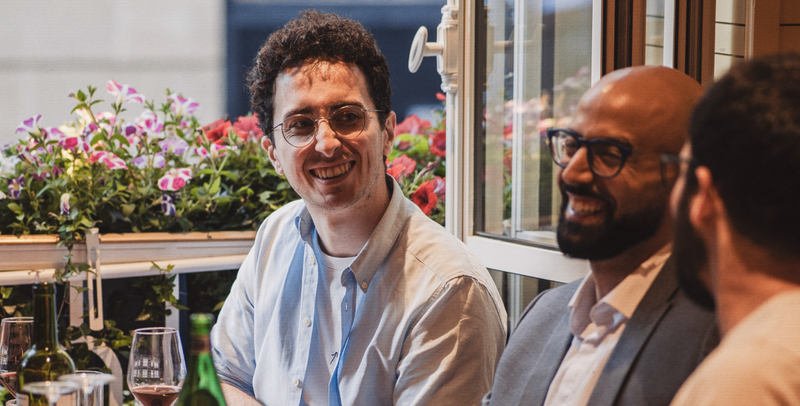
Proximity to the kitchen is the fastest way to separate a chef-led supper club food experience from a social event with catering. A genuine supper club removes the distance entirely. The kitchen isn't running for anyone else that night. The chef is cooking for the people in front of them, and everyone in the room knows it. In the best rooms, every table sits close enough to the open kitchen that you can watch the culinary team at work, and the chef comes out between courses because they want to explain the food, not because a floor manager told them to.
If the host can't name the chef, explain the menu's reasoning, and trace the sourcing, you're at a dinner party with a ticket price.
Why the sourcing story matters
A chef cooking one seating can afford ingredients a restaurant menu can't. There's no walk-in crowd to feed, no broad menu to stock, so the money goes to the fish that was line-caught yesterday or the vegetable from one named farm. Look for named farms or named boats in the listing. Vague language about "seasonal, local ingredients" is what social-packaging events write when the food isn't the story.
How to read a supper club menu for chef intent
The menu is the most legible signal a host sends before you arrive. A few things tell you almost everything.
Deciphering the supper club menu
A supper club menu tells you the host's intent before you taste anything. Four things to read for:
- Narrative structure. A chef-led menu has an argument. It's built around a region or a technique the chef is actively working through. A social-club menu has a greatest-hits list designed to offend nobody.
- Fixed versus collaborative. A fixed menu with no substitutions signals a chef testing a specific idea. A menu that bends to every preference signals a host optimizing for attendance.
- Specificity. "Duck" is a dish. "Dry-aged duck, 21 days, cherry wood" is a chef thinking out loud.
- Portion philosophy. Tasting portions signal a culinary progression. Large plates signal a dinner party.
Sourcing as a quality indicator
Underground or closed-door restaurants are typically chef-run, small-scale, and marketed by word of mouth, with the location and menu revealed at the last minute. The secrecy only works when the sourcing justifies it, so ask two questions before booking. Where does the protein come from, and what is the chef doing that they couldn't do in a restaurant? Good hosts answer both in one sentence. Weak hosts talk about the ambiance.
Red flags in the listing
- No chef named. If the listing names the DJ but not the cook, you have your answer.
- Photos of people, not plates. Check what the host chooses to show you.
- A menu that never changes. A culinary lab rotates because the chef is learning. A static menu means the testing phase ended, or never started.
- Price with no menu at all. Some secrecy is part of the format, but a host who won't share even the theme is usually hiding a caterer.
Assessing the supper club food experience
Quality varies more at supper clubs than anywhere else in dining. The format is the reason it can go either way.
When the format serves the food
A supper club can serve better food than a restaurant running the same night. The kitchen cooks one menu, once, for people who chose it. There's no table of two sending back the risotto while the chef's experiment dies in the pass. When the format works, you get restaurant-level technique applied to ideas a restaurant couldn't greenlight.
Tickets reflect this range. The $250 tasting menu end of the market exists because the format, when it works, justifies it. The lower end is where you're most likely to pay chef's-table money for a catered dinner party.
Distinguishing theater from serious dining
Theater is fine when it supports the plate, not when it replaces it. A chef explaining why the fish was line-caught adds information that changes how you taste the next bite. A host giving a ten-minute speech about community while the food goes cold is wearing the same name but selling a different product. If you remember the speeches and not the dishes, the evening was a social event, and there's nothing wrong with that as long as you didn't pay tasting-menu money for it.
Where supper clubs beat the bistro
A restaurant tasting menu gives you serious food, but the social layer is whatever you bring with you, and a solo diner at one often feels like an afterthought wedged between two anniversaries. A supper club gives the food a room full of people who all opted into the same menu. The room is part of the dish whether the host plans for it or not. A table of people who chose the same menu eats differently from a table assembled by accident, and a serious supper club host accounts for that.
"I've met different and incredible people, who have made the dinners good and unforgettable." - Sergio on Trustpilot
Why the table changes how the food tastes
The food on your plate doesn't change, but who you eat it with does.
The company is part of the tasting
Who you eat with changes how you eat, not just how much. A table of engaged, curious diners slows you down and gets you talking about what you're tasting. A table of people who came for the networking does the opposite.
The guest list drives the menu
Good hosts know this and seat deliberately. Underground formats run on trust. The location and the menu stay hidden until the last minute, and the room assembles itself from whoever bought a ticket. That's the wild card. You can get a structural engineer and a cellist arguing about whether cities have a smell, or you can get four people photographing their plates in silence.
The cost of a mismatched room
The most expensive mistake a foodie can make at a supper club isn't a bad dish. It's a great menu eaten next to a conversation that doesn't match it. You've paid $100 to think about your phone. This is the risk the underground model can't solve, because it has no standardized oversight of the kitchen or the guest list, and it's why some serious eaters who've tried unvetted social dinners report the food was "passable" even when the concept appealed to them.
Are supper clubs good for serious foodies?
Yes, with a condition. Supper clubs are good for serious foodies when the host's intent is culinary, and the table is treated as part of the experience rather than an afterthought. The honest answer is that the format spans a spectrum, and your job as a diner is to locate any given event on it before you pay.
| Model | Culinary intent | Social structure | What to expect |
|---|---|---|---|
| Traditional (comfort-oriented) | Nostalgia, comfort food | Regulars and families | Predictable menu |
| Chef-run underground | Experimental | Word-of-mouth strangers | High variance |
| Restaurant-based group dining (Timeleft) | Vetted restaurant kitchens | Algorithm-matched table | Reliable venue, matched table |
| Restaurant tasting menu | High, refined | Dine with your own group | High culinary craft |
Some eaters would push back on that. They argue that only the underground model delivers genuinely experimental food, and that any structured platform sands down the edges. They're partly right, and if your goal is a chef's private lab with zero guardrails, book the chef's private lab. What Timeleft removes is the two things that ruin a supper club before the food arrives: an unvetted room and format uncertainty. The matched group is the differentiator, and a real restaurant means a real kitchen, not a caterer.
Use this checklist before booking any supper club:
Does the host give the menu a narrative? A theme or a question the chef is working through.
Is the menu fixed? No substitutions usually means a chef with a point of view.
Can you see the kitchen or meet the chef? The "no kitchen door" test.
Is the sourcing named? Named farms or named boats, not adjectives.
Who else is at the table, and how were they chosen? If the answer is "whoever bought a ticket," factor that into the price you're willing to pay.
If you want to see what this looks like city by city, the guides to dinner with strangers and the best supper clubs in NYC apply the same framework to real venues.
How Timeleft handles the room and the kitchen
Timeleft uses real restaurants, which means the kitchen is already accountable before anyone sits down.
Why real restaurants change the baseline
Timeleft sits on the restaurant side of the spectrum deliberately. Every dinner runs at a real restaurant with a real kitchen, not a hired room with a caterer. Only hand-selected restaurants are accepted into the network, and venues rotate so regulars keep finding rooms they haven't eaten in. Members can also suggest venues they think belong on the list, which keeps the network honest in each of the cities where Timeleft operates.
Knowing what the evening will cost before you sit down
Timeleft works with real restaurants, so the menu is the restaurant's own, not a caterer's approximation of one. You set a price range when you book, which keeps the spend predictable. Setting your price range up front means you know what the evening costs before you sit down.
Matching people to the table
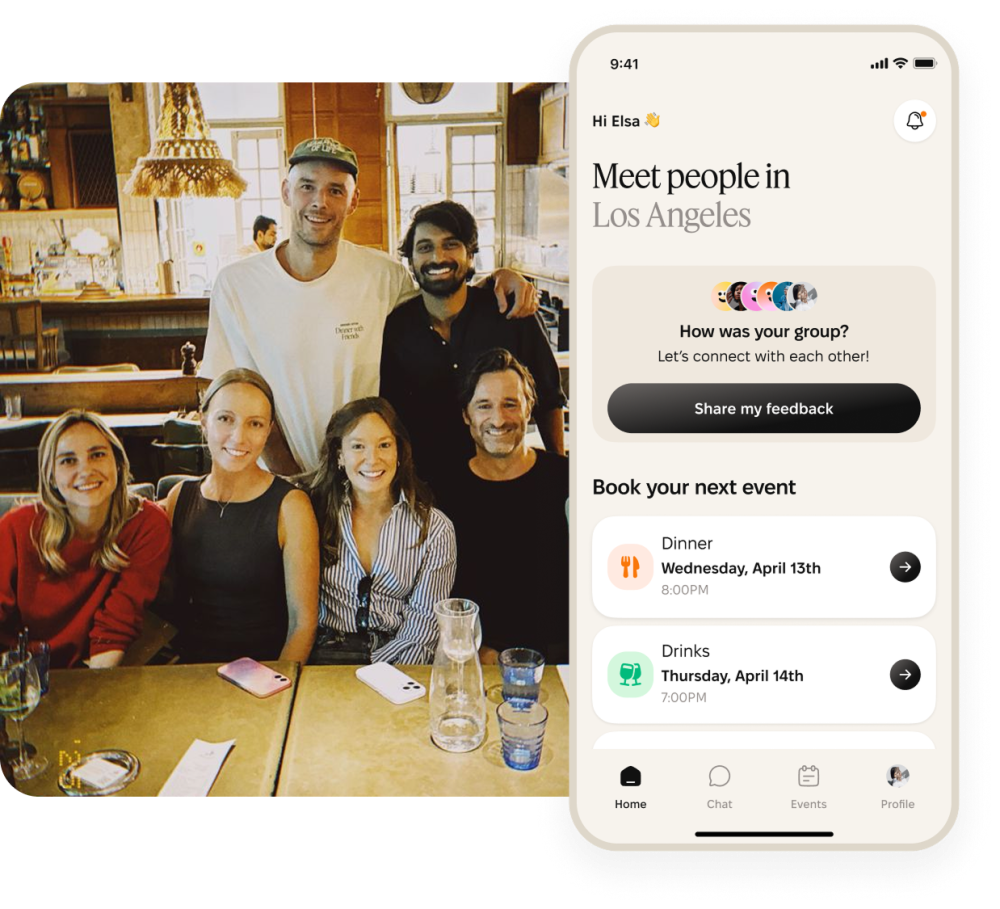
The table is where a supper club succeeds or fails, so the table is treated as part of the food experience. You take a short personality quiz when you join, and the algorithm builds a table of four to six people who are compatible without being identical. The explainer on how the format works covers the matching in more detail, and if you're weighing whether the structure fits you, a self-assessment guide walks through it honestly.
The logistics stay simple. The subscription is $19.99/month in the U.S., required before you attend any event, and once subscribed you can attend as many events as you like that month across dinner, drinks, coffee, and runs. You find out the venue the day before, which means you can't overthink it, and you can book up to 13 hours before an event starts (here's how booking works).
Food and drinks are paid directly to the venue on the night. If your plans change, cancel ahead. The 35% no-show fee in Timeleft's T&Cs exists to respect the other diners and the venue holding the table. If you'd rather not go solo the first time, you can bring a guest with you.
A good supper club is the kind of evening that's hard to engineer and easy to ruin. The food has to be worth it, the room has to match it, and neither of those things is guaranteed when you're booking blind. Timeleft handles both sides of that equation. The kitchens are vetted, the table is matched, and you find out the venue the day before so the decision is already made before you have time to overthink it. The only thing left to figure out is whether you liked the food. Take the personality quiz and start your subscription
FAQs
How do I know if a supper club is worth it for the food?
Run the "no kitchen door" test. If the listing shows people instead of plates and never names the cook, the food is decoration.
Can I go to a supper club alone as a foodie?
Yes. Most attendees at underground clubs and Timeleft dinners arrive without company, and the shared menu gives the table an immediate subject. You dine with a group either way; you just don't have to organize it.
What if the conversation doesn't match the menu?
At an underground club, that's the uninsurable risk, since the guest list self-selects. At Timeleft, the personality quiz and group matching exist specifically to reduce it, and if a table ever feels off, you can flag a seating problem in the app.
Are supper clubs better than restaurants for serious eaters?
For experimentation, often yes, because a chef cooking one fixed menu for one group can take risks a nightly restaurant can't. For consistency and refinement, a restaurant tasting menu still wins. The trade-off is that the room is fixed before you arrive and the chef rarely leaves the kitchen.
How much should a food-focused supper club cost?
Pricing varies more than any single range can capture. High-end chef projects in Los Angeles have charged $250 for a tasting menu. Treat anything at the low end with suspicion and anything at the high end with questions. With Timeleft, the subscription is $19.99/month and you pay the restaurant directly for what you order, so the only gamble is whether you'll like the room.
Key terms glossary
No kitchen door: A supper club where the kitchen is open and the chef is present and accessible, signaling the food is the point of the evening.
Culinary lab: A fixed-menu event a chef uses to test dishes and concepts a full-service restaurant can't justify on a regular menu.
Supper club food experience: The complete dining event at a supper club, including the menu, sourcing, chef interaction, and table composition, distinguished from restaurant dining by fixed menus and intimate scale.
Fixed menu: One menu served to every guest with no ordering choices, usually a sign of deliberate chef intent rather than a limitation.
Venue reveal: Timeleft's day-before notification telling you which restaurant you're eating at, so the decision is already made.
Matched group: The table of four to six people Timeleft's algorithm assembles from personality quiz inputs, designed to be compatible without being identical.