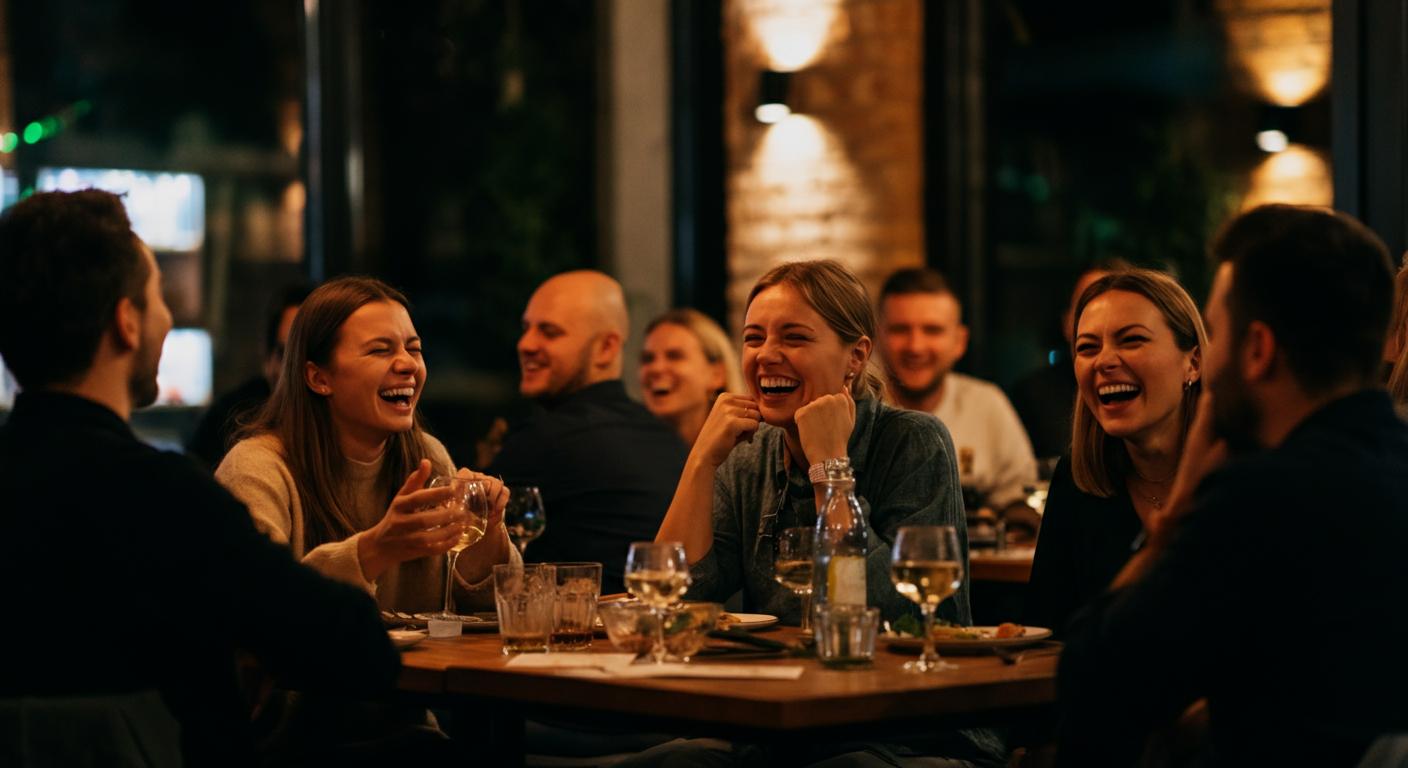
TL;DR: Finding a local supper club does not have to require hours of digital detective work or exclusive social connections. While traditional secret dining scenes hide behind niche newsletters and Instagram geotags, modern social dining platforms remove the coordination tax entirely. Platforms like Timeleft match you algorithmically with compatible strangers at vetted local restaurants, sending you the venue details the day before. This guide gives you a practical playbook to locate, vet, and book a seat at a table of interesting strangers without the back-and-forth.
Most advice on finding a local supper club tells you to DM mysterious Instagram accounts or beg for invite-only links. That digital detective work leads nowhere: a broken email list, a waitlist that never moves, or a "dinner" that turns out to be a sponsored networking breakfast with name tags.
Your Saturdays have become entirely predictable. You want to sit at a table with people you did not choose, eating food you did not have to coordinate, having conversations you could not have scripted. Finding that does not have to feel like a second job. The traditional secret dining scene remains intentionally hidden, but new platforms and smart search tactics make it possible to skip the coordination tax and show up to a table of interesting strangers this week.
Cracking the code of secret dinner scenes
Supper clubs are having a genuine moment. Group dining grew 11% year over year according to OpenTable's 2026 Dining Trends Report, and the global experiential dining market is growing at a 23.5% compound annual growth rate through 2033, driven by diners who want a story attached to their meal, not just the food itself. The appetite is real. Accessing these clubs is the problem.
How private dining stays hidden
Traditional supper clubs face real regulatory risk. These events operate entirely outside the formal restaurant system. There are no reservations, no reviews, and none of the licensing infrastructure that governs conventional dining. Hosts tend to avoid public advertising and rely instead on invite-only access and whisper networks, keeping a low profile in a regulatory environment that treats unlicensed food sales as a compliance risk.
Why discovery remains decentralized
Because traditional clubs cannot advertise openly, their presence often surfaces through word-of-mouth, WhatsApp invites, and social media whispers rather than any public listing. A dinner that ran every Wednesday for three years in your neighborhood might be invisible to you unless you know the right person. That exclusivity is part of the appeal (invite-only access and word-of-mouth are features of the format, not gaps in its marketing), which means you cannot search your way in.
Where to find a local supper club right now
Multiple channels surface active clubs, and you do not need all of them. You need the right two or three for your city. The sections below break down each one.
How to map local clubs via hashtags
Instagram's search function is the fastest starting point for city-specific discovery. City and industry-specific hashtags target a more niche audience far more effectively than broad terms. Try formats like #ChicagoSupperClub, #LondonUndergroundDining, or #NYCPopUpDinner. Cross-reference with cuisine-specific tags like #ChicagoPrivateDining or #LASecretMenu, and scroll the "Recent" tab rather than "Top" to catch active events rather than old posts that still rank for engagement.
How newsletters reveal hidden dinners
Food writers are the connective tissue of the underground dining scene, tracking leads that never surface through open advertising channels. Their newsletters and social feeds provide the most reliable early signal for active supper clubs and pop-up events. The full two-channel approach (newsletter search plus social-feed monitoring) appears in the "Track food writers for event leads" section below, which covers both tactics in detail.
Tapping into your local social loop
Bartenders, line cooks, and independent restaurant owners know who is running dinners in their neighborhoods. A direct question at the right bar ("do you know of any private dining groups or pop-up dinners happening around here?") often surfaces leads that no amount of Instagram scrolling will find. Chefs who run supper clubs as side projects frequently recruit guests through the restaurants where they work their day jobs.
Booking a supper club near me safely
Public restaurant venues offer safety infrastructure (staff, licensing, and emergency protocols) that home settings cannot replicate. If you are attending a private home dinner for the first time, confirm the host's identity through their social presence before you commit, tell someone where you are going, and look for attendee reviews from previous guests.
Social apps for unplanned dinners
A growing category of platforms removes the discovery problem entirely by handling the matching and venue selection for you. Rather than searching for a club and hoping it fits, you answer a short personality quiz and the platform assembles a group and books a venue. This shifts the question from "how do I find one?" to "when do I want to go?" (a significantly shorter conversation to have with yourself).
How to find a supper club without endless scrolling
The manual search approach works, but it has a natural failure mode: you bookmark more than you act on. The gap between saving an Instagram post and actually showing up is where most discovery intent dies.
Spotting genuine host communities
Genuine community tables look different from commercialized networking events. Authentic clubs feel like an extension of someone's actual life (a chef running side dinners, a food obsessive hosting at their apartment, a home cook building a recurring table) rather than a polished brand operation. The real indicator of quality is specificity. Look for a real menu, a real venue, real people tagging themselves at the table. What most people get wrong about connection is looking for polished proof rather than messy, specific evidence that something unplanned actually happened. The detailed checklist for vetting these distinctions appears in the "How to vet a supper club before you book" section below.
Using geo tags to find supper clubs
Instagram removed its dedicated Places tab in May 2026, so location-browsing no longer works the way most guides describe it. The current workaround is to search for a specific restaurant or neighborhood venue by name, open its account directly, and look at posts where it has been tagged by other users rather than posts it published itself. That tagged content is where pop-up announcements and attendee check-ins still surface. On TikTok, location-based discovery still works well: search your city alongside "supper club" or "pop-up dinner" and filter by "Latest" to find recent event footage rather than algorithmically promoted viral hits from months ago.
Track food writers for event leads
Underground dining rarely advertises in traditional ways, which means word-of-mouth and direct channels from writers tracking the local scene are where real leads surface. This two-channel approach covers both newsletter discovery and social-feed monitoring.
Search Substack for your city's name alongside "food," "dining," or "restaurant" to find writers tracking the local scene. Newsletters from working kitchens (restaurants like Smithereens, Sqirl, and Snail Bar have all published their own) tend to offer specific, first-hand perspectives on the local dining scene that media company newsletters rarely replicate.
Follow the same local food critics and writers on Instagram Stories and social feeds rather than waiting for newsletter issues, since event announcements often appear with very short notice. Critics writing for alternative weeklies, local food blogs, or city-specific Substack publications are more likely to surface genuine community dinners than national food media, which tends to cover established restaurants rather than pop-up circuits.
Source lists for genuine community supper clubs
Once you find clubs worth attending, the next problem is keeping track of them. These approaches help you stay in the loop without constant active searching.
How to track local supper clubs
Build a simple tracking system. Save an Instagram collection for supper club accounts, keep a folder in your email for newsletters from local food writers, and set a recurring reminder to check both regularly. The clubs that will actually get you to a table run consistent events on a predictable cadence. A recurring club is where you build a social habit through repeat exposure rather than treating each dinner as a one-off experiment.
How to source invite-only dinners
The most effective approach to waitlisted or invite-only clubs is a short, specific, personal request: "I've been following your dinners for a few months and would love to be added to your list if a spot opens." Avoid pitching credentials or explaining why you deserve access: hosts are looking for guests who will contribute to the table. Attend any public events the host runs (tastings, pop-ups, collaborations with local restaurants) before asking for private access. Demonstrating that you show up when given the chance is more persuasive than any message.
Platforms for local supper clubs
Not all social dining formats work the same way. The table below maps the key differences before each option is covered in more detail.
| Supper club type | Cost structure | Event access | Surprise factor |
|---|---|---|---|
| Traditional (ticket-based) | Varies widely by venue and model | Varies (some ticketed, some membership-based) | Medium to high (surprise menus increasingly popular) |
| Membership club | High (annual or seasonal fee) | Application required | Medium (vetted guests) |
| Spontaneous events (Timeleft) | Monthly subscription ($19.99) + your food/drink | Plan required, then just show up. | High (strangers matched, venue revealed the day before) |
Why Timeleft works for unplanned evenings
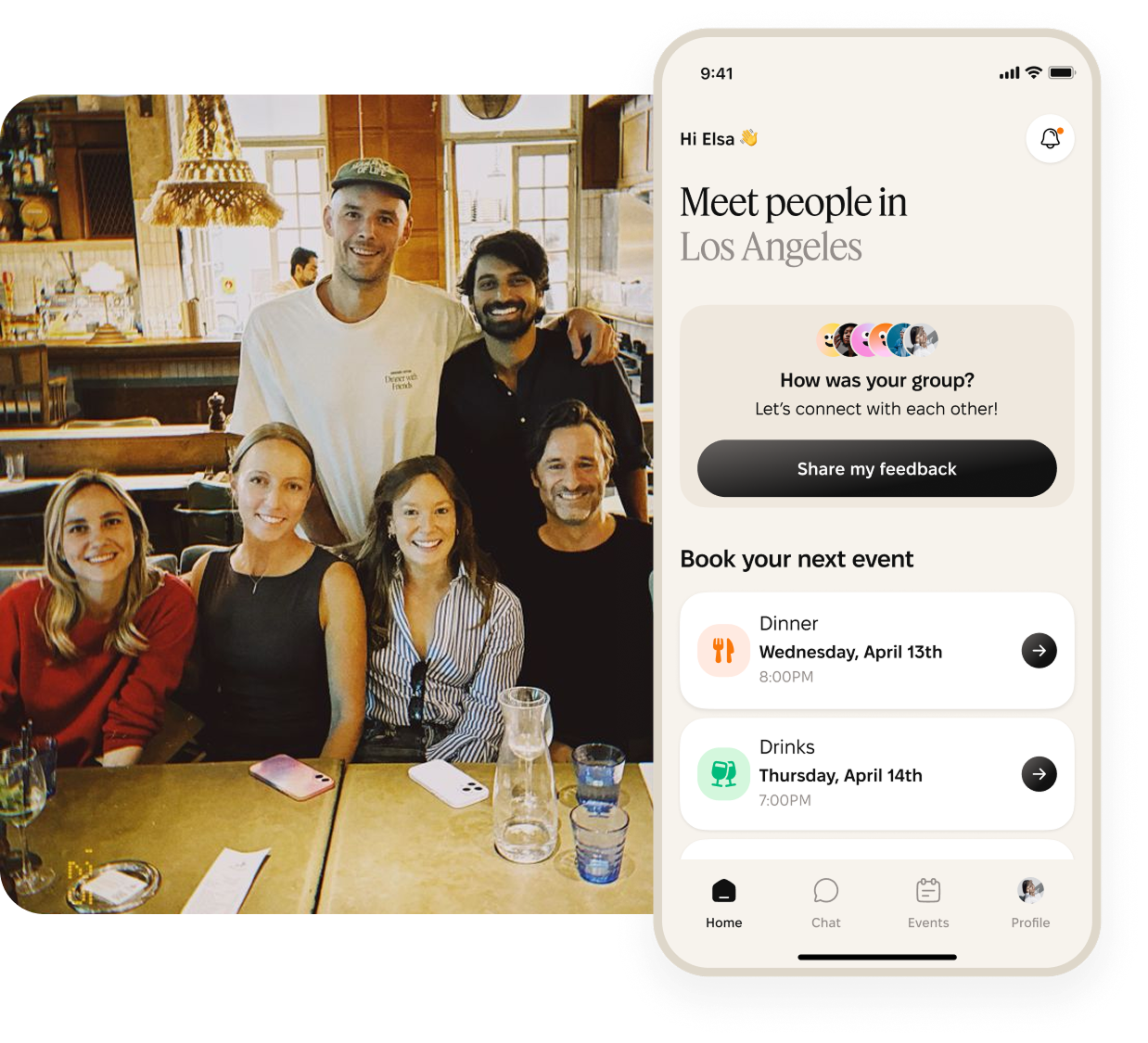
Timeleft removes the search entirely. You answer a short personality quiz, choose a format (dinner is the most popular, but drinks, coffee, runs, and walks are all available), pick a date, and the algorithm builds your group and books the venue. You find out which restaurant the day before, which means you cannot overthink it, which is sort of the point.
Timeleft operates across 200+ cities in 52 countries, with a network of 20,000+ hand-selected venue partners across its footprint. The matching is algorithmic. 96% of diners report feeling compatible with their group, which is what the algorithm is specifically designed to deliver.
The venue reveal lands the day before your dinner, which means the decision to attend is already made before you have time to talk yourself out of it.
The booking process is short. You pay for your plan upfront and cover your food and drinks at the venue on the day. No venue research, no group chat, no chasing confirmations.
Finding local supper clubs on Eatwith
Eatwith specializes in host-led, chef-prepared experiences (usually a fixed menu prepared by a local cook in a home or private setting). If you want the traditional supper club format with a known menu and a specific culinary theme, Eatwith delivers it well. The trade-off is coordination: you need to plan ahead, and the spontaneity factor is low since you know the menu and theme before you arrive. Timeleft removes the pre-planning Eatwith requires and reveals the venue the day before, which means you cannot overthink it.
Using Eventbrite for local supper clubs
Eventbrite carries high volume, so genuine supper club events do surface there among the noise. Search "supper club" plus your city and filter by "Food & Drink." The limitation is that Eventbrite is a ticketing platform, not a matching one. You buy a ticket and show up to whoever else bought a ticket. There is no personality-based group matching, no venue reveal mechanic, and no post-event feedback loop. It works as a discovery channel for one-off events and pop-ups, but Timeleft is designed for the kind of repeated social dining that builds actual familiarity over time.
How to vet a supper club before you book
Most clubs worth attending leave a visible trail. These checks take under 10 minutes and reliably separate genuine community tables from commercialized networking events dressed as dinners.
Verify legitimacy via recent posts
Check the organizer's social presence for recent activity and authentic signals. These signals separate genuine community tables from commercialized networking events:
- Post cadence driven by availability, not a marketing calendar. Irregular event announcements signal a real person running dinners when they can, not a brand operation optimizing for engagement.
- Host account shows a real person. A chef, a food obsessive, a home cook with a visible identity and history, rather than a faceless brand or generic promotional account.
- Attendee-tagged posts with candid photos and specific, unscripted comments. Look for posts where guests have tagged themselves at the table, not just promotional content from the organizer.
- Specific details over promotional graphics. Tagged content should include a dish, a table, a venue name, or other concrete evidence of a real event, not just polished marketing visuals.
- Specificity as the primary quality signal. Messy, specific evidence of something unplanned beats polished, generic proof every time.
Seek out specific, unscripted anecdotes
The reviews that signal a genuine experience contain a specific story: a conversation that went somewhere unexpected, a dish that surprised them, a person they sat next to who does something they had never encountered before. Generic "great evening, highly recommend" language tells you nothing about whether the format actually delivers. What you want is evidence that unplanned conversations happened, not that a managed atmosphere produced polished social outcomes.
Assess if the vibe fits your needs
Most clubs fit roughly into one of three shapes. Purely social dinners where strangers meet to eat and talk. Skill or interest-based evenings built around a wine focus, a regional cuisine theme, or a cooking component. And professional-adjacent events organized around an industry or career stage. If the promotional copy mentions "network" or "connect with industry leaders," you are looking at a networking event dressed up as a supper club.
Warning signs of a commercialized trap
These are the signs worth walking away from:
- High upfront fees above what the meal alone would cost, especially if refund terms are unclear
- Mandatory bios or LinkedIn profiles as part of the registration process
- Promotional brand partnerships that suggest the event is primarily a marketing vehicle
- Vague guest descriptions ("accomplished professionals," "high-achieving individuals") that prioritize status over personality
- No visible social proof from actual attendees - only promotional content from the organizer
Starting a local supper club when none exist
Thin local scenes are a genuine problem. You can either find a platform that already operates in your city, or build something from scratch yourself.
Try automated dinner booking platforms
If your city does not have an active underground dining scene, platforms like Timeleft solve the supply problem automatically. Because Timeleft operates in 200+ cities, there is a reasonable chance your metro area is already covered.
How to host a local supper club
If you are genuinely in a lower-density market and want to build something from scratch, the logistics typically follow these steps:
Recruit guests through a local Facebook group, Meetup listing, or personal network. Aim for variety over familiarity.
Choose a compliant venue. A private dining room at a local restaurant is simpler and legally cleaner than hosting at home.
Set a simple format. A fixed menu and a loose conversation prompt work better than open ordering, which fragments the table.
Handle RSVPs seriously. Remove guests who have not confirmed before the dinner.
Tactics for finding underground supper clubs
The practical side of attending matters as much as finding the right club. Cost, solo attendance, booking lead times, and dietary requirements each shape whether you actually show up.
Budgeting for your supper club seat
Traditional ticketed clubs vary widely in price depending on format, menu, and location. Toast POS recommends researching typical pricing in your area and using recipe costing to understand what a seat actually needs to cover. App-enabled platforms like Timeleft split the cost differently. The monthly subscription is $19.99 (less than your streaming bundle, or a single cocktail in New York), and you pay for your food and drinks directly at the venue on the night. The more often you go, the lower your per-dinner cost works out.
Dining solo at a Timeleft dinner
Showing up alone to a table of strangers is common at supper clubs, and it is often the better experience. Groups who arrive together can default to their existing dynamic, which sometimes limits what the table can become. Solo diners arrive without a script, which is the entire point. The format is straightforward and low-pressure, and first-timers often find the initial nervousness fades quickly once food arrives. You can also bring a +1, whether that's someone you met at a previous Timeleft dinner or an old friend, so your existing circles and your new ones start to overlap.
Typical booking windows for locals
Traditional clubs generally require advance booking, with popular nights filling faster. The venue reveal is a structural feature, not a side effect. You book your date in advance but find out the restaurant the day before. The decision to attend is made, the venue is out of your hands, and the only remaining task is showing up. If you need to find your table on the night, the app handles that too.
Navigating menus with dietary limits
For app-enabled platforms, declare dietary restrictions during sign-up so the venue selection can account for them. The algorithm integrates multiple parameters when selecting restaurants, including group preferences and budget range. For traditional clubs with fixed menus, contact the host directly at the time of booking - most experienced organizers have handled dietary restrictions before and will confirm whether a particular dinner works for you.
If you have read this far and still have not booked anything, that's the coordination tax at work. Take the quiz and pick a date, or check if your city is covered first.
FAQs
Do I need a membership to attend a Timeleft dinner?
Yes. A subscription is required, but it gets you access to as many events as you want in a given month across any format. The idea is that you show up once, then again, until going becomes the thing you just do.
Is Timeleft a dating app?
No. Timeleft is a connection-first platform with no bios, no swiping, and no romantic agenda built into the format. Timeleft runs dinners, drinks, coffee, runs, and walks, all matched by personality algorithm. That said, plenty of users have met significant others at events, and more than a few have ended up married. Where connections go is entirely up to the people at the table. Timeleft has also recently launched Singles Events for those who want that possibility a little closer to the surface.
What happens if I book a dinner and do not show up?
Under the subscription model, Timeleft enforces a no-show penalty of 35% of the monthly subscription price to keep tables full and fair for other diners. Three or more late cancellations within a two-month period can result in suspension. The policy exists to respect the time and energy of the other diners at your table, as well as the venue partners who have held a seat for you.
How does Timeleft pick the restaurant?
Timeleft's algorithm selects a venue from its network of 20,000+ hand-selected venue partners, based on the group's profile, location, and budget range. The details are sent the day before.
Can I use my Timeleft plan in a different city?
Yes. One active plan covers 200+ cities in 52 countries. Check the locations page to confirm your city is included before booking.
How do I find a supper club that is not on any platform?
Start with Instagram geotags for your neighborhood's best independent restaurants, follow local food writers on Substack, and ask bar staff at independent venues directly.
Key terms glossary
Venue reveal: The process where Timeleft sends the exact restaurant location the day before your dinner, removing the ability to overthink or cancel based on venue preference.
Algorithmic matching: A data-driven system that groups compatible strangers based on personality quiz inputs rather than self-selected profiles or open registration.
Coordination tax: The time and effort spent organizing group plans (including venue research, scheduling, and chasing confirmations) that kills most ad-hoc social plans before they happen.
Supper club: An informal dining event, typically recurring, where strangers or semi-strangers share a meal in a private or semi-private setting outside of a standard restaurant booking.
Day-before reveal: Timeleft's signature format mechanic where the restaurant is confirmed the day before, not at booking time, preserving spontaneity while giving enough notice to make practical arrangements.