In this article
- Designing spaces for people instead of profiles
- How the best singles events compare
- What to expect at high-pressure social mixers
- Why structured speed dating feels like an audition
- Activity-based singles meetups
- How Timeleft's singles dinners work
- What singles coffee is like
- How to find events for singles near me
- FAQs
TL;DR: Singles events differ mostly in how much they ask you to perform in front of strangers, so the right one depends on how you feel about being sized up on the spot. Speed dating and mixers suit people who are comfortable making a quick first impression. Activity meetups and singles dinners take that pressure down by giving everyone something to share, whether it's a task or a table. Timeleft's singles dinners have their own night, everyone at the table is single, and each table keeps a balance of men and women. Mixers and speed dating usually charge per event, with drinks on top. Timeleft runs on a monthly subscription, and you pay for your own food and drinks at the venue.
Most singles events ask you to sell yourself in some way. It might be a few minutes at a speed dating table, or a crowded bar where you have to walk up to someone you've never met. At a Connecticut mixer earlier this year, one attendee told CT Insider, "the problem is you have to go up and talk to them." Some formats take that step away, and that one difference shapes the whole evening.
The formats below differ most in how much pressure they put on you and how easy they are to attend alone, so those are the two things worth weighing before you buy a ticket.
Designing spaces for people instead of profiles
Feeling worn out by dating apps is common. Part of the problem is how the apps are built, since they tend to favor good photos and confident openers over curiosity and patience. Psychotherapist Esther Perel calls the wider pattern social atrophy and links it to the slow erosion of everyday human contact. She told Fortune that showing up for people in person "is a muscle that needs to be practiced, otherwise it weakens."
Design over hype for real connection
Traditional dating formats tend to reward performance skills, which only partly overlap with the skills that build a connection. Apps favor people who make a strong first impression and trade witty messages, and bars favor people who are comfortable approaching strangers cold. Neither does much to surface the people who are good at a slow conversation and at opening up to someone new.
The real cost of going alone
Going to a mixer alone means arriving with nobody to introduce you. The first 20 minutes often go to scanning the room and working up the nerve to start a conversation, which can wear you out before you've said hello. Formats where the group is put together in advance skip that step, because the table is already waiting when you walk in.
How conversation flows without an opener
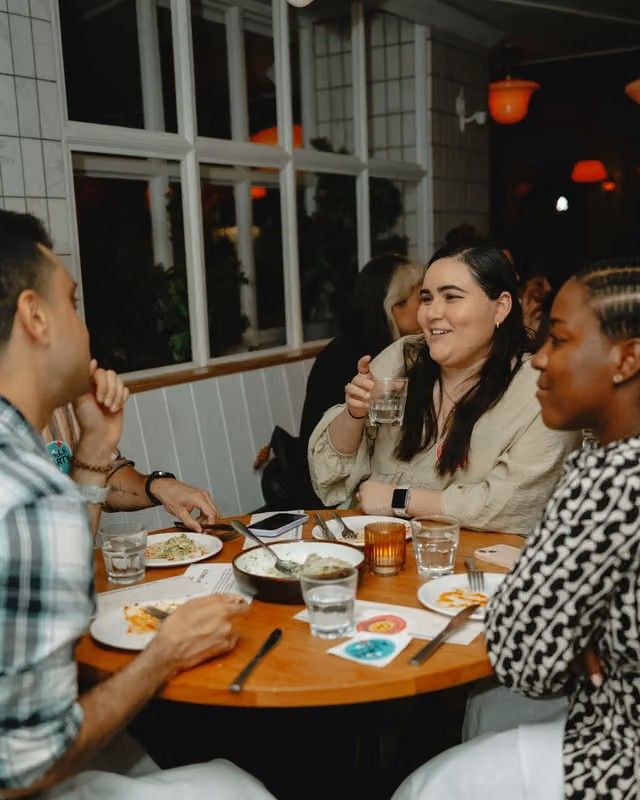
Conversation tends to come easier when people are curious about each other. A small table helps, and so does having no profiles to browse before you meet. Timeleft builds each singles table in advance, so everyone at the table booked a singles event and the group keeps a balance of men and women. A group chat with your table opens 30 minutes before the start, so you don't walk in cold.
How the best singles events compare
Each format below is judged on four things, starting with cost, which covers entry fees and what you spend once you're there. Vibe means the pressure level and the social dynamics in the room. Solo-friendliness is how easy it is to go without a wingman, and the last measure is whether the format sets up real conversation or mostly adds contacts to your phone.
I've had great experiencies in timeleft dinners, and found great friend, with whom I am creating memories! I truly recomend Timeleft - Cristal Otalora
What you pay for and receive
Mixers and speed dating usually charge a ticket per event, and drinks are extra. Activity meetups vary more, since some are free and others charge for materials or instruction. Timeleft works on a monthly subscription that covers every event you book in that period, and you pay for your own food and drinks at the venue. The bigger difference is what the money gets you. A mixer ticket gets you into a room where you still have to approach people, while a Timeleft booking gets you a seat at a table where the group has already been put together.
Setting the mood and social dynamics
The mechanics of each format decide whether people relax or brace for judgment. Mixers run on circulation and quick reads of the room, and speed dating runs on rotation and scorecards. Activity meetups give everyone a task to focus on, while group dining runs on one long conversation with no interruptions.
The benefits of going solo vs. together
Going alone feels riskier, but it also leaves you more open to meeting new people. Going with a friend makes it easier to walk in, though it can turn into a crutch that keeps the two of you talking to each other all night. Timeleft's Bring a +1 feature lets you bring someone from your existing circle if you're not ready to go solo.
How each format shapes the experience
The format shapes the evening more than the venue does. A timer turns conversation into an audition, while a shared activity or a shared table gives people something to settle into.
| Format | What you pay | Pressure level | Solo-friendly | What it delivers |
|---|---|---|---|---|
| Mixers | Entry ticket, drinks extra | High (cold approaches in a crowded room) | Common but hard (you approach people cold) | Quick conversations and swapped contacts |
| Speed dating | Event ticket, drinks extra | Often high (timed evaluation) | Moderate | A short list of people to see again, based on timed rounds |
| Activity meetups | Often free, some charge for materials | Medium (shared task) | Moderate | Conversation around a shared experience |
| Singles dinners (Timeleft) | Monthly subscription, plus your own food and drinks | Low (pre-assembled table, everyone single) | Default | Conversation with no timer, usually about three hours |
| Singles coffee (Timeleft) | Monthly subscription, plus your own drinks | Low to medium | Default | Relaxed socializing over coffee, where your city runs one |
What to expect at high-pressure social mixers
Mixers are among the most common singles events, and they ask the most of you socially. A typical mixer takes place in a bar or event space, with no matching and no group put together in advance.
Entry and logistics
Expect to buy a ticket in advance or at the door, and premium events usually cost more. Some include light appetizers, but drinks are almost always extra. The venue is often a bar with loud music and mostly standing room, and who shows up is hard to predict.
Expectations for the social setting
Mixers tend to be loud and crowded, with people moving from one conversation to the next. Many attendees are there to collect numbers or Instagram handles, so conversations often stay on the surface while everyone keeps half an eye on who else is in the room. The format depends on cold approaches, which means walking up to a complete stranger with no shared context to lean on.
Going to mixers without a wingman
Going alone to a mixer means approaching strangers cold and handling rejection in real time. The format suits people who enjoy quick small talk and are comfortable performing a little on the spot.
How the connection forms
Connection at a mixer starts with first impressions and quick reads, since you size people up and they size you up within moments. That's a different skill from connecting with someone over time, and it tends to favor extroverted, confident people over curious or reflective ones.
Who mixers suit best
Mixers suit outgoing people who enjoy approaching strangers and like a high-energy room.
Why structured speed dating feels like an audition
Speed dating removes the need to approach strangers and replaces it with a timer and a scorecard. Because every round is timed and scored, quick impressions tend to count for more than slow-building rapport. Tickets are sold per event, and drinks are usually paid separately.
Budgeting for your speed dating night
Plan for an event ticket plus your bar tab at the venue. Some services offer premium tiers with fewer participants or nicer venues, and those cost more, while food is rarely included.
The social atmosphere of speed dating
The atmosphere is structured and timed, with every conversation feeding into a decision. Rounds last a few minutes each, and when the bell rings, one side moves to the next table. The timer puts pressure on you to be interesting on demand and to leave a memorable impression fast, and the scorecard turns the evening into a run of quick assessments.
Pressure levels for solo guests
Most people go to speed dating alone, but the pressure is high because everyone you meet is assessing you against the clock. There's little downtime between rounds, which leaves few chances to settle in and be yourself. The format works best for people who think fast and don't mind being judged.
What happens once you arrive
You check in for a name tag and a scorecard, then sit across from the first person in your rotation. The timer starts right away, and after a few minutes of introductions, you rotate to the next table, repeating until everyone has met. At the end, you mark yes or no for each person, and when two people both say yes, the organizer shares contact details.
Ideal personality for speed dating
Speed dating suits people who are comfortable being evaluated and enjoy a fast pace. If you need time to warm up, a singles dinner is a better fit, since a small table has no timer or scorecard and the conversation can develop over several hours.
Activity-based singles meetups
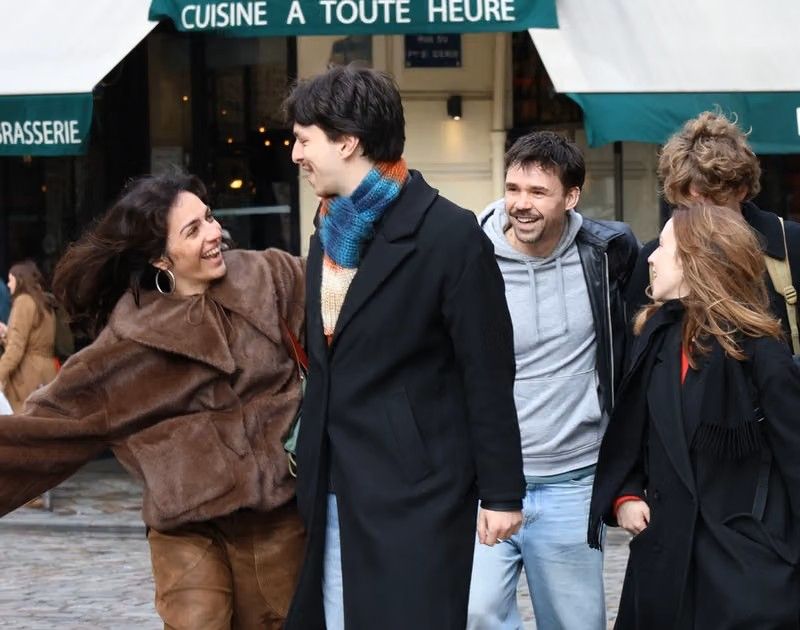
Activity-based meetups use a shared task to take the pressure off, so whether it's hiking or pickleball, the activity does the icebreaking for you. Casual meetups often cost nothing, while structured classes usually charge for materials.
Budget breakdown by event category
Hiking groups and board game nights are often free or ask for a small donation. Structured activities like cooking classes or pottery workshops usually charge per session, and equipment or materials may cost extra.
What to expect in the room
The activity gives everyone something to focus on, and conversation happens around the task, so you have a built-in reason to talk to people without working up the courage for a cold approach. Shared experiences make it easier to chat, because everyone is busy enjoying the activity and nobody is keeping score.
Going to activity events without a plus one
Going alone is easier here than at a mixer, because the activity gives you something to do. You still have to join a group or say hello, but the context is already there.
What participation looks like
You show up and talk to people while you do the activity, and connection builds through the shared experience. You might spend two hours hiking and chatting, or 90 minutes cooking a meal with a group, and the conversation grows out of what you're doing together.
Signs this style suits you
Activity meetups work well for people who bond over shared interests and like to talk while they're doing something. They're a weaker fit if you want conversation to be the main event or if the activity itself would distract you. For a closer look at how open activity groups compare with matched dinners, see Timeleft vs Meetup.
It was fun to step outside of you comfort zone and enjoy totally new company that’s not in your regular bubble. - Annabelle Keller
How Timeleft's singles dinners work
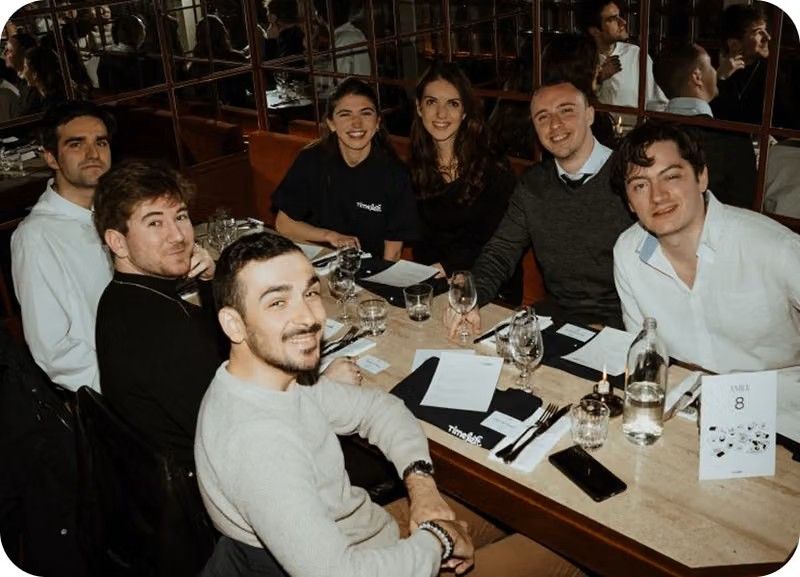
Timeleft's singles dinners are the format for people who'd like to meet someone romantically, and they have their own night, separate from the regular dinners. Everyone at the table booked a singles event, so you know the whole table is single before you arrive. Timeleft keeps a balance of men and women and groups people by age band, according to Timeleft's singles page. You show up and meet in person first, then decide the rest later.
Participation costs and event flow
Costs are a monthly subscription instead of per-event tickets, plus whatever you order at the venue. You pick a singles dinner and a date when you book, and the help center walks through how booking works. The venue is revealed before the event, and a preview of who you'll meet appears on the day.
What to expect from the dinner
You arrive at a pre-booked restaurant to meet a table of single people, with a balance of men and women and grouped by age band. Timeleft aims for four to six people, though the number on the night can be smaller. Nobody needs an opener, and nobody has to cross a room to introduce themselves.
The solo participant experience
A shared table gives everyone a reason to be there, the way a class or a shared commute once made conversation easy. You don't need a wingman, since your table is your group for the evening.
How the evening runs
Singles dinners usually run about three hours, with no fixed end time, so you can leave when it suits you. In-app Icebreakers are there if the conversation needs a nudge, though most tables don't end up using them. Afterward, the group chat stays open, and you can stay connected with anyone from the table in the app. What happens next is up to the two of you.
Who thrives at these dinners
Singles dinners suit people who want to meet someone without the timer and the scorecard. They also suit people who are tired of performing and would rather meet in person and see what happens.
What singles coffee is like
Singles coffee is Timeleft's lighter singles format, and it may not run in your city yet, since it's still a small test according to Timeleft's singles page. Where it does run, it uses the same approach as the singles dinners, with everyone at the table booked for the event and a balance of men and women.
What to expect regarding cost
Singles coffee runs on the same monthly subscription, and you pay for your own coffee at the café. There's no entry fee on top.
What to expect on arrival
The setting is casual and short. You meet at a café table, with no assigned seats and no timer. Because the group is assembled in advance from people who booked the singles event, you aren't walking into a room of strangers alone.
Going alone versus with a friend
At most bar events, going alone means approaching people cold. At singles coffee, the group is put together beforehand, so you have a table to join from the moment you arrive.
What happens at the table
Conversation over coffee is shorter than dinner by design, so it works well as a first step. If a table clicks, you can book a singles dinner together as the follow-up.
Ideal for the burnout crowd
Singles coffee suits people who want a low-key first step. If you're testing whether singles events work for you, coffee is a gentle place to start before you book a dinner that can run about three hours.
How to find events for singles near me
Finding a good offline group means knowing where to look and which signs point to a low-pressure event.
Where to find offline groups
One way to find singles events near you is by searching for "dinner with strangers [city]" or "how to meet people without dating apps [city]." Timeleft also runs singles events in a different across 200+ cities, including London, Paris, New York, and Taipei. Singles dinners have their own night, separate from the regular dinners, so check the singles listings rather than the general event calendar.
Recognizing high-pressure formats
High-pressure formats tend to involve timers, scorecards, cold approaches, and pressure to collect numbers. Low-pressure formats tend to have matched groups and shared tables, where conversation can start without an opener.
Signs of a low-pressure event format
When you read an event listing, look for a matched group and a pre-booked venue. Both mean someone else has done the planning, so all that's left on the day is to show up.
Take the personality quiz and subscribe to see which singles events are available in your city.
FAQs
Are singles events worth it if I'm going alone?
They can be, especially if you pick a format with a matched group. Many people come to Timeleft's singles dinners on their own, so you won't be the only one at the table without a friend. Mixers are harder solo because they depend on cold approaches.
How do I avoid the awkwardness at singles events?
Most people feel a bit nervous before their first event, and the awkward part usually lasts about ten minutes. A format with a shared table and a matched group helps, since nobody has to approach strangers cold or pitch themselves on a timer. In-app Icebreakers can get things started if the table needs it.
What's the best singles event format for introverts?
Singles dinners tend to suit introverts best. A small table with no timer and no cold approach lets the conversation build at its own pace, and the group is assembled in advance. If you have accessibility needs, you can request an accessible venue before booking.
Do people meet romantic partners at these events?
Singles events are the opt-in format for people who'd like to meet someone romantically, and Timeleft members report friendships and sometimes romantic relationships. What a connection becomes stays open-ended, since the format sets no expectations either way.
How much should I expect to spend on singles events?
Mixers and speed dating usually charge per event, and drinks are extra. Timeleft uses a monthly subscription that covers every event you book in that period, and you pay for your own food and drinks at the venue. Check the app for current plans in your city.