In this article
Are we nostalgic for the 90s?
Or do we just miss when people had enough time and money to hang out more than they didn't? Maybe what we really long for are the days when we could see our friends and loved ones without needing to be glued to a laptop just to afford the minimum rent in the city. (Carrie Bradshaw sold us a lie here btw.)
We recently wrote a piece on how tables are disappearing from our lives for the first time in human history, in the hopes that it'd inspire more people to want to meet people at a Timeleft table in an (also sadly declining) third space in their city.
While the discourse was generally appreciated, there were a number of comments that raised a very important consideration:

And these really got us thinking about two things: (1) in what ways does the rising cost of living impact our ability to connect with others, and (2) where do we, as a paid subscription service, fit into that narrative?
First, let’s look at the stats
With the cost of living already reaching pretty unplayable levels, it's unsurprising that dwindling connection levels have followed suit.
Across 28 countries, home prices have risen more than 50% since 2020, and groceries have trended the same way. When more of your income disappears before you've left the house, what's left over for the stuff that isn't survival – the dinners, the drinks, the hanging out – shrinks fast.
And it shows:
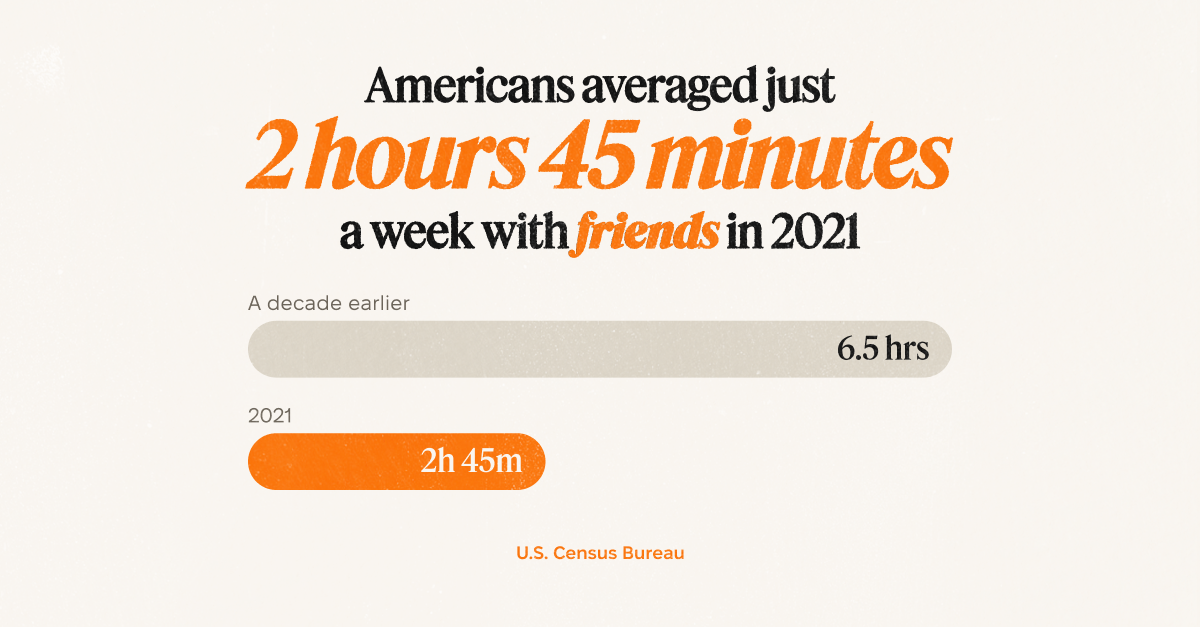
There's a number that puts this in even starker terms.
The Economic Growth Capital Resource Fund developed a Global Economic Reality Index to measure the true cost of living – rent burden, inflation, food, debt, wages, all of it – across every nation. GERI scores countries from 0 to 100, where:
- 100 = excellent affordability / very livable
- 0 = severe hardship economy
And the global average in 2026 is 34, which sits in the "distress economy" band (20–39).
So yeah, it’s safe to say the stats are far from encouraging.
Cost of living and connection
But how does this all affect our ability to connect with other humans? Well, pretty considerably, we'd say. Below are a few of the main cost of living related spin-offs that affect human-to-human connection, and why frustrations like what were shared in the comments are very, very valid.
Spaces are a lot smaller
“Honey I shrunk the house” has never rung more true than now tbh. The spaces we live in have gotten a lot smaller, and so has the room for things like dining room tables and social areas within the home. The average new US apartment has dropped from 941 to 887 square feet over the past decade – the steepest year-on-year decline on record – and studios and one-bedrooms now make up 57% of new builds, a record high.
Ultimately, less space = less places to host, have people over, or simply hang out with other people in our homes.
More time spent working
And sometimes more than one job to meet the never-before-seen levels of rent prices in cities. A third of Americans now work a side hustle just to stay afloat, and 61% say their life would be unaffordable without that extra income. That's not a hobby or a passion project… for a lot of people, it's rent. And when asked what they'd cut first if that income disappeared, the top answer wasn't a bill – it was dining out.
More hours worked means fewer hours (and energy) left for everything else, including the people you'd otherwise be spending that time with.
It’s expensive to host
The price of food and drinks is just: 🤯 Even more so when more people are single now than ever before. Hosting has gotten pretty damn expensive, and singles are covering that cost alone. One-person households now sit at a record 29% of all US households – 39.7 million of them – and living solo comes with a price tag: Zillow calls it the "singles tax," and it now averages $10,470 a year in extra rent nationally, climbing to $23,400 a year in New York City.
Buying the wine, cooking the dinner, footing the bill… it adds up faster, especially when there's no one to split it with.
It’s expensive to drink
Speaking of wine, even the most foolproof social lubricant has gotten pricier. A craft cocktail in New York now runs $20–$30 at most bars, with mid-tier spots still landing around $14–$20 – not far off the price of an entire month of Timeleft. For a lot of people, especially younger renters already stretched thin, that's made the choice simple: skip the drink. The share of US adults under 35 who say they drink at all has dropped from 72% to 62% over the past two decades, and cost is one of the most cited reasons why.
This means that for the younger generation, one of the simplest, easiest and most accessible ways to socialise is fast becoming a thing of the past.
It’s even expensive to date
Dating has its own inflation now too – which people are aptly calling "date-flation." This rising cost of dating shows up in the stats too. The average all-in cost of a date in the US hit $189 in early 2026, up 12.5% from the year before, and daters spent $2,323 on dates over the past 12 months on average. Nearly half of singles (47%) now say dating simply isn't financially worth it, and average date frequency has dropped from about 14 outings a year to 12.
(Food for thought: is it really that fair to axe a prospect based on bill-splitting these days?)
Not even friendship is spared
Yup, the most important type of relationship we have in life comes with a price tag too, and it's definitely influencing things. 44% of Gen Z and millennials say they've skipped a major social event purely because of the cost, and 1 in 5 say financial or lifestyle differences have contributed to a friendship actually ending.
Call it a friendship recession, or just the maths not mathing anymore, but either way, it's costing us (in more ways than one).
So… where do we as a brand fit in?
We won't sit here and pretend that we're a free service, because we aren't.
What we offer technically exists for free outside of Timeleft, but it just isn't happening – largely because of what we've explained above. Circumstances have made it harder than ever to do what humans were made to naturally do.
So yes, we charge a monthly subscription (in New York, about the price of one of those cocktails, just saying). But what we save our users goes beyond money: time spent organising, chasing plans out of group chats, and figuring out where to meet after a long and exhausting work day. We also offer options that suit different budgets – what you're willing and able to pay determines where we book you, and what you order to eat and drink on the night is 100% your call.
Something we’re proud of is that your money goes toward something bigger than your own table as well. Every booking helps keep a bar, restaurant, or café in your city open – spaces that matter even more now that ours at home are so limited.
While we, like you, wish things didn't cost as much as they currently do, we exist within the same circumstances. Our mission is to make those circumstances more human, more social, and more accessible, in whatever way we can. And ultimately to make human connection easier than it’d be without us.
Regardless of whether you try a Timeleft experience or not, you need human connection to stay happy and healthy. Times are tricky right now, but as much as you can, don't let that get in the way of the thing that makes us most human. Seek it out wherever you can: a walk in the park with a friend, a regularly scheduled FaceTime, a knitting club, or… a dinner with strangers <3
Sources
- Visual Capitalist, "Ranked: The 2026 Global Cost of Living Index", 2026
- U.S. Census Bureau, American Time Use Survey (2021), as reported by economist Bryce Ward in The Washington Post, Dec 2022
- RentCafe/Yardi Matrix, "National Average Apartment Size Shrinking as Studios & 1-Bedroom Apartments Gain in Share", 2023
- LendingTree, Side Hustle Survey, 2026
- U.S. Census Bureau, Current Population Survey, "Families and Living Arrangements", Dec 2025
- Zillow Research, "The Price of Going Solo" (Singles Tax report), 2026
- VinePair, "The Most Expensive Cocktails in NYC", 2026
- Gallup, "Young Adults in U.S. Drinking Less Than in Prior Decades", 2023
- BMO, "'Date-flation' Hits Hard: Average Date Spend Nears $200", BMO Real Financial Progress Index, Feb 2026
- Ally Bank, "New Ally Bank Survey Reveals the Hidden Financial Cost of Friendships" (The Friendship Tab survey), Jul 2025