In this article
- Why making friends in your 30s feels harder than it should
- Mistake one: waiting for friendship to happen organically
- Mistake two: choosing venues that limit conversation
- Mistake three: treating every interaction like a job interview
- Mistake four: only reaching out when you're desperate
- Mistake five: assuming everyone else already has enough friends
- Mistake six: letting initial discomfort end the relationship
- Mistake seven: trying to replicate previous friend groups
- FAQs
TL;DR: If your circle has thinned out in your 30s, the cause is usually structural. Too many steps sit between wanting to meet people and sitting at a table with them. The two mistakes that matter most are waiting for friendship to happen organically and assuming everyone else already has enough friends. The other five mostly come from friendship scripts built for an earlier stage of life, and the fix for each is specific and low-friction. Timeleft handles booking and venue selection, so once you take the personality quiz and subscribe, all that's left is showing up.
Americans averaged two hours 45 minutes a week with friends in 2021, down from 6.5 hours a decade earlier, according to Washington Post analysis of Census Bureau time-use data.
If your circle is smaller than you want it to be, look at the pattern first. Most adults in their 30s are running friendship scripts built for a life they no longer live. This article names the seven most common mistakes and gives a specific fix for each one, so you can change one pattern this week without becoming a different person.
In this article
- Why making friends in your 30s feels harder than it should
- Mistake one: waiting for friendship to happen organically
- Mistake two: choosing venues that limit conversation
- Mistake three: treating every interaction like a job interview
- Mistake four: only reaching out when you're desperate
- Mistake five: assuming everyone else already has enough friends
- Mistake six: letting initial discomfort end the relationship
- Mistake seven: trying to replicate previous friend groups
- FAQs
Why making friends in your 30s feels harder than it should
A few things shifted after your 20s, and nobody mentioned them at the time.

Why proximity no longer builds bonds
Social circles peak around age 25 and shrink after, according to research analyzing mobile phone records from Aalto University and Oxford University. The reason is proximity. School and early career placed you next to the same people every day without any planning.
Why your previous social habits fail
The informal public spots where people used to gather without an invitation, known as third places, saw widespread closures between 2019 and 2021, according to research from University of Colorado Boulder. The habits that worked when those spaces existed do not work in their absence.
How friction prevents new bonds
A week-long intervention of repeated conversations with strangers made people less fearful of rejection and more confident in conversation, according to research published in ScienceDirect. The finding points to where the difficulty sits, in the number of decisions and steps required to reach the conversation.
Mistake one: waiting for friendship to happen organically
Waiting feels a lot like patience, and it's the most common mistake of the seven, one that stalls many adult friendships before they start even though the way out is simpler than it looks.
The myth of effortless friendships
Some people do make friends organically in their 30s, though it is rare. University and early career friendships felt effortless because the structure did the work. Proximity and repetition built bonds without anyone organizing anything. Adult life strips those defaults away, and waiting for the same result without the same structure rarely works.
The trap of waiting for invitations
Most adults stop organizing plans because the back-and-forth of scheduling wears them out. A group dinner normally means a thread of 40 messages and a venue nobody wanted. Seven in 10 Americans agree that keeping a large friend circle gets harder with age, according to a Talker Research survey of 2,000 Americans.
How to build intentional connections
Intentional connection comes from choosing a structure that removes the steps. Timeleft handles the logistics, including booking and the venue.
Removing that burden means handling every step between "I want to meet people" and sitting down with them. Timeleft members take a short personality quiz and subscribe, then pick a format, a neighborhood, and a date. Timeleft matches the group and books the venue. The venue is revealed 12 hours before the event. Booking and rescheduling close 13 hours before. Cancelling stays open until four hours before the event starts. Food and drinks are paid separately at the venue, never through the app.

Mistake two: choosing venues that limit conversation
Where plans happen matters more than most people expect. The default venue shapes the conversation, and a small change opens up the evening. Timeleft's guide to where to meet people after 30 covers more options.
When your social script centers on alcohol
Bars are the default for a reason. They are open late and need no planning, and they signal social intent without saying it out loud, but noise and the pressure to keep ordering limit conversation and make it harder to move past small talk. For newly sober adults, the bar default is exclusionary. A bar works as a format for some people, and the default still narrows the options for anyone who wants a quieter, more structured way to meet.
Finding alcohol-free social spaces
The fix is to choose formats built for conversation. Timeleft runs dinners in every city. Drinks and coffee run in many cities, and so do women-only dinners, while walks run in only some. Formats vary by city. Coffee and walks remove the alcohol question entirely.
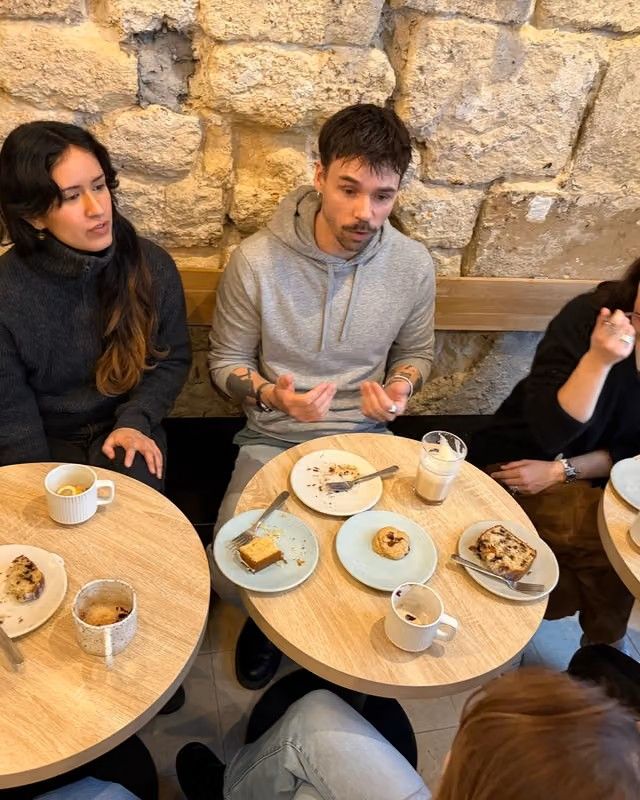
Mistake three: treating every interaction like a job interview
Once you're at the table, it's easy to turn a first conversation into a test. That pressure makes the whole thing feel harder than it is.
Avoid the performance pressure trap
Picture a first conversation run like an interview. You prepare stories and ask questions designed to impress. Then you leave the interaction evaluating whether you performed well enough to deserve a follow-up. It is exhausting, and it treats friendship as a transaction. Weak ties, the loose connections outside your close circle, are the main source of new opportunities, according to Stanford research on social networks. That research is about career moves, but the principle applies to socializing. More low-stakes contact with people outside your existing circle helps, even when no single interaction leads to a close friendship.
Why small talk builds real bonds
Small talk gets a bad reputation, but it is where connection starts. Trouble begins when the first 10 minutes become the whole interaction. Timeleft's in-app Icebreakers exist for the opening moment. Most tables don't end up needing them.
Mistake four: only reaching out when you're desperate
The fourth mistake lives in the gaps between events. How and when you get in touch matters as much as how well a night goes.
Why sporadic contact feels heavier than it is
Reaching out only when you need something trains people to associate your contact with obligation. It also trains you to avoid contact until the need is urgent, which makes the ask feel heavier than it is. The pattern is common after a breakup or a move. The social circle thins and the silence stretches, so the first message feels loaded and often never gets sent.
Cultivate connections before you need them
The fix is regularity without agenda. Regular contact, even with different people each time, builds more connection than sporadic catch-ups. Timeleft's Repeat feature lets members invite someone they connected with to their next event, and because a subscription covers event access, there is no per-event decision to make.
Mistake five: assuming everyone else already has enough friends
Before you send a single message, an assumption about other people's calendars is already at work. The numbers suggest it's often wrong.
Debunking the full calendar assumption
The assumption looks like this. Everyone at work is coupled up. Everyone at the gym already has their people. So why would they want one more? The assumption is wrong. 12 percent of U.S. adults reported having no close friends in 2021, up from three percent in 1990, according to the Survey Center on American Life. That is more than one in 10.
Breaking the cycle of social isolation
The assumption creates a loop. You do not reach out because you assume they are busy. They do not reach out because they assume you are busy, so the loop only breaks when someone goes first. Timeleft's group format removes the one-on-one pressure. A table built for four to six people means nobody is the sole focus and nobody is responsible for the whole evening.
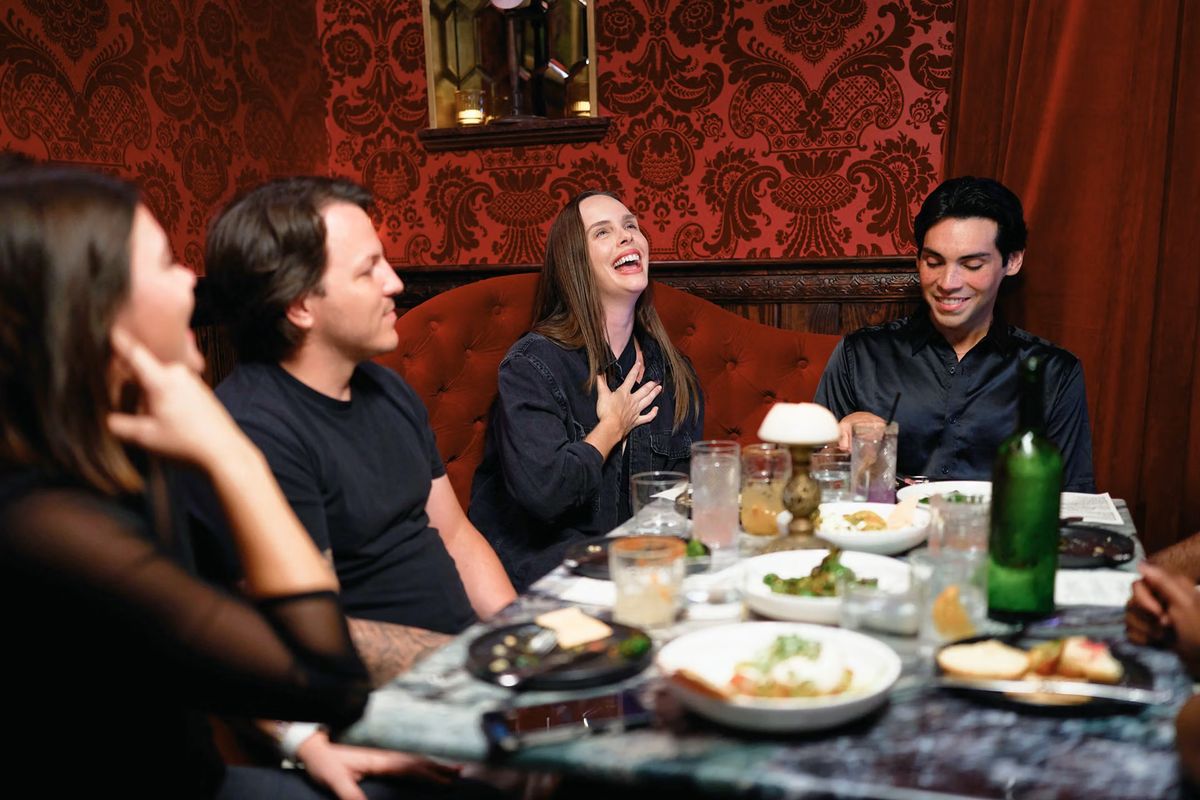
Mistake six: letting initial discomfort end the relationship
The sixth mistake comes right after a first meeting. Most new friendships feel a little off at the start, and reading that as a verdict ends many of them early.
Normalizing the initial awkwardness
The first meeting with anyone new is awkward. That usually means the connection is new. The discomfort says more about the situation than about the person. Most people feel a bit nervous before their first dinner.
Why friendship takes repeated time
Research by Hall (2018) found it takes roughly 50 hours to move from acquaintance to casual friend, 90 hours to reach simple friend status, and more than 200 hours to consider someone a close friend. The hours are scoped to repeated time with one particular person. A single meeting covers only a small fraction of that time, so it is too early to decide from one meeting whether someone is friend material.
Mistake seven: trying to replicate previous friend groups
The group you compare everything to is usually the old one. Looking back at what worked in the past can get in the way of what's available now.
Why nostalgia sabotages new connection
The old group had a specific shape. The same age and the same history. Trying to rebuild that exact shape in a new city or a new life stage is a recipe for disappointment. The new group will not look like the old one, and that makes it a different kind of fit.
Current realities of adult friendship
The current reality is that adult friendship is built through repeated, low-friction contact with people who are also looking. The shape and the mechanism are different, but the outcome can be as real. Timeleft's adult friendship guide covers the mechanics in detail. Showing up once creates a moment. Showing up again and again turns moments into real connections.
Take the personality quiz and subscribe.
FAQs
Why can’t you make friends in your 30s no matter what you try?
The problem is usually structural. Proximity and shared obligation disappear after 30, and so do the easy scripts for meeting people.
How long does it take to make real friends as an adult?
It takes roughly 50 to 200 or more hours of repeated time with one person, depending on how close the friendship gets, according to Hall (2018). The hours are scoped to time spent with one particular person, not to a set number of meetings.
Is it normal to have no friends in your 30s?
Yes. It is more common than most people assume, and the Mistake five section above covers the numbers.
What's the easiest way to meet people in your 30s?
The easiest way is the one with the fewest steps between wanting to go and going. Timeleft handles venue booking and group formation.
Do you need to lower your standards for friendship?
No, but consider lowering the threshold for the first meeting. First impressions are unreliable, and friendship builds over repeated time. Standards for closeness can stay high. Standards for the first hour should allow for nerves and a little silence.