In this article
- What turns an awkward room into energy
- Dinner with strangers: the social gamble that pays off
- Beyond the brunch loop: Sunday run and walk clubs
- Culinary workshops for the socially curious
- Pub trivia for low-stakes social friction
- Creative workshops (writing, drawing, improv)
- Where to find unscripted social encounters
- Group fitness classes and sports leagues
- How to choose your first social experiment
- FAQs
TL;DR: The best group activities for meeting people this weekend are the ones that remove planning friction and create conditions for unpredictability. A matched dinner with strangers delivers that more reliably than most hobby clubs or fitness classes. Sunday run clubs and volunteer shifts come closest, though they can't guarantee the same depth of conversation. Cost is rarely the deciding factor, and what matters is whether the format creates conversation you couldn't have manufactured yourself.
When the same few restaurants and the same conversations keep filling your Saturdays, the weekend starts to feel predictable. What helps is a format where the evening can still go somewhere you didn't plan.
Most weekend group activities fail on one of two fronts. They either demand too much planning from the person showing up alone, or they're so tightly structured that real conversation never starts. This guide ranks the formats that work by social payoff and solo-friendliness, with cost alongside, so you can pick one and go.
What turns an awkward room into energy
The best group activities for meeting people share a few structural features. They remove enough friction that showing up alone feels natural, and they leave enough unpredictability that the evening goes somewhere you didn't see coming.
Real conversation vs. networking theater
Real conversation tends to happen when people share a novel experience and have little agenda beyond the evening itself. Networking theater tends to happen when everyone arrives with a goal and a business card, and the difference often lives in how the event is structured. Formats that force performance, whether through elevator pitches or facilitated introductions, can undercut the thing they're trying to create.
Research on friendship formation by Jeffrey Hall found that time spent doing things together contributes far more to connection than time spent near each other, so being in the same room only gets you so far if you're not doing something together. His study tracked hours across friendship stages, with hanging out counting for more than parallel activity.
How these weekend plans are rated
Every format here gets rated on three criteria. Social payoff measures whether the format creates real conversation, cost covers what you spend (from a free Saturday shift to a full evening out), and solo-friendliness tells you whether you can show up alone without feeling like a project. The ratings come from published first-person accounts and user reviews, weighed against the structural features of each format, since no independent rating system exists for this.
Solo-friendly ratings explained
In this guide, a 10/10 solo-friendly rating means showing up alone is the norm and feels like the default, while a 5/10 means you'll spend the first ten minutes explaining why you're there.
The table below ranks weekend group activities on those three criteria.
| Activity type | Social payoff (1–10) | Typical cost | Solo-friendliness (1–10) | Best for |
|---|---|---|---|---|
| Matched dinner (Timeleft) | 8–9 | Subscription plus venue bill | 9–10 | Matched group, zero planning |
| Sunday run/walk clubs | 6–7 | Free to $15 | 7–8 | Movement plus conversation, recurring community |
| Culinary workshops | 5–7 | $25–$300 per class | 7/10 | Hands-on learning, small teams |
| Pub trivia | 5–6 | Usually free, plus drinks | 5–6 | Low-stakes competition, integrating into existing groups |
| Creative workshops (writing, pottery, improv) | 5–7 | $40–$400 | 6–7 | Hands-on projects with a social bonus |
| Volunteer shifts | 7–8 | Free | 8–9 | Working side by side on a task, with repeat shifts that let you see the same people again |
| Group fitness classes | 4–6 | Varies | 5/10 | Shared rhythm and social accountability |
Dinner with strangers: the social gamble that pays off
A matched dinner with strangers removes most of the decisions between you and the table. You don't pick the venue or choose who shows up. You take a short personality quiz, subscribe, pick a date and neighborhood, and walk into a restaurant where your matched group is already assembling.
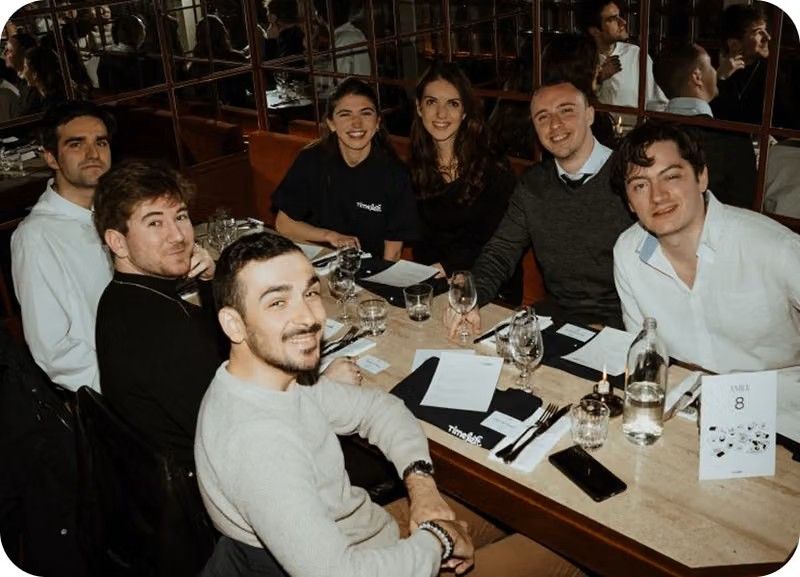
Timeleft runs this format across 52 countries and 200+ cities. For dinners, the venue is revealed 12 hours before the event, and a preview of who you'll meet appears on the day. The matching uses your quiz answers to build groups across backgrounds and personality types. Timeleft reports that 96% of diners feel compatible with their matched group.
Timeleft offers different formats on different days of the week, and each one has its own pace and setting.
| Format | Crowd it attracts | Vibe | Best for |
|---|---|---|---|
| Wednesday dinner | Varies by city and neighborhood | The full dinner format, usually about three hours | Your first matched dinner |
| Thursday drinks | Varies by city and neighborhood | Casual bar setting, relaxed and low-key | A low-key, low-cost evening out |
| Saturday coffee | Varies by city and neighborhood | Daylight, lower pressure, no alcohol | Early risers who want connection without nightlife |
| Sunday walk | Varies by city and neighborhood | Outdoors, and one of the most-booked formats | Conversation at a walking pace |
Budgeting for your seat at the table
A subscription is required before attending an event. Food and drinks are paid separately at the venue, so the real cost is the subscription plus your restaurant bill, which varies by city and venue. The per-event cost works out well for members who go to a few events a month, since the subscription covers events across the formats available in your city.
Why solo diners feel right at home
The format works because solo is the default. Guests typically arrive on their own, so the playing field starts mostly level. That doesn't mean every table is all strangers, since members can bring someone they already know through the Bring a +1 feature, and some guests may already know each other. Even so, the format carries the first ten minutes, so for most guests the conversation starts from zero.
So cool evening. I met fantastic people and we try know to get back together to new drinks ! Very nice idea for people living abroad to meet international new friends. - Olivier Gambari on Trustpilot
How real conversations start
Timeleft includes in-app Icebreakers for the opening minutes, though most tables don't end up needing them. The matching does most of the work. The quiz asks about your ideal evening (such as deep conversation over wine or exploring creative spaces) and how you want to feel after dinner (such as seen and connected or surprised and refreshed). It also asks what you value in the people around you.
As an illustration of how that range works in practice, a Wednesday dinner might seat someone who wants to be surprised and refreshed next to someone who wants to feel seen and connected, with a third guest who chose exploring creative spaces. Nobody arrives with the same idea of a good evening, so the conversation has more than one direction to go.
Beyond your usual social circle
Weak ties matter because they connect you to networks outside your own. On LinkedIn, weak ties are more likely to lead to new opportunities than strong ties are, according to a large-scale experiment co-directed by Sinan Aral of MIT. Weak ties are the acquaintances and friendly strangers you meet outside your usual circle, which is the kind of people a matched dinner seats you with.
Beyond the brunch loop: Sunday run and walk clubs
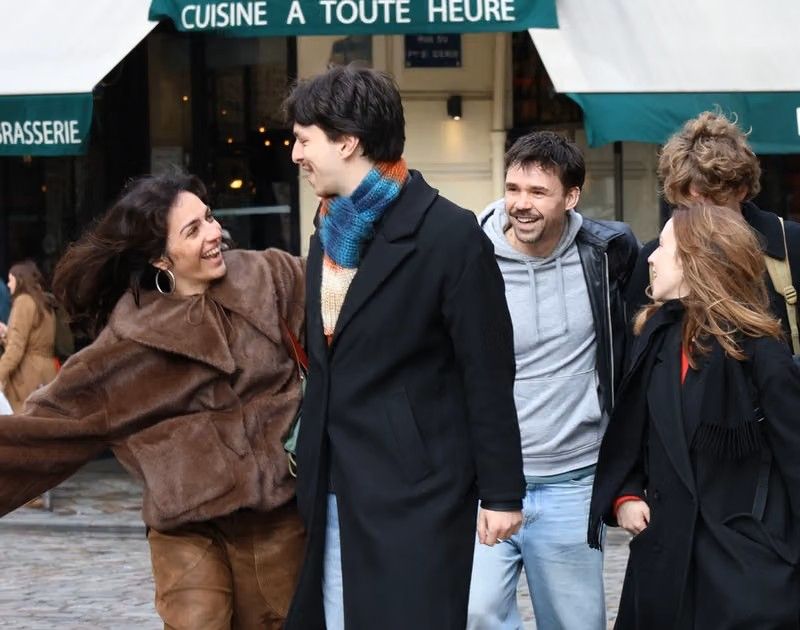
Most run clubs are free and structured so showing up alone feels natural, which makes them excellent for recurring community.
The price of joining a weekend crew
Most run clubs are free. You show up and run, and the talking happens along the way. Some groups head out for coffee or breakfast afterward, but that part is optional and what you spend is up to you. The real cost is time, since the community pays off most when you keep showing up week after week.
Why these runs suit solo arrivals
People who arrive at a run club on their own tend to be open to conversation, and groups that welcome first-timers make that easy.
Prioritizing pace or social flow?
The best run clubs for conversation are the ones that prioritize social pace over speed. Look for groups that advertise "no drop" policies or "conversational pace" runs, since the faster the group, the less talking happens.
Finding local run clubs that click
Search for independent run clubs in your city on Instagram or through local running store bulletin boards. Timeleft offers walks in some cities, which follow the same principle (shared movement with conversation built in) but with personality-based matching rather than open attendance. Walks run in fewer cities than dinners, but they attract a different crowd and offer a slower pace for people who want to talk without the endorphin rush.
Culinary workshops for the socially curious
Cooking classes put you in a small team with a shared task, which sounds ideal until you realize the structure varies wildly. Some classes pair you with a partner, while others split the group into teams of four or five. The social payoff depends on whether the instructor builds in time to talk.
What you will pay
Cooking classes run $25 to $300 per class in 2026. Community centers and libraries often host cheaper, more casual workshops that tend to be more social.
Why solo diners fit in
Solo attendees are common, but partner-based work structures can create awkward moments. Some providers encourage solo attendees to bring a guest, which can defeat the purpose. Look for classes that advertise "team effort" formats, where each small team makes a different dish.
Classes that prioritize conversation over technique
Some classes leave you chopping vegetables in silence next to someone who brought their own partner, and conversation rarely gets going. The better ones have an instructor who circulates and teams that rotate between stations, and everyone sits down to eat together at the end.
Pub trivia for low-stakes social friction
Pub trivia gives you a shared activity without requiring athletic ability or special skills, so most people can play. The catch is that trivia nights are built for teams, and solo players have to integrate into existing groups.
Entry fees and hidden costs
Most trivia nights are free to play, since the bar makes its money on food and drinks. Some venues charge an occasional small entry fee, so check the venue's own page before you go.
Navigating trivia nights alone
Most pub trivia nights are built for teams, and team sizes vary by venue, so it's worth checking the venue's own rules before you go. Solo players are often welcome, and many venues will let you join another team. The friction comes from having to walk up to a table and ask if they have room.
How to integrate as a solo guest
Arrive early with a drink in hand and scan the room for teams that look short-handed. Most trivia regulars are happy to add a solo player, especially if you know something about obscure 1990s sitcoms or European capitals. Post-game socializing is limited to brief interactions during rounds, so the real conversation happens if the team decides to keep hanging out after the final question.
Creative workshops (writing, drawing, improv)
Creative workshops attract people who want to make something, so the social payoff is real but arrives as a side effect of the class.
Investment and hidden fees
Pricing varies widely by format and city, so check each provider's own page before you book. Many improv classes run in multi-week sessions, which means the social payoff builds over time but requires a bigger upfront commitment.
How well these suit solo visitors
Solo attendees are the norm in creative workshops. The shared task (writing a scene or throwing a pot) creates natural conversation, but the structure of the class determines how much talking happens. Improv classes involve a lot of interaction because many exercises and games need at least two people, and writing workshops tend to be the quietest because most of the work happens silently.
Workshops that prioritize interaction
Look for workshops that build in critique sessions with group feedback or collaborative exercises, and be wary of those that promise "individual instruction" or "self-paced learning," since the classes that work best treat the group as a group project.
Where to find unscripted social encounters
Volunteer shifts are structured so showing up alone is normal, with shared work creating natural conversation. Timeleft dinners cost more but are built to seat you with people matched to your quiz answers rather than whoever else signed up for the park cleanup, and the venue matters as much as the company.
Budgeting for your weekend social life
Volunteer shifts are usually free, and food banks and community cleanup organizations frequently hold Saturday events. The main cost is your time, usually two to four hours.
Ease of joining as a solo
Volunteers typically show up individually and integrate through shared work. There's rarely an awkward introduction moment because the shared task gives everyone something to talk about. Depending on the organization, you might be sorting donations or cleaning a park.
Best weekend volunteer formats for socializing
Many volunteer organizations build social time into their shifts, particularly post-work gatherings at food banks and park cleanups. Look for recurring shifts rather than one-off events, since they let you see the same people again and again, which is where real connection tends to start. After a few weeks of the same shift, familiar faces tend to turn into conversation.
Most of the time, I’m paired with people around my age, although occasionally the group has been a little younger. Either way, the conversations have always been fun, with plenty of laughs and interesting people to meet. - GG Shalton on Trustpilot
Group fitness classes and sports leagues
Group fitness classes and recreational sports leagues promise community, but the structure often works against conversation. High-intensity classes leave little room to talk, and sports leagues require a season-long commitment and often skew toward people who already know each other. Both tend to offer less room for conversation than the formats above.
Budgeting for weekend spontaneity
Costs vary by city and provider, but the per-event cost is usually lower than a cooking class, and the social payoff is less reliable.
The solo experience in group fitness
Showing up alone to a fitness class is easy, but talking to anyone during the class is not. Most people work out and leave without exchanging more than a nod. Sports leagues are better because the shared goal (win the game, don't embarrass yourself) creates camaraderie, but the commitment level filters out casual participants.
Why high-octane events kill rapport
The harder the workout, the less oxygen available for conversation. High-intensity interval training and spin classes make talking harder because the pace and the noise leave little room for it, even when the provider promotes community. Boot camp classes often run in small group settings, and many people bond with the regulars in theirs, though that bonding still happens around the workout rather than during it. If the goal is meeting people, choose formats where the activity serves as a backdrop for conversation.
How to choose your first social experiment
The best weekend group activity is the one you'll attend. That means picking a format that fits your budget and your tolerance for unpredictability, even if you have to show up alone.
If you want depth over breadth
A matched dinner with strangers tends to deliver the deepest conversation because the format is built for it. You're sitting at a table for about three hours with little else competing for your time, and there's no fixed end time, so the evening runs as long as the conversation does. The matching reduces the risk of walking into a room where you have nothing in common with anyone, and the venue reveal keeps the evening unpredictable.
High-impact events for smaller budgets
Run clubs and volunteer shifts cost almost nothing, as do most pub trivia nights, and they still create real conversation. The trade-off is that they don't guarantee the same depth. You might have a great conversation, or you might spend two hours sorting canned goods next to someone who doesn't want to talk.
How to break the ice with strangers
The best icebreaker is a shared task and the second-best is a good question, and Timeleft builds both into the format. The shared task is the meal, and the in-app Icebreakers supply the question.
The formats ranked here can all work. The question is whether you want the conversation supported by the structure, or you want to gamble on who else shows up.
Take the personality quiz and subscribe, and see which formats are available in your city this week.
FAQs
What are the best group activities for adults who are new to a city?
The best group activities for adults new to a city are the ones that require little planning and no existing network. A matched dinner or a run club can both work because they let you show up alone and start talking quickly.
How do I join a group activity alone without feeling awkward?
Arrive ten minutes early and say "first time here," and someone will usually walk you through it, which is how many of these groups work. Many people feel nervous at first, and it usually eases once the shared activity gets going.
Which weekend group activities are free?
Run clubs, volunteer shifts, public library programs, community garden workdays, and museum free nights are often free. Meetup is free to browse, and many events are free to attend, though quality depends on the organizer and some events charge a fee. Timeleft costs a subscription but delivers a matched group of four to six at a pre-booked venue, so the logistics and group composition are handled before you walk in.
How do I know if a group activity will have people my age?
Age ranges aren't always published upfront, so you may have to infer demographics from event photos and organizer profiles, or ask directly. Timeleft collects your age group on the quiz (18–29, 30–39, 40–49, 50+) and uses it to build each dinner group.
What's the difference between networking events and social group activities?
Networking events are designed for exchanging information and developing contacts, especially to further your career, while social group activities are typically built around shared enjoyment and connection, without a professional agenda. Which one you're attending comes down to how the event is structured.