In this article
These days, it can feel easier to run a marathon or build flat-pack furniture without the instructions than it is to turn a dating app match into an actual date.
That might sound dramatic, but if you've ever matched with someone, swapped a few messages and then watched the chat slowly fade out, you know exactly what we mean.
The good news? Not every app works the same way. Some are built for quick swipes. Others make you fill in a long questionnaire before you see a single face. Each one suits a different kind of dater.
As for which one actually works? We compared the most popular dating apps of 2027 to find out.
Here's what we found.
What is the best dating app? The short answer
If you only read one part of this guide, make it this one.
- Best overall: Hinge. Its prompts give you something real to reply to, and most people on it want a relationship.
- Best dating app for women: Bumble, where each person gets one opening message and the chat only opens when the other replies.
- Best dating app for men: Hinge again. Prompts give you more than a photo to stand out with.
- Best for the biggest pool: Tinder. More people have used it than any other app, so it's the quickest way to see who's out there.
- Best for a long-term relationship: eharmony, thanks to its detailed compatibility questionnaire.
- Best for over 50s: Match, one of the longest-running paid dating sites.
- Best free dating app: OkCupid, which has one of the most generous free versions.
- Best for open relationships: Feeld, built for non-monogamy, couples, and being upfront about what you want.
And if you'd rather skip the apps altogether, Timeleft singles events put you around a table with other singles in your city, for a more real life alternative to them all.
Why do dating apps feel so hard? (and how do we start comparing them)
Dating apps aren't a niche thing anymore. According to Pew Research Center, three in 10 US adults have used a dating site or app.
But using them hasn't gotten any easier. In the same study, 46% of people who'd used a dating app said their experience had been negative. If you've ever closed an app mid-swipe and wondered why you bother, you're in good company.
It's no surprise, then, that the apps have started to split off in different directions, each trying to fix a different part of the problem.
The key insight? Every dating app promises roughly the same thing, but they work in very different ways.
The four types of dating apps
Most of the top dating apps fall into one of these four categories:
Swipe-first apps
These apps are built for speed. You see a profile, decide in a second or two, and match if the feeling's mutual. They're great if you want lots of options fast. Think Tinder and Bumble.
Prompt-led apps built for relationships
These apps slow things down on purpose. Profiles are built around prompts and answers, so you have something to start a conversation with. They're a good fit if you want something serious. Think Hinge and Coffee Meets Bagel.
Compatibility and questionnaire apps
Apps like eharmony, OkCupid, and Match ask you a lot of questions up front, then use your answers to suggest people. They take longer to set up, but they're a solid choice if you care about shared values from the start.
Niche and members-only apps
These apps are built for a specific crowd, whether that's open relationships or a private, vetted community. Feeld and Raya are the best examples.
Yes, many of these apps overlap a bit, but most have a clear strength in how they help you meet someone.
Five ways we ranked them
Instead of ranking every app on a single scale, we compared them on what actually shapes your experience:
How you meet people
Is it swiping, replying to prompts or answering a questionnaire? This often decides whether a match turns into a conversation.
What the free version gets you
Some apps give you almost everything for free. Others make you pay before you can send a single message.
What it costs
We looked at what each paid tier costs and whether it's worth it.
Speed to a real date
How long does it take to go from download to sitting across from someone? This is where most apps lose people.
Who's on it
Are most people looking for something serious, something casual, or a bit of both? And are there enough of them in your city?
Different apps, different outcomes
The biggest takeaway from comparing these apps is pretty simple. There's no single "best" dating app, only the one that fits how you want to meet people.
Some apps are great for browsing lots of profiles, while others are better for fewer, more thoughtful matches. Understanding this difference is what helps you choose the right one, instead of clogging up your phone with five new downloads and hoping one works.
Let's get into the nine best dating apps of 2027.
The best dating apps in 2027 at a glance
Prices checked in the US App Store on 18 November 2026. The table shows the lowest listed price for each app's paid plans. What you pay depends on the plan length and current offers.
| App | Best for | Free version | Paid from | Who's on it |
|---|---|---|---|---|
| Hinge | Dating with intent, prompt-led profiles | Limited likes a day, free messaging with matches | Hinge+ / HingeX: from $16.99 | Mostly relationship-minded daters |
| Tinder | The biggest pool, quick swiping | Daily swipes, free messaging with matches | Tinder Plus / Gold / Platinum: from $9.99 | The broadest mix, casual to serious |
| Bumble | Fewer, more considered openers | Swiping, free messaging with matches | Bumble Premium: from $17.99 | A mix of casual and serious |
| OkCupid | Matching on values and detailed profiles | Matching, questions, and messaging | OkCupid Premium: from $7.99 | Inclusive, values-led daters |
| eharmony | Long-term relationships | Questionnaire and browsing, limited messaging | Premium plans: from $179.99 | People who want to settle down |
| Match | Serious, paid dating | Profile and browsing, most messaging is paid | Subscription: from $42.99 | Established, relationship-focused daters |
| Coffee Meets Bagel | Fewer, slower matches | A small set of matches a day, free messaging | Premium: from $34.99 | Busy, relationship-minded daters |
| Feeld | Open relationships, non-monogamy, and couples | Browsing, connecting and messaging | Majestic Membership: from $29.99 | Open-minded singles and couples |
| Raya | A private, members-only community | None once accepted | Membership / Raya+: from $24.99 | High-profile crowd, by application |
From us
Timeleft (Singles Events)
Best for: Anyone with dating app fatigue who still knows that chance encounters and meet-cutes happen, you just have to give them the space and the format to.
Verdict: The option that most mirrors real life dating, or old school dating, in that you put yourself in a low-stakes dinner environment where connection comes first, then follow up communication if there's mutual interest. No swiping or vetting before you meet – which leaves room for chance to happen.
How it works: After sign up, you answer a few quick questions in the personality test so we can put you at the right table. You then choose a singles event format in your city at a time and day that suits you, then just… show up. That's it. If you do meet someone, you can use the Connect feature to keep in touch after the event.
Free version: None. You'll need a subscription before you can book an event.
Cost: A membership lets you book events in your city. Food and drinks are paid separately at the venue. Check the current price in the app.
Strengths
- Low-stakes group environment where there's a chance for something to happen, but no pressure if it doesn't
- A wider range of people than your swipe filters would ever show you, matched on interests rather than photos
- No swiping, no conversations that fizzle out before you've met, just dinner
- Nobody gets picked or turned down at the end of the night, so the evening can't "fail" the way a first date can
- One subscription covers as many events as you like that month, so if one table doesn't click, there's another next week
Limitations
- Singles events are only running in some cities so far
- No free version
More than 4 million people have joined Timeleft, with more than 28,000 five-star ratings on the App Store and Google Play (October 2026).
“Beats the hell out of dating apps as you get to meet real people and share real experiences.”
“I highly recommend giving this app a try, it's way better than meeting people through dating apps, and our group even bonded over our collective disappointment with them 😂”
9 best dating apps in 2027
Hinge
Best for: People who want something serious, with conversation starters built in
Verdict: The best all-rounder, and one of the best dating apps for relationships if you're tired of small talk.
How it works: Hinge profiles are built from photos and written prompts. Instead of swiping, you like or comment on a specific photo or answer, which gives you an easy way into the conversation. The app's own line is that it's designed to be deleted.
Free version: A limited number of likes a day, and free messaging once you match.
Cost: Hinge+ and HingeX. One month costs $29.99 for Hinge+ and $49.99 for HingeX, and the App Store lists Hinge+ plans from $16.99.
Strengths
- Prompts make opening messages much easier, because you're replying to something specific
- Most people on it say they want a relationship
Limitations
- The daily like limit runs out fast on the free version
- Seeing who's already liked you is a paid feature
Tinder
Best for: People who want the biggest pool and don't mind swiping
Verdict: The quickest way to see how many singles are near you, but expect to filter.
How it works: You swipe right on profiles you like and left on ones you don't. If two people swipe right on each other, it's a match and you can start chatting. Pew found it's the most-used dating app in the US. Nearly half of people who've used a dating app have tried it.
Free version: A daily number of swipes and free messaging with matches.
Cost: Tinder Plus, Gold and Platinum. The App Store lists plans from $9.99, and one month of Platinum costs about $49.99. Prices vary with the plan length.
Strengths
- The biggest pool of people, in most cities
- Fast and easy to set up
- Good if you're new to a city or travel a lot
- A gentle start if you've never used a dating app before
Limitations
- Intentions are mixed, from casual to serious
- Swiping can get tiring quickly
- Lots of matches never turn into a conversation
Bumble
Best for: Women who want more control over who they talk to
Verdict: One of the best dating apps for women who want more say over which conversations start.
How it works: Bumble works like other swipe apps. Since August 2026, either person can send the first message, but only one, and the chat opens once the other person replies.
Free version: Swiping and free messaging with matches.
Cost: Bumble Premium, $32.99 for one month or $17.99 for a week.
Strengths
- A chat only opens when you reply, which means fewer unwanted openers
- Familiar, easy-to-use swiping
Limitations
- Matches expire if the conversation doesn't start within 72 hours
- Chats still stall like on other swipe apps
- Some of the best filters are paid
OkCupid
Best for: People who want shared values and detailed profiles
Verdict: The best app for matching on values, if you're happy to answer a lot of questions.
How it works: You answer questions about everything from politics to whether you'd date a smoker, and OkCupid shows you how well your answers match other people's. It also has a wide range of options for gender and sexual orientation.
Free version: Matching, questions and free messaging with matches.
Cost: OkCupid Premium, listed from $7.99 in the App Store. The price depends on the plan length.
Strengths
- Detailed profiles tell you a lot before you match
- Inclusive options for gender and orientation
- A generous free version
Limitations
- Answering enough questions to get good matches takes time
- The free version has ads
eharmony
Best for: People who want to settle down and don't mind a long setup
Verdict: The most thorough app for anyone who's looking for a long-term relationship.
How it works: eharmony starts with a long compatibility questionnaire, then suggests people based on your answers. There's very little swiping. The focus is on fewer, better-matched suggestions.
Free version: The questionnaire and browsing, with limited messaging.
Cost: Premium plans are paid up front for several months. Six months of Premium Light costs $219.99, and the App Store lists Premium plans from $179.99.
Strengths
- Most people on it want something serious
- Less swiping, less noise
Limitations
- Setup takes a long time
- One of the more expensive apps
- The free version is very limited
Match
Best for: Over 50s and anyone who wants a paid, serious dating site
Verdict: A steady, paid option, and one of the best dating apps for over 50s.
How it works: Match has been around since the 1990s. You build a detailed profile, search or get suggestions, and message people once you subscribe.
Free version: A profile, browsing and chat with the matches Match recommends to you. Most other messaging needs a subscription.
Cost: Subscription, from $42.99 for one month. Six months cost $129.99, which works out at about $21.67 a month.
Strengths
- Paying members tend to be serious, and it's popular with older daters
- Detailed search filters
Limitations
- You'll need to pay to get much out of it
- The design feels older than newer apps
- A smaller pool in some cities
Coffee Meets Bagel
Best for: Busy people who want a few thoughtful matches instead of endless swiping
Verdict: A calmer alternative for people who find other apps overwhelming.
How it works: Instead of an endless feed, Coffee Meets Bagel sends you a small set of suggested matches each day. If you both like each other, you can start chatting.
Free version: A small number of matches a day and free messaging.
Cost: Premium, $34.99 for one month or $74.99 for three months.
Strengths
- Less overwhelming than swipe apps
- Focus on quality over quantity
- Good for people with limited time
Limitations
- A smaller pool, especially in smaller cities
- It can feel slow if you like lots of options
Feeld
Best for: Non-monogamous daters, couples, and anyone who wants to be upfront about what they're looking for
Verdict: The most open-minded app on this list, built for people exploring different kinds of relationships.
How it works: Feeld lets you add interests and desires to your profile, so people know what you're open to before you start talking. You can date solo, or link your profile with a partner (or up to five people) and explore together. Feeld says it has a community of more than 14 million people.
Free version: Browsing profiles, connecting and messaging are free.
Cost: Majestic Membership, $29.99 for 30 days, $49.99 for 90 days or $149.99 for a year.
Strengths
- Room to be specific about what you want, including non-monogamy
- Partners can link profiles and date together, openly
- No ads, plus identity verification and privacy features like incognito browsing
Limitations
- It's built around openness, so it may not suit you if you want something traditional
- A smaller pool than the biggest swipe apps
Raya
Best for: High-profile people, and anyone who can get a referral from an existing member
Verdict: The most exclusive app on this list, and the hardest to get into. For most people, it's more of a curiosity than a real option.
How it works: Raya is a private, membership-based app for dating, networking, and making friends. You download it, fill in an application, and wait while it's reviewed. A referral from an existing member makes a big difference. Without one, most people stay on the waitlist for a long time, and many never get in. It's known as the "celebrity dating app", but you don't need to be famous to join.
Free version: Free to download and apply, but there's no free version once you're accepted.
Cost: Membership, $24.99 for one month or $113.99 for six months. Raya+ is listed at $49.99.
Strengths
- A smaller, vetted community, so less noise
- Dating and networking in one place
- The creative and entertainment-industry crowd makes for interesting profiles
Limitations
- Very hard to get into, especially without a referral
- No free option once you're a member
- iPhone only
- Much smaller pool than the mainstream apps
The best dating apps by country
The big names work almost everywhere, but every country has its own favorites and local apps, and prices vary too. If you're not in the US, these guides go deeper:
- The best dating apps in the UK
- The best dating apps in Australia
- The best dating apps in Canada
- The best dating apps in Brazil
- The best dating apps in Germany
- The best dating apps in Taiwan and Hong Kong
Which dating app actually works for you?
At the end of the day, there's no shortage of dating apps in 2027. The real challenge is figuring out how you actually want to meet people.
If you're still working out what suits you, start with the format that feels most natural. And if the idea of skipping the chat and sitting down with a few other singles sounds more like your kind of thing, then it’s definitely worth booking a Timeleft singles event (no bias).
Sources
- Pew Research Center, From Looking for Love to Swiping the Field: Online Dating in the U.S., survey of 6,034 US adults (fieldwork July 2022, published February 2023)
- Feeld community figure: feeld.co (registered accounts as of February 2026)
- App Store listings and prices in the US, checked on 18 November 2026: Hinge, Tinder, Bumble, OkCupid, eharmony, Match, Coffee Meets Bagel, Feeld, Raya
FAQ
What is the #1 rated dating app?
There isn't one app that tops every list, because ratings depend on what you want. For people looking for a relationship, Hinge is our top pick. Tinder is the most used, according to Pew Research Center.
Is Bumble or Hinge better?
It depends on how you like to date. Hinge is better if you want prompt-led profiles and a relationship-minded crowd. Bumble is better if you want fewer unwanted openers, since a chat only opens once the other person replies.
Which dating app has the highest success rate?
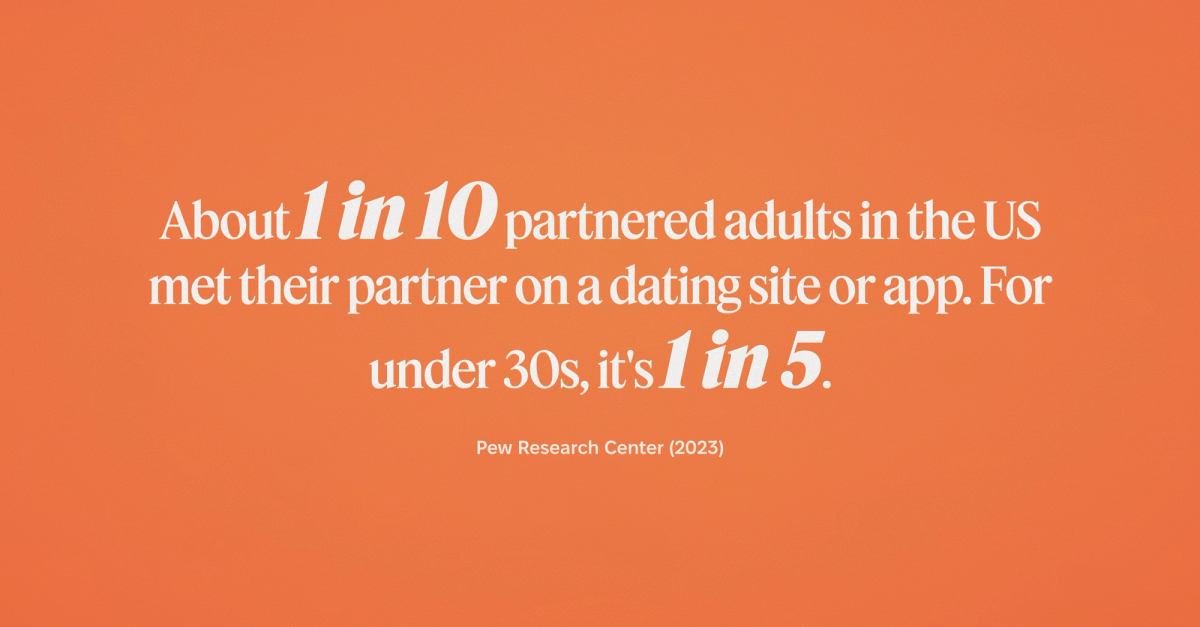
No app shares independently checked success rates, so be wary of any that claim one. What we do know is that about one in 10 people in a relationship in the US met their partner on a dating site or app (Pew Research Center). Apps built around relationships, like Hinge and eharmony, tend to attract people who want something serious.
What is the best free dating app?
Hinge, Tinder, Bumble, and OkCupid all have free versions you can use without paying. OkCupid's is one of the most generous.
How do you meet singles without a dating app?
Try places where conversation happens naturally, like classes, run clubs, or plans through people you already know. You can also try a Timeleft singles event. You meet a small group of other singles in your city over dinner, and see who you click with in person before anything else.