TL;DR: Bumble BFF is free, selfie-verified, and dense in major metros, which makes it the easiest on-ramp to friend-finding in 2026. But its dating-app mechanics reward profile polish and opener skills over the things that matter in friendship, and the match-to-meetup conversion is the exception rather than the rule. It works for a narrow set of people in dense cities who want low-stakes, one-on-one chats. If the goal is an in-person evening with real people this week without organizing anything, a matched group dinner removes the friction Bumble BFF leaves in place.
Bumble BFF has a 4.2-star App Store rating and wide name recognition, but downloads and meetups are two different things. The app borrows its mechanics from dating, profiles and one-on-one chats, which means you audition through photos and bios before anyone meets you as a person. The gap between matching and meeting shows it.
In this article:
- Understanding the Bumble BFF matching process
- Bumble BFF reviews: does it deliver on its promise?
- Identifying the real strengths of Bumble BFF
- Structural limitations of the Bumble BFF format
- The specific personality types that thrive here
- Alternatives to Bumble BFF in 2026
- FAQs
Understanding the Bumble BFF matching process
Bumble BFF runs on the same profile-browsing model as its dating counterpart. You build a profile with photos, a bio, and up to five interests, then browse other profiles and send waves. A wave back creates a match, and from there it's a one-on-one chat window with no structure beyond what you bring to it.
Evaluating the Bumble BFF matching logic
After its September 2025 relaunch, the app added a Groups tab where users can join or create interest-based communities, with events and hangout planning built into it. A discovery function for finding new groups arrived in February 2026, months after the relaunch itself. The core experience is still profile-first. You evaluate someone based on photos and a short bio before any conversation happens, which means the filter selects for people who are good at profiles, not people you'd want to sit across from at dinner.
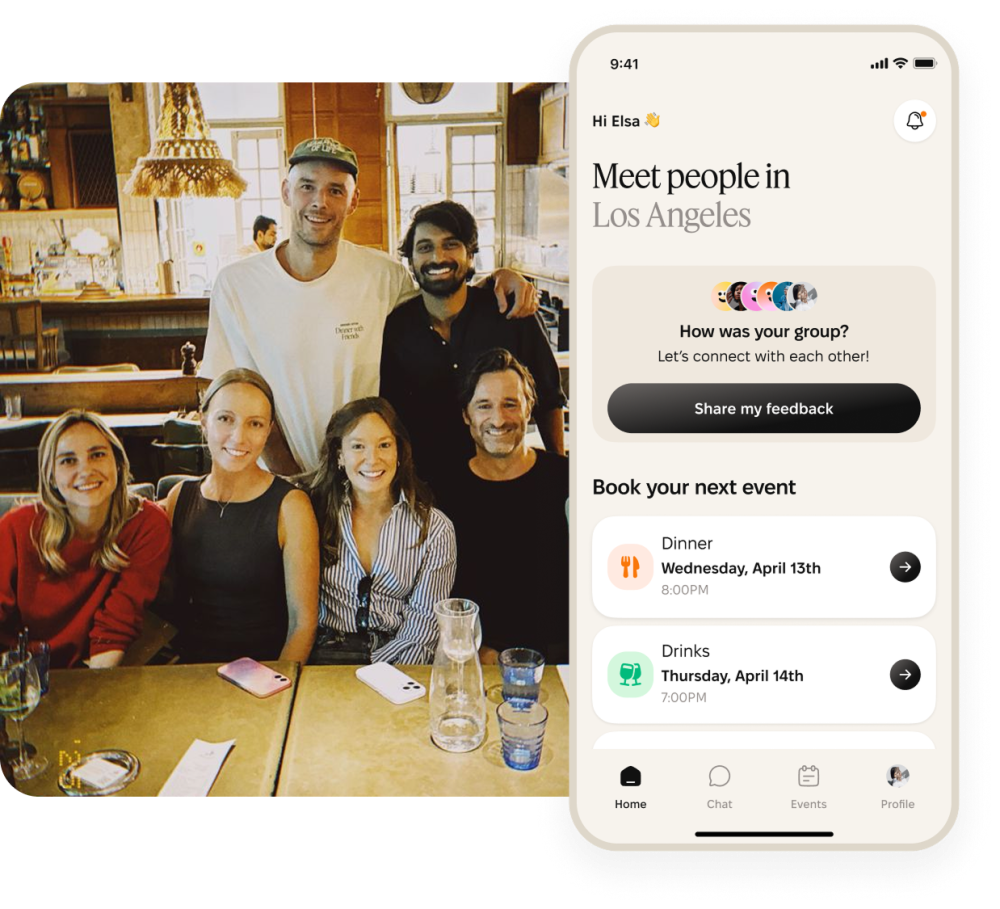
Timeleft works differently. There's no browsing, no profiles to evaluate before you meet. You take a short personality quiz, pick a format and a neighborhood, and the app builds the group from personality answers rather than photos.
Friendship vs romantic matching
Bumble BFF was built on the same profile-browse-and-connect mechanic as Bumble Date, so for years the main difference was stated intent. Bumble acknowledged the problem in early 2024, when then-CEO Lidiane Jones said the company had “been slow to realize this broader vision with Bumble BFF thus far” and wanted to shift the product toward a different paradigm. The September 2025 relaunch, built on technology from the community app Geneva, keeps one-on-one matching but shifts the focus to Groups, a bet that community features can set friendship apart from dating.
The problem is that the one-on-one match remains the default. Group features exist, but someone still has to create the group, propose the event, and coordinate attendance.
Profiling the active 2026 community
Bumble hasn't disclosed standalone user numbers for BFF since the relaunch. As of mid-2026, the company said it hadn't sought to generate revenue from the app, which remains excluded from Bumble’s key operating metrics. Activity appears to concentrate in major metros, with New York, Los Angeles, London, and Toronto cited most often in user reviews as having the deepest pools of active profiles. The experience thins out fast outside those markets.
Bumble BFF reviews: does it deliver on its promise?
User reviews tell a consistent story. Plenty of matches, far fewer meetups. Here's what the data and lived experience shows.
Real user success rates
A Bumble-commissioned survey found that 60% of respondents want to find new friends, and 52% hadn't made a friend in the past year. That underlying demand is clearly there. The question is whether the new format delivers on it.
The most common experience described in user communities is matching with someone who seemed genuinely interested, then watching the conversation stall before anything concrete was arranged.
That said, some users do make it work. The successes tend to cluster in dense cities, among people who treat the app as a numbers game, and among those who move to a plan within the first few messages. If you're willing to be the person who drives momentum every time, Bumble BFF can produce results. That's a specific skill set, though, and it has more to do with your tolerance for logistical persistence than with the app's design.
Short-term and task-specific success
Bumble BFF's strongest use cases tend to be short-term and task-specific. The app's density in major metros means you can match with someone nearby within minutes, and if both people are motivated, a meetup can happen fast.
The selfie verification feature is a genuine strength. Every profile goes through a photo check, which reduces the catfishing risk that plagues other friend-finding platforms. For people who've been burned by fake profiles on less regulated apps, that's a meaningful safety layer.
The structural flaws of Bumble BFF
The core flaw is architectural. Bumble BFF borrowed the mechanics of dating and applied them to friendship. But friendship doesn't work like dating does. Dating has a built-in escalation path from chat to first meeting to something more. Friendship has no equivalent. There's no obvious next step after "hey, you seem cool," which is why so many conversations stall.
The absence of deeper compatibility matching makes this worse. Matches tend to be based on proximity and surface-level profile details rather than shared values or life stage, which means two people can run out of conversation fast once the opener is out of the way.
The planning burden compounds this. Even when a match goes well, converting a chat into a plan requires one person to drive the logistics from start to finish, and that burden alone is enough to kill most meetups before they happen.
Identifying the real strengths of Bumble BFF
Bumble BFF does a few things genuinely well. Here's where the app holds up against scrutiny, regardless of its wider limitations.
High user density in major metros
Major metros tend to have the largest user bases. That density is the app's single biggest advantage over smaller platforms. If you live in a major metro and you're willing to put in the browsing time, you'll match with people.
Lowering the barrier to connection
Bumble BFF is free. Every feature, including Groups, is included without a paywall. The optional premium tier ($17–80/month depending on location and demographics) adds convenience features like seeing who liked you, but nothing essential sits behind it. Timeleft requires a subscription before you can attend any event, plus you pay for your own food and drinks at the venue. What the subscription buys is the removal of every step between wanting to go out and going. The matching, the venue, the group, and the logistics are all handled.
Using prompts to jumpstart chats
Like Bumble’s dating app, BFF uses photo prompts and customizable profiles, which give matches something to talk about beyond “hey.” The prompts cover interests, lifestyle, and personality, and they give the first message a starting point. For users who struggle with openers, this feature reduces the blank-page problem.
Structural limitations of the Bumble BFF format
Bumble BFF's format creates friction at every stage. These structural issues explain why so many matches fail to become real-world meetups.
The match-to-meetup conversion problem
This is the central issue, because Bumble BFF generates matches but doesn't generate meetups. Getting from a match to an actual plan means sustaining a conversation with a stranger, proposing a time and place, and getting them to commit, and the chat can stall at any point along the way. Bumble's in-app Plans tool lets you formalize an invite, but it can't make anyone show up.
A common pattern is that matches feel promising for two or three exchanges and then fade. The conversation has nowhere to go because the only thing the two people share is proximity and a profile that looked interesting for three seconds. Without a reason to keep talking, the burden of creating momentum falls entirely on the two people in the chat, and most of the time neither one picks it up.
The hidden cost of app fatigue
Sustained use of profile-browsing apps tends to wear people down, and Bumble BFF's profile-first interface replicates that dynamic.
As users browse more profiles, the experience tends to shift from curiosity to pattern-matching, scanning for reasons to pass rather than reasons to connect. Over time, this makes you worse at the thing the app is supposed to help you do.
The anatomy of ghosting cycles
Ghosting on Bumble BFF follows a predictable pattern. One person stops responding, and the other is left wondering what went wrong. The answer is usually nothing. The conversation ran out of structural support.
Without a shared plan or a reason to keep talking, the chat becomes a low-priority notification competing with everything else on the phone. The person who ghosted didn't decide you weren't worth meeting. They never had a concrete enough reason to prioritize the conversation over the next profile.
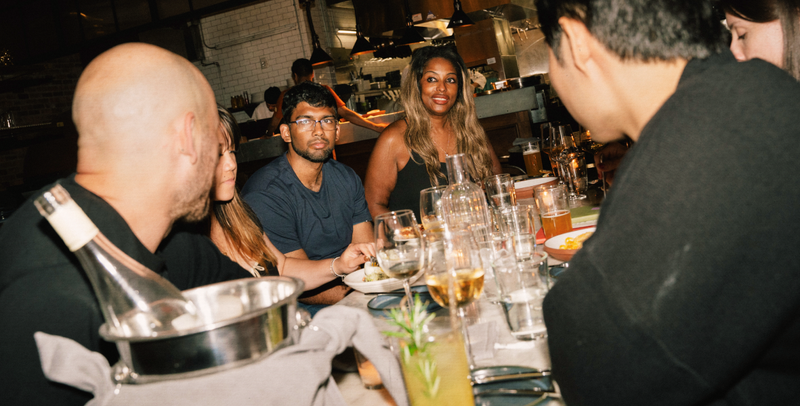
A pre-arranged group dinner removes this dynamic. When four to six people show up to the same table at the same time, there's no chat window to deprioritize and no plan to fade from.
Why one-on-one chats feel like auditions
A one-on-one Bumble BFF chat puts two strangers in a private window and asks them to perform. You need to hit a narrow social register that has nothing to do with whether you'd be a good friend.
A group dinner distributes that load. A table of four to six people means the conversational weight is shared. No one has to carry the evening alone.
The specific personality types that thrive here
Bumble BFF doesn't work equally well for everyone. The format rewards certain traits and habits far more than others.
When Bumble BFF works
Bumble BFF works best for people who are comfortable driving a conversation forward and who live in a dense metro. It rewards persistence and a tolerance for conversations that go nowhere.
It also works for short-term, task-specific goals. If you need a specific companion for a hobby or activity in the next two weeks, the app's density and speed can deliver. The goal-orientation matrix looks like this:
High utility:
- Travel buddies and workout partners
- Remote work companions and coworking buddies
- Niche hobby connections
- Immediate social plans in a new city
Low utility:
- Long-term friendship building
- Deep one-on-one bonds
- Recurring social rituals
- Meeting people outside your existing demographic
When to skip Bumble BFF
Skip Bumble BFF if you've already tried it and the match-to-meetup cycle left you drained. Skip it if you live outside a major metro, where the user density drops off sharply. And skip it if the idea of performing through a profile before anyone meets you feels like the problem rather than the solution.
If the last one sounds familiar, the issue isn't your profile. It's that the format rewards being good at profiles, and being good at profiles is a different skill from being good at connection. That distinction matters, and no amount of profile optimization will close the gap.
Alternatives to Bumble BFF in 2026
Not every alternative to Bumble BFF takes the same approach. The main options differ meaningfully on matching, planning, and format.
Matched group dining
Timeleft is the most direct alternative for people who recognize the profile-first problem. You take a short personality quiz, subscribe, pick a format and a neighborhood, and show up. Timeleft matches the group and books the venue. There's no profile browsing and no need to organize the plan yourself.
The 96% reported group compatibility figure suggests the quiz-based matching works. The tradeoff is cost (a monthly subscription plus food and drinks at the venue) and the fact that you don't choose who you meet. For people who found Bumble BFF's self-selection exhausting rather than freeing, that tradeoff is the point.
One verified user described the experience after a first dinner:
"I did my first TimeLeft dinner on May 2024. I met an incredible group of people who are now my best friends for about one year and half." - Océane on Trustpilot
Skill and hobby focused meetups
Meetup remains the broadest interest-based platform. It's free to browse and attend most events, and the range of activities is enormous, from hiking groups to book clubs to coding workshops. The tradeoff is that there's no matching. You browse, RSVP, and walk into a room where the format and energy vary widely depending on who organized it.
WeMeet, backed by WeRoad's recent $58M Series C, offers free hobby and activity events in Western European cities. It's good for structured activities where the shared interest creates the conversation, but there's no matching and no guarantee of a consistent weekly group.
Both platforms solve the "what do we do" problem, but neither solves the "who will be there" problem. Meetup lets you browse event descriptions, and WeMeet shows the activity, but you walk in blind. Timeleft handles both by matching the group from personality answers and revealing who you'll meet on the day of the event.
Skipping profiles for in-person events
222 Place offers small-group experiences beyond dinner, pottery classes, matcha ceremonies, themed combos, with a deeper personality quiz than Timeleft's. The limitation is availability. Selection isn't guaranteed, waitlists are common, and there's no predictable weekly seat.
For a side-by-side comparison:
| Platform | Matching model | Planning burden | Group size | Cost |
|---|---|---|---|---|
| Bumble BFF | Self-select from profiles | High: you plan everything | 1:1 | Free (premium $17–80/mo) |
| Timeleft | Personality quiz, matched group | None: venue and group handled | four to six (dinners) | Subscription + food/drinks |
| Meetup | No matching, browse by interest | Moderate: RSVP and show up | Varies widely by event | Free to attend most events |
| 222 Place | Algorithm from detailed quiz | Low: pre-arranged experiences | Small group | ~$30/event |
The structural difference is clear. Bumble BFF and Meetup leave the planning to you. Timeleft and 222 Place remove it, but Timeleft offers a recurring weekly format across 200+ cities, while 222 Place is boutique and waitlist-dependent.
If the pattern you've recognized in this review, the matches that go nowhere, the chats that feel like auditions, the plans that never materialize, feels structural rather than personal, it probably is. People show up to a Timeleft dinner for the table, not an outcome, and what it becomes is still up to the people at it. Take the personality quiz, subscribe, and show up to your first Timeleft dinner.
FAQs
Is Bumble BFF good for making friends?
Bumble BFF works best in dense metros for short-term, task-specific connections like workout partners or concert buddies, but the match-to-meetup conversion rate is low for most users.
Why do Bumble BFF matches rarely lead to meetups?
The app now includes interest-based Groups with planning tools and a Plan feature for setting up hangouts in-app, but none of them do the initiating for you. Without a shared commitment or a reason to prioritize the conversation, momentum still dies within a few messages.
How long does it take to make friends on Bumble BFF?
Hall's 2018 research found it takes roughly 50 hours of interaction to build a casual friendship, so a single coffee from a Bumble BFF match is a starting point, not a friendship.
Is Bumble BFF free or do you need to pay?
Bumble BFF is free with every feature included. A premium tier ($17–80/month) adds convenience features like seeing who liked you, but nothing essential requires payment.