TL;DR: Timeleft works for social anxiety because the format removes the unknowns that anxiety feeds on. Members take a short personality quiz, pick a date, subscribe ($19.99/month in the US), and get a seat at a table of four–six people, with the venue revealed the day before and a clear end time. Timeleft reports 96% of diners feel compatible with their matched group. Food and drinks are paid at the venue. It isn't a clinical intervention. It's a format that removes what usually makes social events expensive. Leaving early is a legitimate choice, not a failure.
Most people who deal with social anxiety have a version of the same pre-event ritual. Not excitement, not nerves exactly. More like advance logistics. Running the exit math before the evening has even started. That calculation is what this guide is worth reading.
Most advice about how to socialize with social anxiety tells you to change how you think. This article is about changing the format instead. Timeleft is a subscription platform that handles the group matching and venue booking, then sends members the details the day before. That structure means the courage it takes to walk through the door goes a lot further than it would at an open-ended event. Below is an honest account of what the evening actually feels like and what it costs.
In this article
- Reducing the mental tax of social dinners
- How Timeleft removes the uncertainty that triggers anxiety
- Managing your nerves before the first course
- Measuring your social battery post-event
- How structured settings aid social anxiety relief
- Evidence of relief for anxious diners
- FAQs
- Key terms glossary
Reducing the mental tax of social dinners
The format matters because of what it removes. Before judging whether Timeleft for social anxiety makes sense, it helps to name what makes unstructured socializing so expensive in the first place. A few costs show up most often.
The "how do I leave" calculation
The hardest part of social anxiety usually isn't the people. It's the not knowing. Arriving at a party immediately starts the background math running. For a lot of people, that's 20 minutes of background accounting before the evening has properly started. Working out when it's acceptable to leave, and how to get out without making it strange. That math runs the entire night, and it's exhausting in a way nobody else in the room can see.
The brain is very good at treating an unread room like a problem that needs solving. An unstructured social situation hands it a lot to process. Where to be, what's expected, whether that silence meant something. Which is why a "casual" party can cost more than a full workday.
Managing the post-dinner energy drain
Then there's the day after. The crash that follows an evening of masking and monitoring is real. Friends saw the early exit. They didn't see the recovery day that followed.
Unstructured socializing demands a continuous stream of small calls, each one carrying social weight. That adds up faster than people expect, and the compounding is invisible to anyone watching from the outside. Treating recovery time as legitimate, rather than as evidence something is wrong, makes the next evening out possible in the first place. The better move is picking formats that cost less upfront.
Why unstructured dinners drain you
A social anxiety dinner with strangers sounds like it should be the worst possible format. In practice, it depends entirely on how much of the evening is pre-decided. At an open-ended event, the attendee is deciding where to stand, when to circulate, and when to leave, and each of those decisions spends executive function that could go toward the actual conversation. The problem isn't bad socializing skills. The format is expensive.
How Timeleft removes the uncertainty that triggers anxiety
The platform's structure is built to pre-answer the questions anxiety asks before leaving the house. Here's how it works in practice.
Eliminating ambiguity in social plans
Here's how Timeleft works, step by step:
Take the personality quiz: a short in-app quiz that feeds the matching algorithm. No photos to curate, no bio to write.
Pick a format and date: dinner, drinks, coffee, or a run, depending on the city.
Subscribe: $19.99/month in the US, required before attending any event. Once subscribed, members can attend as many events as they like that month.
Event access: Timeleft matches the group, books the venue, and reveals the details the day before.
Show up: food and drinks are paid directly at the venue on the day.
Swipe-based apps put the legwork back on the member. The venue negotiation, the back-and-forth on timing. None of it starts, because there is no planning. As the Timeleft vs Meetup comparison puts it, members are grouped based on personality rather than photos, and receive a day-before preview of their dinner companions.
Eliminating on-site decision fatigue
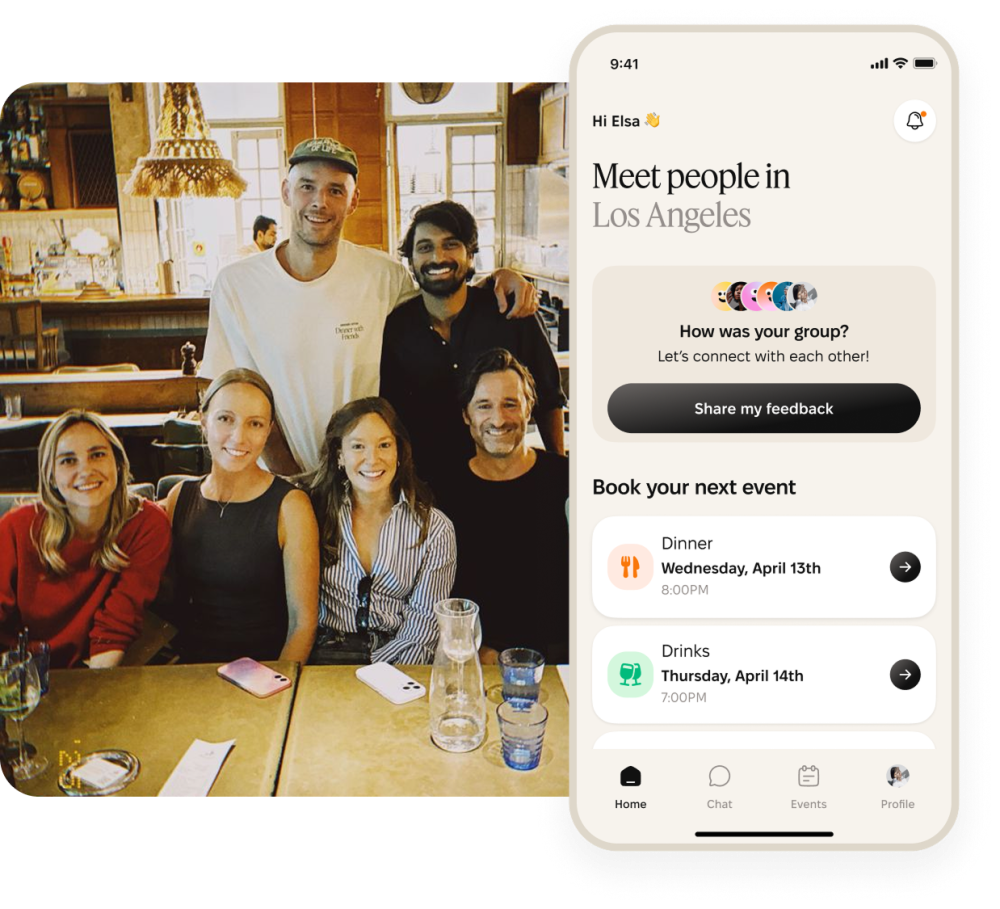
The algorithm handles the group matching, building tables of four–six people from personality quiz answers rather than random assignment, and the detail on how group matching works is available. Members don't browse attendees beforehand and don't choose who sits where. Each place at the table is already decided before arrival.
The App Store listing puts it plainly. Meet the table and use the in-app icebreakers to get past the opening silence.
How clear rules lower social anxiety
Predictability is the design logic here, not a clinical claim. When the rules are visible upfront, attendees can show up as themselves instead of managing the room. Timeleft confirms the venue and the group before arrival. The venue name and meeting time land in the app the day before the event starts.
Managing your nerves before the first course
Pre-event nerves are normal, but most of what feeds them can be handled the night before, not in the moments before walking in.
Reducing arrival anxiety at dinner
Most people feel a bit nervous before their first dinner. That's normal, and the awkward part usually lasts about five minutes. Walking in, finding the table, sitting down. Nobody at the table is the host, which means nobody is performing hospitality and nobody is a guest in someone else's territory.
The night before is a better time to handle the logistics than the hour before walking in:
- Check the menu online once the venue reveal lands, so ordering isn't a decision on the night.
- Plan transit there and back, including the last train or parking.
- Decide on an outfit and lay it out.
- Charge the phone and screenshot the venue address, to avoid hunting for the app in transit.
How structure saves your energy
The fewer real-time judgment calls an evening requires, the more energy is available for the actual conversation. Logistics are handled before arrival, so what's left at the table is dinner, and the people at it. Not the architecture of the night. Dinners run about three hours, roughly what you'd expect from a long restaurant meal, which is long enough to settle in and short enough to have a real end point.
Measuring your social battery post-event
What surprises most first-timers isn't the dinner itself. It's what the next morning feels like compared to what they expected.
Why the expected burnout never happened
The variable that changed isn't stamina. It's the structure. When the evening has a set shape, the nervous system isn't scanning for exits and reading unspoken rules for three hours straight. The crash braced for often doesn't arrive. Tiredness is likely – the normal kind, the way any full evening out feels – but the next day won't be spent recovering from having managed the room. Most social anxiety advice asks for more tolerance of uncertainty. A structured dinner removes most of the uncertainty upfront instead.
Recognizing the post-dinner energy boost
A good evening that doesn't drain your battery the way you expected is proof, not just relief. One parent who bought a subscription for a shy adult kid described the dinners as "very nice get togethers" where "conversations have been easily flowing," with groups often extending the night past what was planned:
"I bought this as a gift for my kid who's a bit shy and just moved back to town and they're described them as very nice get togethers and said they are having a great time. Enjoyed both the coffee and dinners they've attended thus far. Reports that the people are nice, and that it's a nice mix of educated professionals in various careers. Conversations have been easily flowing, and they always seem to extend their time together past what's planned and tack on extra time, or do something else, and have combined groups at the end of the night, with other TL groups if another group is there, so meeting more people. Very positive experience. Highly recommend." - Ani on Trustpilot
Success here is measured by battery level on the way home, not by how many people you talked to.
How structured settings aid social anxiety relief
Structure isn't just a comfort. It's the mechanism that makes the evening cost less. The table below shows every variable that's already settled before a member walks in.
The logistics of an anxiety-friendly dinner
Here's everything decided before arrival:
| Detail | What's confirmed |
|---|---|
| Group size | four–six people, matched by the algorithm |
| Duration | About three hours |
| Venue | Revealed the day before |
| Cost | $19.99/month subscription plus food and drinks at the venue |
| Exit | Clear end time, leaving early is fine |
For other formats that work for social anxiety, the types of events page covers dinners, drinks, coffee, and runs, all running on the same matching and booking system. The format repeats across 52 countries and 200+ cities, so the structure travels with you.
Reducing pre-dinner anxiety with structure
The day-before reveal short-circuits overthinking. The decision is already made, so there's nothing left to renegotiate on Tuesday afternoon. For a lot of anxious people, knowing the evening has edges before they commit is the thing that makes committing possible.
How a set table lowers the stakes
Knowing your table in advance removes the "where do I sit" scan entirely. The scan for where to plant yourself, and how to look like you meant to stand there, doesn't happen. The table is already set before anyone arrives.
"Really interesting experience." - JZ on Google Play
Evidence of relief for anxious diners
What real people with real nerves actually reported carries more weight than any brand claim. Across reviews, the pattern holds. Nerves going in, and then the evening is just an evening.
"It was my first time trying this out. They matched me with a great group of people! I had a great night with good conversation and made some new connections as well! I'm looking forward to joining another dinner in the near future." - Stephanie on Trustpilot
"I found the experience to be fun and exciting . The registration process was simple and easy to follow. Thanks Timeleft." - Sara on Trustpilot
Standard Timeleft dinners are social rather than romantic, and the platform is built as a space where everyone belongs regardless of age, gender, orientation, or background. Singles Events run as a variant across select cities for anyone who wants the romantic angle made explicit. But that's a separate format, not the default. Timeleft's safety approach relies on proactive screening rather than after-the-fact reporting, and the staying safe at meetups guidance is worth a read if arriving somewhere new is the hard part. If you want a sense of what a first dinner in your city looks like, the launch write-ups from Paris, Brighton, Berlin, Leeds, Nantes, and Antwerp show the same format working across different cities. Check city availability first.
The 20 minutes that used to go to planning an exit can just be 20 minutes of the evening back. The door is already open, the seat is already there, and the end time is already written down. The only thing left is showing up. Take the personality quiz and start your membership.
FAQs
Can diners leave early?
Leaving early is an option, and nobody will make it weird. The dinner has a clear end time, so leaving at the end is built in, and bowing out before that is battery management, not failure. A simple "early morning tomorrow, this was lovely" is a complete exit script.
Do other diners notice nerves?
First dinners tend to start with a certain amount of quiet. The in-app conversation starters are there for exactly that moment, and the opening usually smooths out within five minutes.
Will the evening turn into an open-ended night?
Dinners run about three hours with a set end. Some cities offer an optional Last Drink afterward, and it's genuinely optional, with no pressure either way.
Is Timeleft anxiety friendly for first-timers?
The format is structured by design. The table is ready before you arrive, the schedule is fixed, the venue lands in the app the day before, and Timeleft handles the group matching. It isn't a clinical intervention and doesn't claim to treat anxiety, but it removes the specific unknowns that trigger the format-related fear response.
What if the conversation feels forced or awkward?
The conversation starters exist for exactly this moment, and Timeleft reports 96% of diners feel compatible with their matched group (client-stated figure, August 2026). Some tables click less than others, and reviewers say the good evenings outnumber the flat ones.
How loud and bright are Timeleft venues?
Timeleft's 20,000+ venues are hand-selected, vetted, and never a random hired room. Lighting and seating are typical restaurant setups.
Key terms glossary
Day-before reveal: The venue details appear in the app the day before the event, so the decision is already made.
Group matching: The algorithm builds tables of four–six people from personality quiz answers, not from swiping or self-selection.
Conversation starters: In-app prompts that help each table get past the opening minutes without anyone improvising an opener.
Subscription: $19.99/month in the US, required before attending any event, with unlimited events once subscribed. Food and drinks are paid separately at the venue.
Last Drink: An optional bar stop after dinner in select cities, for anyone who wants to keep the evening going.