In this article
TL;DR: The hardest part about making friends after 60 is that the office and the school gate used to do the organizing for you, and now they're gone. Skip the programs built around your birth year. Interest-based settings like matched dinners, niche classes, walking groups, and skill-based volunteering put you in a room with interesting people where age is irrelevant. With Timeleft, you subscribe once and Timeleft handles the coordination and the group. The venue is revealed 12 hours before a dinner, and you can cancel until four hours before. Nobody at the table needs your backstory.
You spent decades having conversations without thinking about it. Colleagues at the coffee machine, parents at pickup. Then the career ended, or the kids left, and the structure that generated all that contact disappeared with it. Rebuilding a social life after retirement means finding settings where age is beside the point and the logistics don't require a project manager.
In this article:
- The problem with standard retirement socializing
- Finding quality social circles beyond bingo
- How to make friends after 60 through shared interests
- Building new circles without senior clubs
- The invisible hurdles after 60
- How Timeleft works after 60
- Your first low-pressure social plan
- FAQs
The problem with standard retirement socializing
Most advice for people after 60 starts from the assumption that age should be the thing everything is organized around. Here's why that approach misses, and what went missing when your old routines disappeared.
Avoiding the retiree activity bias
Search for things to do after retirement and the results read like they were written for someone else. Gentle exercise classes and bingo at 2:00 pm on a Tuesday. These programs assume you want to be with people your age doing age-appropriate activities, and that assumption is exactly what makes them feel wrong.
The better approach is settings where shared interest creates the connection and age is incidental. A memoir writing workshop doesn't care if you're 35 or 65. A pottery class doesn't check your birth certificate.
The loss of built-in social scaffolding
The office gave you recurring contact with the same people and a reason to leave the house five days a week. The school gate did the same when your kids were young. When those structures disappear, the social byproduct goes with them.
Stanford sociologist Mark Granovetter's research on weak ties found that acquaintances and casual contacts connect you to networks and opportunities outside your immediate circle. His 1973 study on the strength of weak ties, summarized in a Stanford News article, showed these peripheral relationships often matter more than close friendships for new information and opportunities. When you leave the workforce, you lose those weak ties overnight. The American Perspectives Survey from 2021 found that 12% of Americans reported having no close friends, up from 3% in 1990, per a Gallup poll cited in the same report.
Why proximity no longer builds connection
For most of your life, friendship happened because you were physically near the same people regularly. Now you have to engineer what used to happen automatically, which means finding settings where the same people show up repeatedly.
Finding quality social circles beyond bingo
The best social settings for adults over 60 share common traits. They're organized around interests rather than age, and they don't require complicated registration. They also minimize the awkwardness of the first five minutes.
| Format | City | Time commitment | Age-agnostic? |
|---|---|---|---|
| Matched dinners (Timeleft) | Subscription plus venue bill | About three hours per dinner, as often as you like | Yes, matches across age groups |
| Niche hobby classes | Varies by provider | Weekly or one-off sessions | Yes, organized by interest |
| Walking groups | Free to $10 | One to two hours, varies by group | Yes, all fitness levels |
| Skill-based volunteering | Free | Flexible, varies by role | Yes, based on expertise |
| University lectures | Free to $25 a lecture | One to two hours, varies | Yes, open enrollment |
| Ticketed supper clubs | Ticket prices vary | Evenings, often monthly | Varies by organizer |
Social settings that ignore birth years
Memoir workshops, photography classes, language exchanges, book clubs, and volunteer roles all attract people across decades. Most run on a recurring schedule with the same group, so by the third session you're greeting familiar faces instead of introducing yourself to strangers. The activity also does the work at the start. You're critiquing a chapter or debating an ending, and conversation follows without anyone needing an opener.
Prioritize easy entry points
The easier it is to walk into something, the more likely you are to do it. Settings requiring intake processes or registration fees create friction that kills momentum. Look for formats where you book online, show up, and leave if it's not working.
Skip the forced icebreakers
The first five minutes of any new social setting are the hardest. Forced icebreaker games make it worse. The best formats manage the opening naturally or skip it entirely. Timeleft includes In-app Icebreakers for the first few minutes. Most tables don't end up needing them. The shared context of a matched dinner gives everyone a reason to start talking without a moderator.
How to make friends after 60 through shared interests
Once you know what to skip, the next step is choosing where to spend your time. Each of these formats puts a shared interest first and gives you a reason to see the same people again.
Organized dinner and supper clubs
Supper clubs exist in most major cities if you don't mind doing the research yourself. The difference between a supper club and a matched dinner is coordination. A supper club requires you to find the club and buy a ticket, then hope the crowd is good. Timeleft is not a supper club, but it solves the same problem with less friction. Members book a dinner through the app, and the restaurant is booked on their behalf.

Meeting peers through niche activities
Pottery, painting, birdwatching, photography, and language classes attract people who want to learn something. A typical session gives your hands or eyes a task, so the awkward first minutes pass while you're figuring out the wheel or the camera settings. Beginner classes put everyone at the same starting line, and a lopsided bowl is an easy way into conversation. Choose a class that runs for several weeks rather than a single workshop, so the same faces return and a nod turns into a chat.
Join local run or walk clubs
Independent running and walking groups are one of the lowest-pressure ways to meet people, and clubs exist in most cities. Timeleft also offers a Walks format in some cities with the same low-key approach. A weekend walk doesn't require you to be interesting. You walk and talk, and the repetitive motion makes silences less awkward.
Finding community at local lectures
University extension programs, museum talks, library readings, and author events attract curious adults of all ages. The lecture gives everyone something to react to, and the post-event reception is where connection happens. The University of the Third Age runs lectures and interest groups for post-career adults, though framing varies by chapter.
Skill-based volunteering roles
Volunteering works when the skill matters more than the age. Mentoring and pro-bono consulting through platforms like Catchafire and Taproot Foundation match professionals with nonprofits needing their expertise. You're using what you know, and the social benefit comes alongside the useful work.
Building new circles without senior clubs
Choosing the right setting is half of it. The other half is how you use it, and a few habits make new friendships easier to build once you've picked a place.
Make familiarity your secret weapon
One recurring event beats 10 one-offs. Familiarity builds connection faster than novelty. The gym membership parallel applies. You're more likely to show up when you've already committed than when you're deciding from scratch each week.
Prioritize engaging shared activities
Shared activities create conversation without effort. A class or a group task gives everyone something to focus on besides each other, taking the pressure off. When you're doing something together, talking becomes a natural byproduct instead of the entire point. This is why hobby groups and volunteering work better than "let's get coffee" with a stranger.
Focus on low intensity encounters
Low-pressure settings where showing up is the win work long term. Coffee, walks, casual drinks, and dinners all fit. You're not performing or proving anything. Timeleft's coffee format is built for exactly this. It's a short, low-cost way to practice being in a room with new people.
Safety in numbers for new events
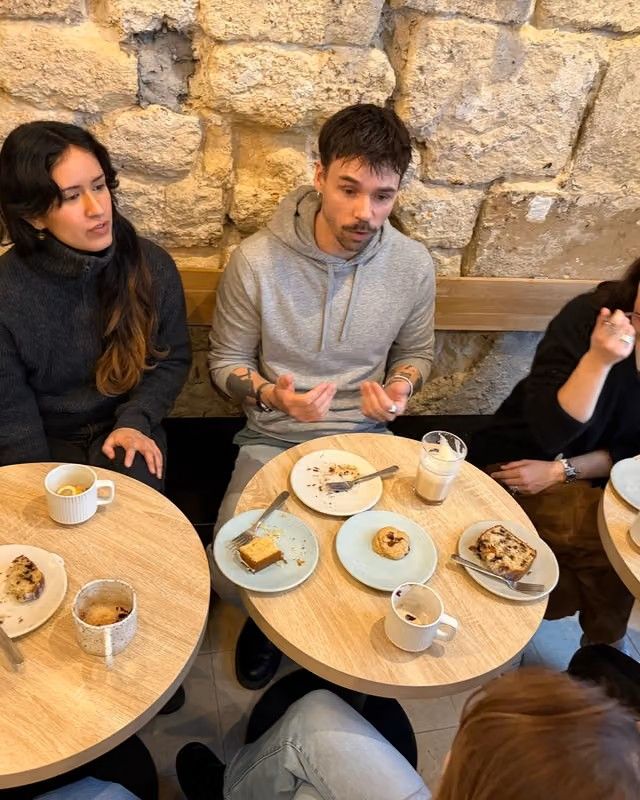
A table of up to six people is easier than a single blind coffee date because conversation moves around and no one carries the whole thing. If going solo feels like too much, Timeleft's Bring a +1 feature lets you bring someone from your existing circle. The feature description puts it this way. "Bring a +1 with you, whether they're a Timeleft friend or an old friend. Introduce people you've met to each other, letting your social circles expand and overlap naturally."
The invisible hurdles after 60
Some of what makes this stage hard rarely shows up in standard advice. These hurdles are easy to miss, and each one has a practical workaround.
Solving the headache of group scheduling
A group dinner normally means 40 messages and three dropouts before anyone agrees on a venue. Timeleft skips all of it. Think of it as a reservation someone else made, for a group you didn't organize. The booking window closes 13 hours before the event.
Avoiding the senior activity trap
The trap is accepting age-categorized options because they're easy to find. The fix is searching for interest-based settings instead, like "memoir writing workshop [your city]" or "beginner pottery class [your city]." The results will be the same settings a 35-year-old would find.
How Timeleft works after 60
Timeleft is one way to handle the logistics if you'd rather not organize anything yourself. Here's how it works for someone rebuilding a social life after 60.
How dinner groups bypass age barriers
Timeleft matches groups across ages and personality quiz answers. The onboarding quiz asks for your age group (18–29, 30–39, 40–49, 50+), but the table isn't organized around it. Timeleft weighs personality type, interests, conversation style, and what kind of evening you're looking for. 96% of diners report feeling compatible with their group.
Dinner with no personal history
Nobody at the table knows your backstory unless you share it. There are no profiles to browse before you meet. A preview of who you'll meet is revealed on the day, with light context like job industries, but no names or photos. The venue is revealed 12 hours before the dinner, so the decision is made and there's nothing left to dread. You can cancel until four hours before, which lowers the barrier for anyone nervous about committing.
Subscription and cost
A subscription is required before attending any event, and subscribers can attend as many as they like. Food and drinks are paid separately at the venue. Pricing varies by market.
The personality quiz takes under two minutes.
Your first low-pressure social plan
You don't need a big plan to get started. A few small steps are enough to turn good intentions into a recurring social routine, and each one builds on the last.
Getting started checklist
Pick one interest-based setting. Choose something you're curious about. A pottery class, memoir workshop, walking group, or matched dinner.
Subscribe, then book one recurring event. If you choose Timeleft, a subscription is required before you can book any event. One-offs don't build momentum. Find a format that runs weekly or monthly and commit to three sessions before deciding if it works.
Prepare your leaving-time script. Decide in advance how long you'll stay and what you'll say when you leave. "I have an early morning" works every time.
Show up 15 minutes late. Paradoxically, arriving slightly late skips the awkward standing-around phase and gives you a reason to join a conversation already in progress.
Follow up with one person. Pick one person whose company you enjoyed and suggest coffee or a walk.
Go again next week. The second time is easier than the first, and by the fourth, faces start feeling familiar.
Take the personality quiz and subscribe. Then choose a format and a date, and Timeleft handles the rest.
FAQs
Is it too late to make friends after 60?
No. The barrier is logistics and repeated contact, and a recurring format with matched groups removes both.
What if you're the oldest person there?
Possibly, at some tables. Everyone there is meeting strangers, so the conversation starts from scratch for all of you.
How do you avoid senior-focused social clubs?
Search by activity instead of age group, using the settings above as a starting point.
What are the best things to do after retirement for meeting people?
Recurring, interest-based formats with low friction.