In this article
TL;DR: Speed dating is a high-volume format that rewards quick first impressions and suits people who enjoy rapid-fire interaction. Singles dinners drop the timer and the rotation, so conversation gets three hours to turn real without anyone performing. The format you pick decides whether you leave feeling auditioned or feeling like someone met you. If you're tired of memorized openers and dating-app fatigue, a matched dinner table removes the audition before it starts. Once you subscribe, Timeleft handles the matching and the venue, so on the night you only need to show up and order food.
It's the hour before a speed dating night. You have three openers memorized, and you know which one to use depending on what the other person says first. By the time you walk in, you're already on autopilot.
Both formats put strangers in a room, and they reward different things. Speed dating favors volume and a strong first impression. A singles dinner favors presence and the kind of conversation that wanders. If you're worn out from auditioning, the most useful question is which format lets you stop performing.
A closer look at the event mechanics
The way an evening is set up changes what can happen inside it. Speed dating and singles dinners start from different ideas about what makes two people click.
Systemic flaws in the speed dating model
Speed dating events usually pair people up for one-on-one conversations lasting three to seven minutes each. When the bell rings, one side moves to the next seat, and the conversation resets.
By conversation seven, you're running the same script you used at conversation two, and by conversation twelve, it's easy to lose track of who said what. The format measures how well you perform under pressure, which says little about how well you connect once the pressure is gone.
How dinner replaces the dating audition
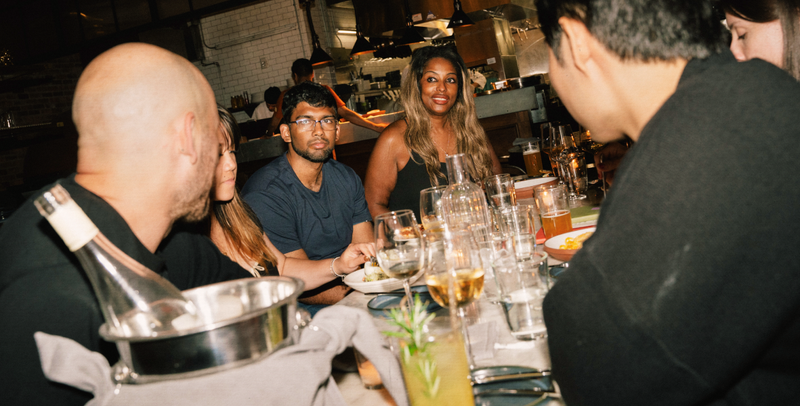
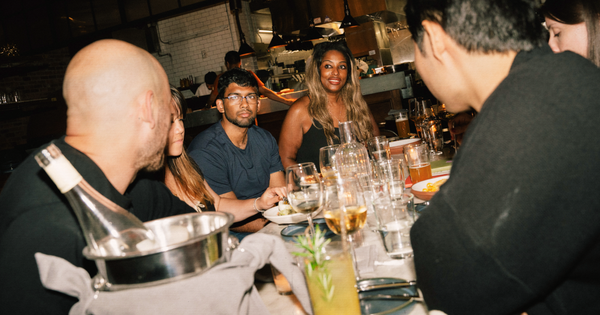
Timeleft dinners run about three hours. Each table aims for four to six people, though the number on the night can be smaller. You find out the venue 12 hours before the event, and a preview of who you'll meet appears on the day, according to Timeleft's format description.
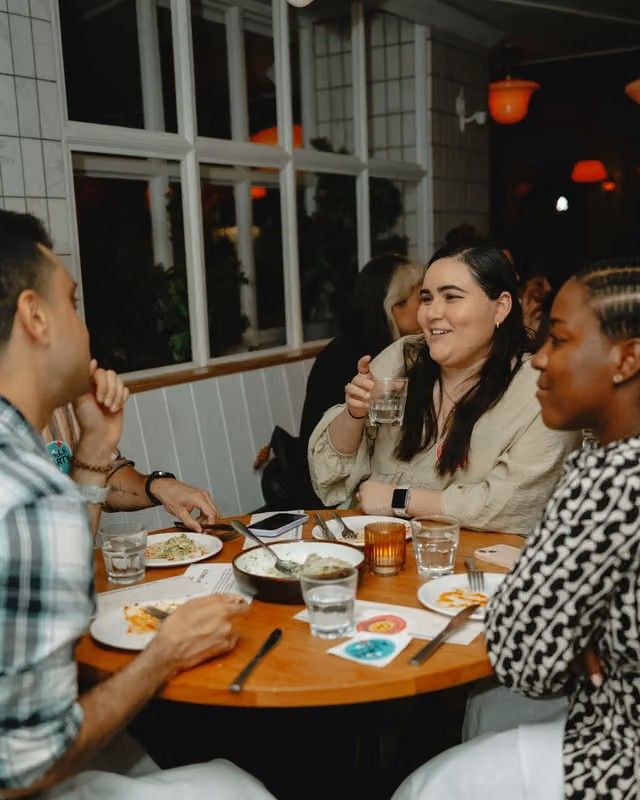
Nobody at the table can browse your profile or photo before you meet, and there's no opener to rehearse, so you sit down and start talking.
Singles dinner vs speed dating structure
| Format element | Speed dating | Singles dinner (Timeleft) |
|---|---|---|
| Who's in the room | Singles, though the mix isn't guaranteed | Everyone at the table booked a singles event |
| Gender balance | Not guaranteed on the night | Timeleft keeps a balance of men and women at the table |
| Group size | 1:1 rotations | Target of four to six people |
| Duration | Three to seven minutes per conversation | About three hours, no fixed end |
| Interaction style | Timed, rapid-fire Q&A | Unhurried, shared meal |
| Pressure level | High (audition dynamic) | Low (no timer, no rotation) |
| Rewards | Volume, first impressions | Presence, conversation depth |
One format turns the evening into a series of micro-interviews, while the other treats it as dinner.
Decoding the atmosphere of each event style
A room sends signals before anyone says a word, and a timer sends a different one than a table does.
The structural flaws of rapid meetings
Seven minutes favors quick first impressions and easy small talk over real compatibility. It also invites what researchers call a socially desirable response pattern. When people answer fast under time pressure, they give the answer they think the other person wants to hear, and the honest one gets left out.
How shared meals bypass dating fatigue
A shared table gives everyone a reason to be present, the way a class or a shared commute once created conversation without effort. Food and drink slow the pace, and the conversation can drift from someone's job to the book they're halfway through while no one watches a clock.

You get a whole evening to be interesting, which is a different skill from being interesting in seven-minute bursts, and a more natural one.
How environment shapes your behavior
Rows of chairs facing each other and a host holding a timer set up an audition, while a restaurant table set for six with no clock in sight sets up a meal. Speed dating venues are often conference rooms or cleared-out restaurant spaces, with deliberate pacing and structured movement. Timeleft books working restaurants, where other diners are eating as usual and your table is another table. Walking in, you can tell whether you're there to perform or to eat.
What your ticket price covers
How each format charges tells you what you're paying for. Speed dating charges for a seat in the rotation, while a singles dinner subscription covers the logistics that make the evening happen.
What your speed dating fee covers
Speed dating tickets are sold per event, and what you pay depends on the operator and the city. A ticket gets you in and sometimes includes one drink, but food is rarely part of it.
Your ticket also doesn't guarantee the mix of people in the room, including the gender balance on the night. At a Timeleft singles dinner, everyone at the table booked a singles event, and Timeleft keeps a balance of men and women.
What you pay for at dinner
Timeleft is a monthly subscription, with your own food and drinks on top, paid at the venue. One subscription covers as many events as you like, across any format and any city where Timeleft runs.
The more you go, the less each event costs you. You're paying for a recurring social ritual, and no single evening has to justify the money in three hours. Booking closes 13 hours before an event, but canceling stays open until 4 hours before, so you can still change your mind on the day.
Hidden costs of each format
Speed dating has an emotional cost that doesn't show up on the ticket. You spend two hours performing for strangers who will forget your name in ten minutes, and the format gives you no time to recover between conversations. By the end of the evening, you're exhausted in a way that has little to do with how many connections you made.
A singles dinner has a financial cost too, since you pay for your own meal, but it carries no performance cost. You'd have paid for dinner anyway, and the energy you leave with is the energy you brought, minus whatever you spent laughing.
Which format builds genuine connection
Connection takes time, as the research on friendship formation makes clear.
Beyond the stopwatch: real connection
Jeffrey Hall's 2018 University of Kansas study found that it takes roughly 50 hours of repeated time with the same person to move from acquaintance to casual friend, and 90 hours to reach simple friend status. Seven minutes can't do that work, and neither can seven seven-minute conversations with seven different people.
Most of the time, I’m paired with people around my age, although occasionally the group has been a little younger. Either way, the conversations have always been fun, with plenty of laughs and interesting people to meet. - GG Shalton on Trustpilot
Singles dinner success rates
Timeleft doesn't publish romantic success rates, since the product is the dinner and what comes after is up to you. What Timeleft does report is 96% group compatibility, a figure that measures how well matched people felt with their table.
Members have reported friendships, and some have reported relationships and even engagements. Those outcomes stay open-ended because the format sets up the conditions and the people at the table decide what happens next. That's on purpose. A format that promises romance sells the same audition under a different name, while one that lets people decide afterward asks for no performance up front.
What creates lasting rapport
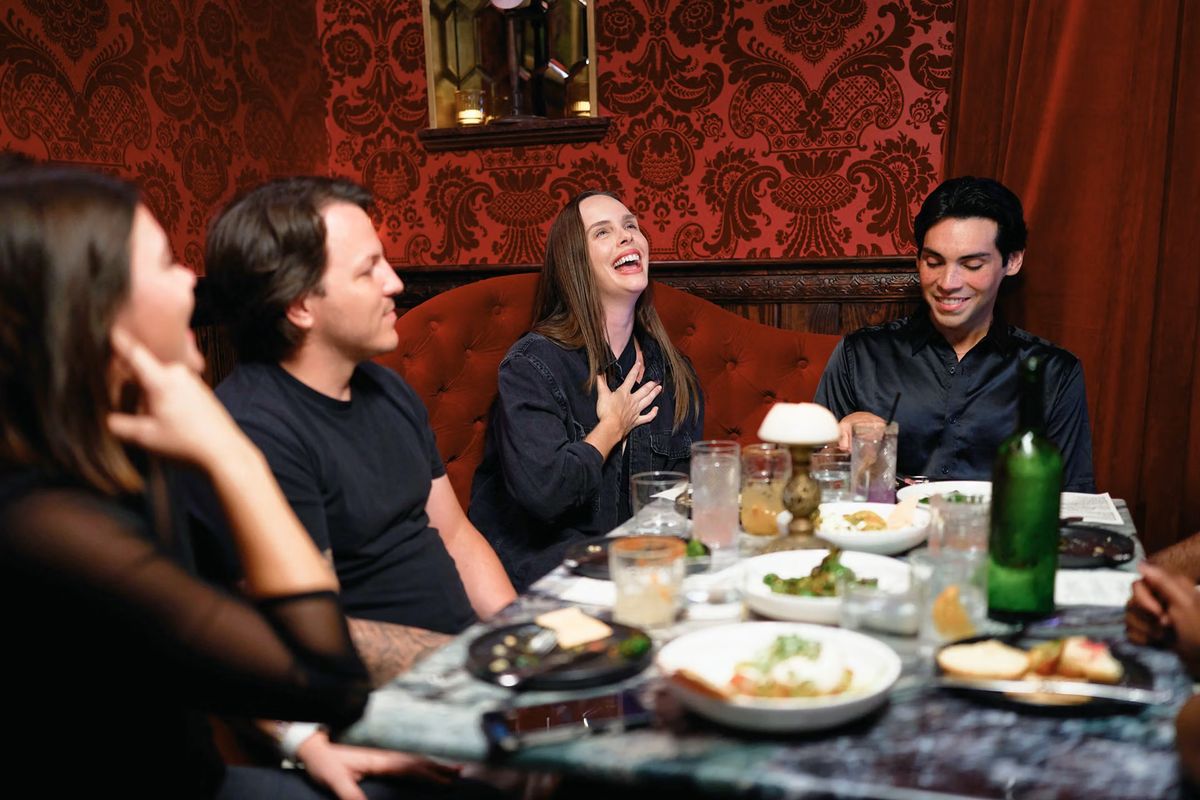
Rapport needs presence and curiosity, and a table of strangers who stay for three hours has room for both. No one is rushing to the next thing, so the conversation can loop back and go somewhere you didn't expect. Seven-minute increments rarely leave that room, since people need time to stop performing and start listening.
The personality profile for speed dating success
Speed dating works for a certain temperament. If you like rapid interaction and the energy of meeting lots of people in one night, and the audition dynamic doesn't bother you, it delivers what it promises.
Dating again after a breakup
If you're recently out of a long relationship, speed dating asks you to perform romantic interest on a timer before you've even decided whether you want to date. It treats being single as a problem to fix, while a dinner lets you show up without a script. You can talk about the breakup or skip it, and you can flirt or not bother. Nobody at the table expects you to perform a readiness you don't feel.
Escaping the cycle of scripted openers
If you're burned out on dating apps, you already have a memorized opener for every occasion. Speed dating rewards that skill and also feeds the suspicion that the problem is you, because the format keeps producing the same result.
A singles dinner makes the opener unnecessary, because you're there to have a conversation and the format gives you room for one.
Structural flaws in quick dating
Speed dating selects for performance, rewarding people who make a strong first impression and filtering out the ones who shine on the second or third. If you get more interesting the longer someone talks to you, seven minutes won't show that.
People have always been lovely in the meetings and if there was ever an issue, practical or other, the costumer service would react if you contact them. - Mie on Trustpilot
Finding your fit in group dining events
Group dining works for people who want connection without the audition. Whether it beats speed dating depends on what you're trying to get away from.
Avoiding the profile filter trap
Apps reward photogenic profiles and clever bios, but a dinner removes that filter. Everyone at the table was matched on their personality quiz answers, and nobody's photo or bio played any part.
Ditching the rehearsed icebreakers
Timeleft includes in-app Icebreakers for the opening minutes, but most tables don't need them. The conversation starts on its own because everyone is there for the same reason and no one is performing for a timer.
Selecting a space that solves your specific fatigue
The right format depends on what's wearing you down. If it's the volume of low-quality interactions, you need fewer, better ones. If it's the pressure to perform, you need a format that doesn't ask for it.
Dropping the digital audition
The digital audition starts before you meet anyone. You polish a profile and an opener, then swipe through hundreds of people doing the same thing, and a singles dinner skips all of it.
Why you should skip the audition
If dating has felt like failing, look at the format before you look at yourself. It asks for a performance, and performing is a different skill from connecting with someone. If you're tired of a structure that rewards performing, changing the structure will do more for you than performing better.
Choosing connection over auditions
If you want efficiency and a high volume of first impressions, speed dating may suit you. If you'd rather have presence and conversation that unfolds over a meal, a singles dinner is the better fit.
Timeleft takes care of the logistics so the only thing left is to show up. You take a short personality quiz and pick a date and a neighborhood, and Timeleft handles the matching and the venue. After the event, Connect lets you stay in touch with anyone you'd like to see again, and contact details only get shared if both people opt in. Nobody has to ask for a number in front of the rest of the table, and you don't have to decide on the spot what the connection is.
Take the personality quiz and subscribe.
FAQs
Which is better: speed dating or singles dinner?
It depends on what you want from the evening. Speed dating suits people who want volume and efficiency. A singles dinner suits people who want presence and natural conversation without a timer.
Do singles dinners lead to more dates than speed dating?
Published head-to-head comparisons of the two formats are hard to find, and Timeleft doesn't promise romantic outcomes. What matters is whether the format lets you show up as yourself.
Is speed dating worth it in 2026?
It can be, if you enjoy quick first impressions and don't mind the timer. If the audition is what wears you out, a dinner is the better fit.
What's the success rate of singles dinners vs speed dating?
Timeleft reports 96% group compatibility, which measures how well people fit their group and covers no romantic outcomes. Speed dating match rates have been studied, and a 2025 University of Montana study reported 65 mutual matches across 394 speed dates, a 16.5% rate.
Can you meet someone real at either format?
Yes, both formats put real people in a room. The difference is whether the format lets you be real while you're there.
Is speed dating or a singles dinner subscription cheaper?
Speed dating is priced per event, usually with no meal included. If you attend only once, paying per event may cost less, but if you go regularly, the per-event cost of a Timeleft subscription drops with each dinner you attend.
How much does Timeleft cost?
Timeleft is a monthly subscription, and prices vary by market, so check the app for current plans. Food and drinks are paid separately at the venue.